
Gaspésie
Le premier groupe d’arrivants acadiens en Gaspésie fuit la déportation et trouve refuge, en 1758, à l’embouchure de la rivière Ristigouche. Ce sont environ 1000 personnes qui se regroupent près du poste français fortifié de Petite-Rochelle. Après la destruction de cet établissement par les Anglais à l’été 1760, plusieurs partent vers Québec, tandis que d’autres s’installent définitivement dans la région.
Quelques familles fondent Bonaventure vers 1761. Elles choisissent probablement cet endroit en raison de la rivière qui forme un havre naturel parfaitement protégé pour se dissimuler en cas d’attaque anglaise. En 1766, un groupe ayant Charles Dugas à sa tête part de Bonaventure et fonde Tracadièche (Carleton-sur-Mer). En 1774, 81 Acadiens exilés en France arrivent en Gaspésie sur les navires de Charles Robin. Ils sont recrutés par ce marchand jersiais pour ses pêcheries de Paspébiac. Plusieurs autres villages accueillent des Acadiens dans la Baie-des-Chaleurs, entre autres, Nouvelle, Saint-Omer, New Richmond, Caplan, Saint-Siméon, Saint-Alphonse et Saint-Elzéar. Aujourd’hui, ils forment près de 70 % de la population.
Attirés par les terres de la vallée de la Matapédia que leur offre la politique de colonisation du Québec, des Acadiens de l’Île-du-Prince-Édouard fondent, en 1870, le village de Saint-Alexis-de-Matapédia. Un autre groupe des Îles de la Madeleine s’établit à Lac-au-Saumon à partir de 1896.
Nous retrouvons en grand nombre dans la région des Alain, Arsenault, Babin, Bernard, Berthelot, Boudreau, Bourg, Bujold, Cyr, Comeau, Dugas, Gallant, Gauthier, Henry, Landry, Leblanc, Poirier et Turbide.
Please click on a name in the list below to go directly to its designated section.
Lac-au-Saumon
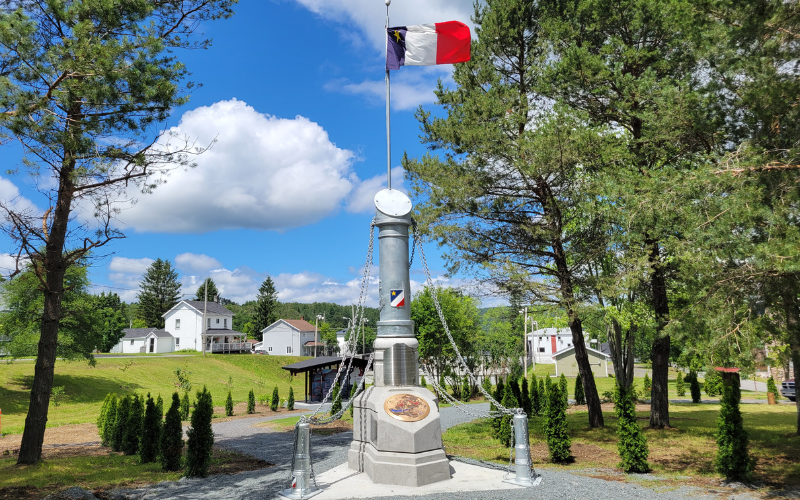
Acadia Square
19 Rue du Noviciat, Lac-au-Saumon, Gaspésie
https://acadielas.ca/
Place de l’Acadie is a park dedicated to Acadian families who, beginning in 1896, came to clear and develop the land that would become the municipality of Lac-au-Saumon. It is a memorial to their fulfilled hopes and pride in their roots. A place of remembrance and recognition. Learn more about the history of the Acadians and Acadia: discover where your ancestors settled by following the route indicated on the map. Starting at Place de l'Acadie, you can visit the Acadian heritage trail, which consists of about 60 panels located mainly along Rang des Acadiens (Rang 3) and Rang des Pionniers (Rang 4). A few other panels are also located on Rang des Ancêtres (Rang 5) and Rang des Défricheurs (Rang 6), as well as along Route 132. These panels feature the names of Acadian pioneers, most of whom came from the Magdalen Islands, who cleared the land. To help visitors find their way around, large signs are located at strategic points along Ranges 3, 4, 5, and 6, with a map showing the location of each plot. Each sign has a QR code that can be scanned to read historical and genealogical notes about the pioneer families.
© Marc Thériault
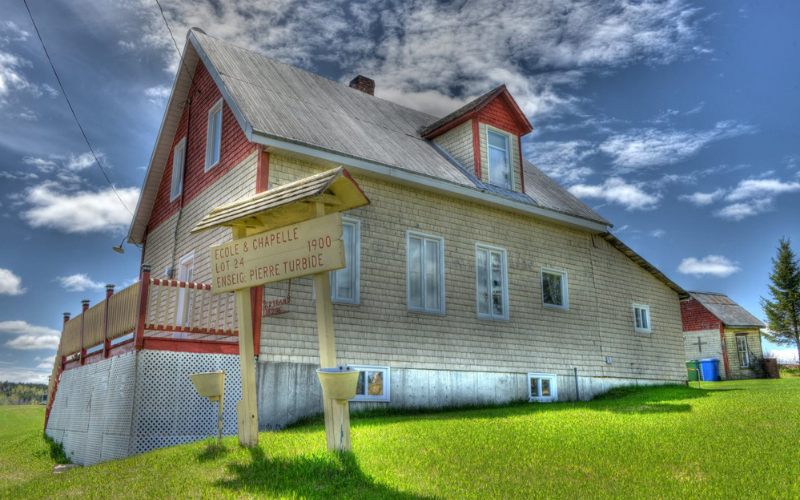
School chapel
Place of interest | 1012 Rang des Acadiens, Lac-au-Saumon, Gaspésie.
The school-chapel was built in 1899 on lot 24 of the 3rd range of Humqui Township by Pierre-Olivier Turbide (1856-1926). Turbide also served as the first sacristan and one of the first teachers at the school-chapel. In the fall of that same year, instruction began for the children of the row. It was there that several generations of Acadians attended school. As its name suggests, the building also served as a place of worship from 1899 to 1907, when the first church was built. The building, which has since been modified, still belongs to the Turbide family, namely the children of Mr. Bertrand Turbide, Pierre-Olivier's grandson.
Text written or compiled by the Acadian Museum of Quebec
© Chapel School – Geneviève Gagné
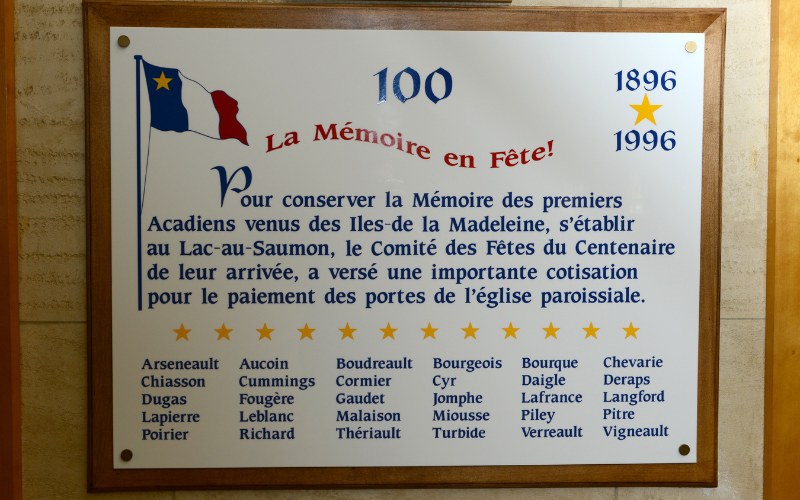
Commemorative plaques – Saint-Edmond Church
42 Bouillon Street, Lac-au-Saumon, Gaspésie.
This plaque is located inside Saint Joseph's Oratory. It was installed in 1996 during the festivities surrounding the 100th anniversary of the arrival of the first Acadians in Lac-au-Saumon. A larger plaque was also located inside the church until 2017, when it was converted into a multifunctional center following its purchase by the municipality. These plaques bear the names of several families of Acadian origin.
A celebration of memory!
To preserve the memory of the first Acadians who came from the Magdalen Islands and settled in Lac-au-Saumon, the Centennial Celebration Committee made a significant contribution toward the cost of the parish church doors. *
* For the sake of accuracy, the texts of the commemorative plaques appearing in italics in this guide have been reproduced in their entirety, including any errors they may contain.
Text written or compiled by the Acadian Museum of Quebec
© Commemorative plaques – Saint-Edmond Church – Geneviève Gagné
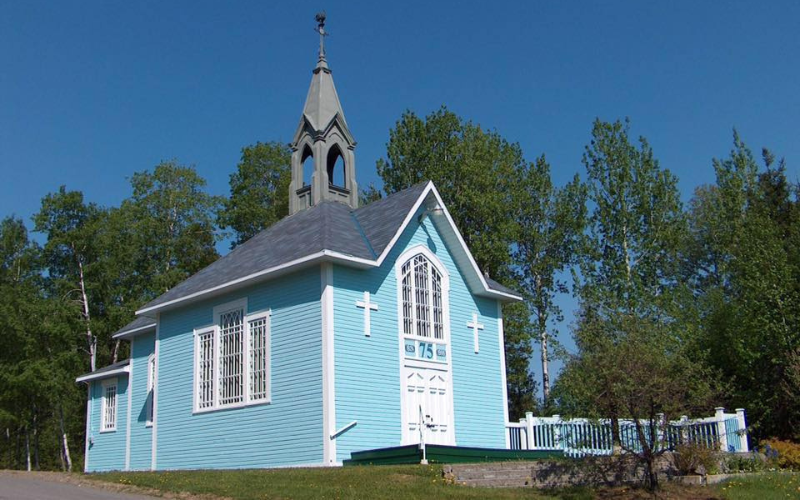
St. Joseph's Oratory
49, rue de l’Oratoire, Lac-au-Saumon, Gaspésie.
Saint Joseph's Oratory represents the realization of a dream held by Father Alexandre Bouillon, founding pastor of the parish of Saint-Edmond-de-Lac-au-Saumon. He was driven by a fervent devotion to Saint Joseph, whom he entrusted with the task of watching over his parish. In July 1921, the priest had a chapel built on a promontory near the cemetery. He celebrated the first Mass there on October 1, 1924, after the Bishop of Rimouski, Joseph-Romuald Léonard, gave him authorization by decree on July 16 of that same year. Today, Mass is celebrated there every Wednesday morning during the summer. Many cultural activities have taken place there, including theMercredis de l'Oratoire(Wednesdays at the Oratory) from 1998 to 2017, during which various artists from the region performed. On Acadian National Day, an evening was dedicated to Acadian themes. Since 1997, Saint Joseph's Oratory has been designated a heritage building by the Quebec Ministry of Culture and Communications.
Text written or compiled by the Acadian Museum of Quebec
© Saint-Edmond Factory in Lac-au-Saumon
Cradle of Acadian colonization
Place of interest
The cradle of Acadian colonization, which has heritage value, is part of the municipality's urban plan and architectural integration plan. New construction in these two rows must blend harmoniously into the landscape of the cradle of colonization. Fourteen panels highlight the Acadian presence in the Acadians' row (3rd Row) and four in the pioneers' row (4th Row). These were installed in 1996 on the 100th anniversary of the arrival of the first Acadians.
Text written or compiled by the Acadian Museum of Quebec
Saint-Alexis-de-Matapédia
The history of Saint-Alexis-de-Matapédia began in Rustico, Prince Edward Island, in 1860. The Acadians on the island needed new land to clear so that young people who were ready to start families could settle down. The priest of Rustico, Georges-Antoine Belcourt, took the initiative to find a place where his flock could flourish and live their dream of freedom. The plateaus of Matapédiac Township overlooking the Matapédia and Restigouche rivers in Quebec, at the far end of Chaleur Bay, were chosen as the land of choice for these valiant pioneers and their families.
In the summer of 1860, an exploratory mission confirmed that the territory was an ideal place to settle. Rich, fertile hardwood lands suitable for agriculture offered hope for a better life. In the fall of that same year, four families and one single person settled there, marking the beginning of Acadian immigration, which ended around 1864. The parish of St-Alexis was founded in 1870, the first in the Matapédia Valley.
Since then, Acadian descendants have formed the majority of the territory's population. One need only consider the many surnames that bear witness to this fact: Arsenault, Poirier, Martin, Gallant, Doiron, Cyr, Doucet, Richard, Pitre, Leblanc, etc.
There are many traces of this Acadian origin:
- The memorial to the Acadian pioneers.
- One establishment bears the name Rustico, as does the street running through the village.
- The legendary hospitality of the Acadians.
Text written or compiled by Aurélien Gallant
August 15 holiday
Event
Saint-Alexis-de-Matapédia, Gaspé Peninsula.
Since 2009, the Acadians of Saint-Alexis-de-Matapédia and neighboring villages have been sure to show their attachment to their origins. People gather around the monument honoring Acadian pioneers in the small park built for this purpose. For the occasion, participants dress in the colors of the Acadian flag and bring instruments to make noise and loudly mark their presence.
After a few speeches and singing Ave Maris Stella, the group sets off down the village's main street and, accompanied by loud noise, wanders around for a while before ending its march on the steps of the town hall.
Text written or compiled by Aurélien Gallant and the Acadian Museum of Quebec
Memorial to the Acadian Pioneers
Place of interest
Main street, a stone's throw from the church. Saint-Alexis-de-Matapédia, Gaspé Peninsula.
In July 2010, Saint-Alexis-de-Matapédia celebrated its 150th anniversary. To commemorate the arrival of the first settlers, the organizing committee and the municipality erected a monument in memory of the Acadians who came from Rustico, Prince Edward Island, to settle on their new land and clear it. The granite monument is shaped like a truncated pyramid. It rests on a bed of cobblestones forming the outline of the Acadian star, the Stella Maris. Four flagpoles are installed, one of which flies the Acadian flag. A bronze plaque commemorates the names of the pioneers and pays tribute to them. The monument and park were inaugurated on July 25, 2010, in the presence of numerous dignitaries and representatives of the Acadian community of Rustico.
Tribute
To our valiant pioneers, Acadians from Rustico,
Prince Edward Island, in 1860, to settle in Matapédia Township: Maurice Blaquière and Appoline Arseneau and their six children, Fabien Doiron and Ruffine Arseneau and their seven children, Simon Martin and Marguerite Gallant and their four children, Joseph Doiron and Marie Le Brun, Thomas Doiron, single. Their courage and determination served as an example to others who,
in the spring of 1861, came to build with them a dream of freedom and mutual aid. We will always remember you. 1860-2010
Text written or compiled by Aurélien Gallant and the Acadian Museum of Quebec
Source: J.A. Beaulieu, Centennial, St-Alexis-de-Matapédia. Its history 1860-1960 – At the sources of our memory
Pointe-à-la-Croix
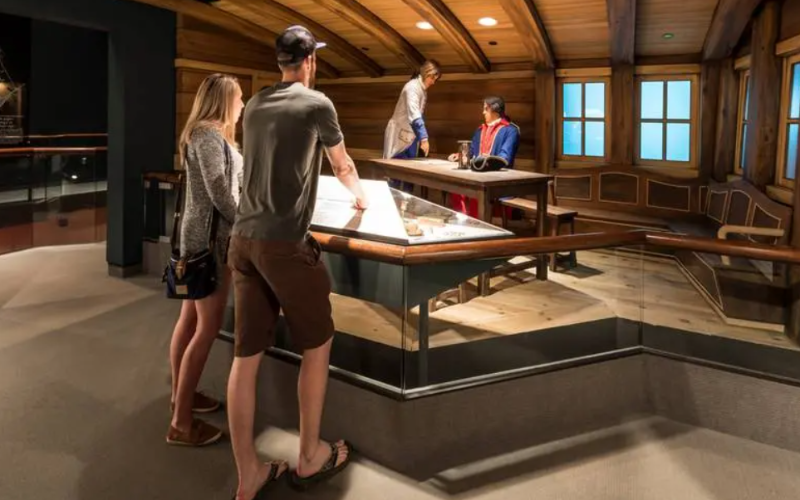
Battle of the Ristigouche National Historic Site of Canada
Institution | 40 Perron Boulevard West, Pointe-à-la-Croix, Gaspésie.
www.pc.gc.ca/ristigouche
Through the display of numerous artifacts recovered from underwater archaeological excavations of the wreck of the French frigate Le Machault, the interpretation center commemorates the final naval battle between France and Great Britain for possession of New France in 1760. This rescue mission is supported by Acadian refugees from Petite-Rochelle and Micmacs from Listuguj.
Text written or compiled by the Acadian Museum of Quebec
© Battle of the Ristigouche National Historic Site – M. Dupuis
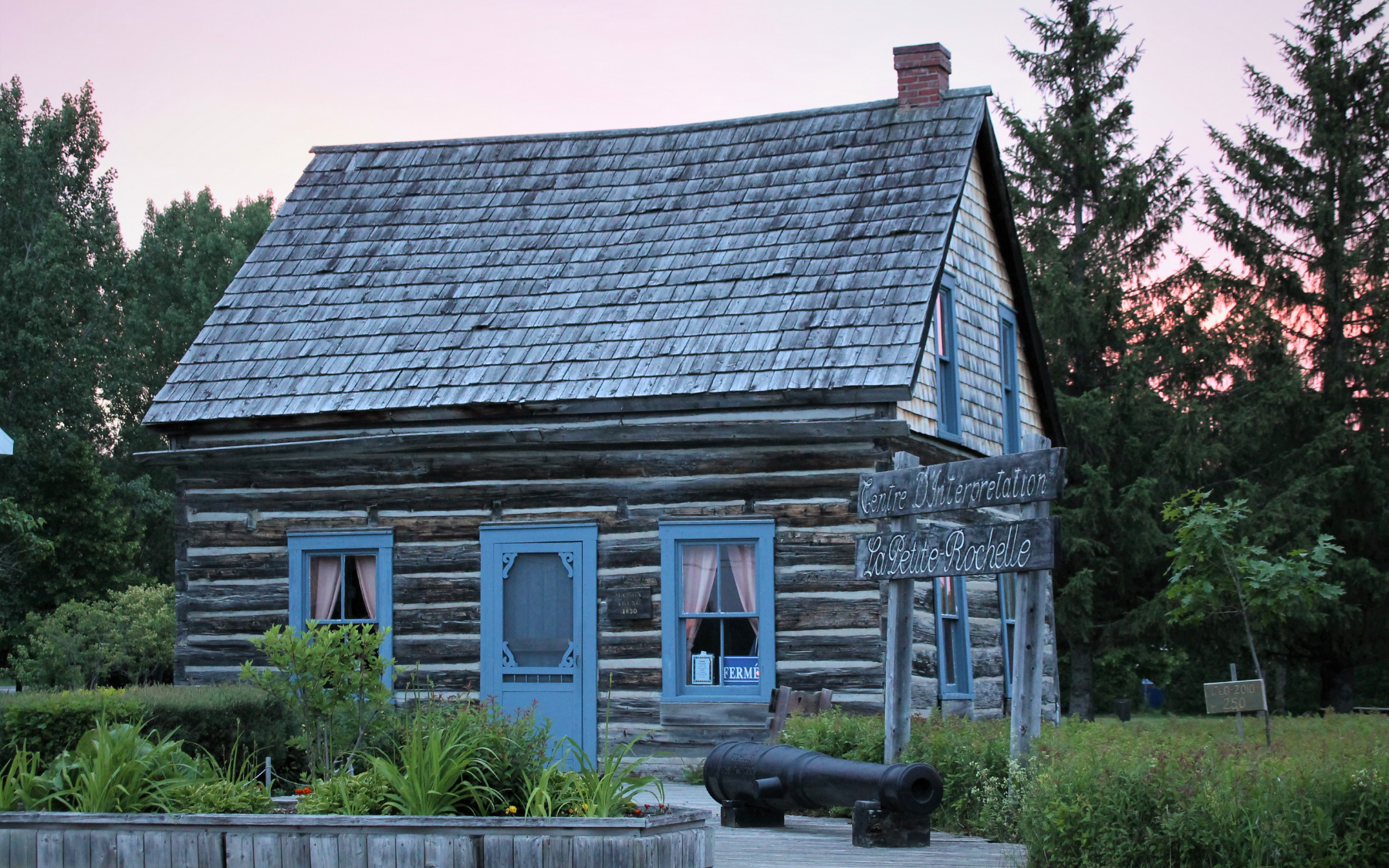
Petite-Rochelle Interpretation Center
Corner of Interprovincial Boulevard and Route 132, Pointe-à-la-Croix, Gaspésie.
Managed by the Machault Historical Society, this interpretation center is located in the historic Young House, built around 1830. Guides present the history of the Acadians and show remnants of their passage on the banks of the Restigouche River.
Text written or compiled by Michel Goudreau and the Acadian Museum of Quebec
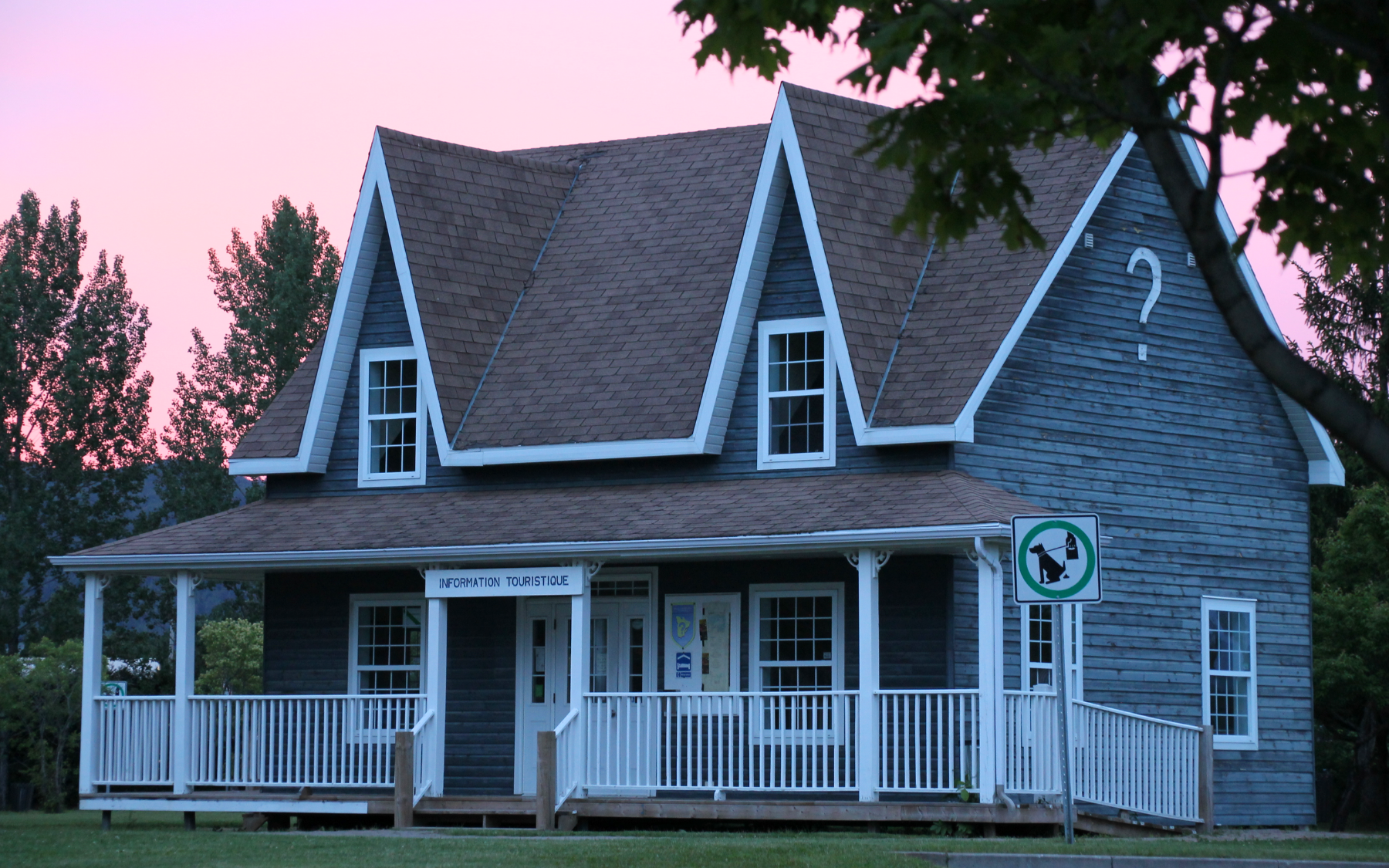
Corsairs-Acadians-of-Petite-Rochelle Rest Stop
Corner of Interprovincial Boulevard and Route 132, Pointe-à-la-Croix, Gaspésie.
The Corsaires-Acadiens-de-la-Petite-Rochelle rest stop was officially designated by the Commission de toponymie du Québec in 2008 on the recommendation of the Société historique Machault.
Among the Acadians, there were several privateers who, starting in 1755, supported the population by bringing them the supplies they needed to survive. Privateers acted completely legally, representing the authority of their nation. They attacked enemy states' warships and merchant vessels, a phenomenon known as "privateering."
After the Battle of Restigouche, Acadian privateers refused to lay down their arms and continued their raiding activities until 1763. Using ships armed with cannons, Joseph Dugas, Joseph LeBlanc, known as "Le Maigre" (The Skinny One), Louis-Aman Bujold, Pierre Gauthier, Olivier Blanchard, Pierre Landry, Jean Cormier, Michel Doucet, Pierre Gaudet, and many others harassed the British and made navigation difficult for them.
Text written or compiled by the Acadian Museum of Quebec
Carleton-sur-Mer
It was during the second half of the 18th century that a permanent settlement was established in Tracadie. In fact, the settlement of our community dates back to the Acadian Deportation of 1755.
Around 1760, most Acadians who settled on the north side of Chaleur Bay chose Bonaventure as their place of exile. A few years later, in 1766, Tracadie witnessed the arrival of several Acadian families, mainly from Bonaventure, Île Saint-Jean (PEI), Beaubassin, and Nepisiguit (NB), led by Charles Dugas. The 1777 census lists the following family names: Alain, Allard, Arsenault, Barriault, Bernard, Berthelot, Boudreau, Bourg, Bujold, Comeau, Dugas, Landry, LeBlanc, Poirier, and many others. From 1766 to 1780, the population of Tracadie consisted mainly of families of Acadian origin.
It was during this period, around 1790, that Tracadièche became Carleton, in reference to Guy Carleton, a military officer and governor of Quebec. Today, Acadian-descended Gaspesians from Baie-des-Chaleurs make up nearly 70% of the population. Their contribution should not be overlooked, as their lifestyle, mentality, character, and language have helped shape and continue to shape the character of this part of the Gaspé Peninsula.
Text written or compiled by Pascal Alain, historian
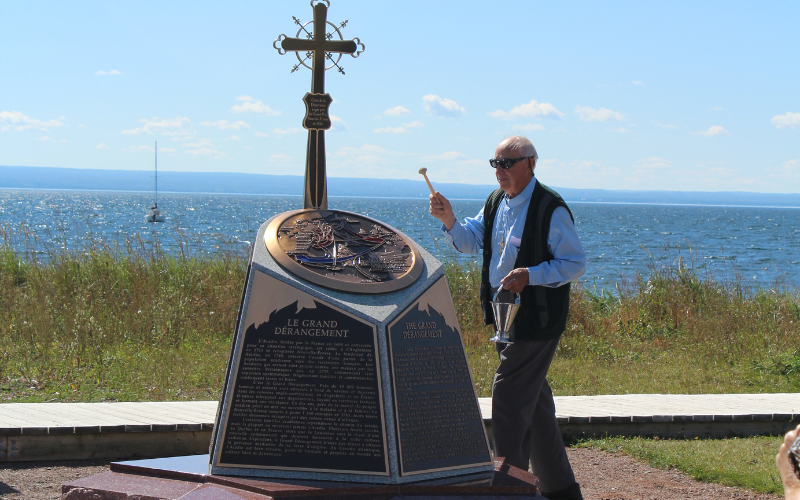
Monument to the Acadian Odyssey
Place of interest
On September 16, 2018, the Société nationale de l’Acadie and the town of Carleton-sur-mer inaugurated the Acadian Odyssey monument. A legacy of the town’s 250th anniversary celebrations, this monument is part of the development of Horizons Park.
Memorial to the Great Upheaval
The Acadian Odyssey commemorates the multiple displacements of the Acadian people. "Tracadièche was founded by Acadian refugees in 1767," explains Paul Lemieux, president of the Tracadièche Ecomuseum, "by people who escaped the deportation of 1755. That's why it's so important to have a monument like this here, especially on the very spot where the first Acadian families settled. In this way, their history, culture, resistance, and resilience will be remembered."
On the monument, a general text explains the history of the Acadians, the Deportation, and their settlement in new places of refuge. There is also a more local text by historians Paul Lemieux and Pascal Alain, who recount the context in which the Acadians settled in Tracadièche, now Carleton-sur-mer.
Throughout the 250th anniversary of the founding of Carleton-sur-mer, known as Tracadièche, the history, heritage, and culture of the local people have been celebrated. For Mayor Mathieu Lapointe, with the wigwam, the connected tree, and the Acadian Odyssey erected in Horizons Park, the city is highlighting the contribution of the three founding peoples—the Mi'kmaq, French Canadians, and Acadians—to the local dynamic. This monument," said Mr. Lapointe, "is now part of the City of Carleton-sur-mer's legacy for its 250th anniversary, a legacy for current and future generations."
Text written or compiled by Mathieu Lapointe, mayor.
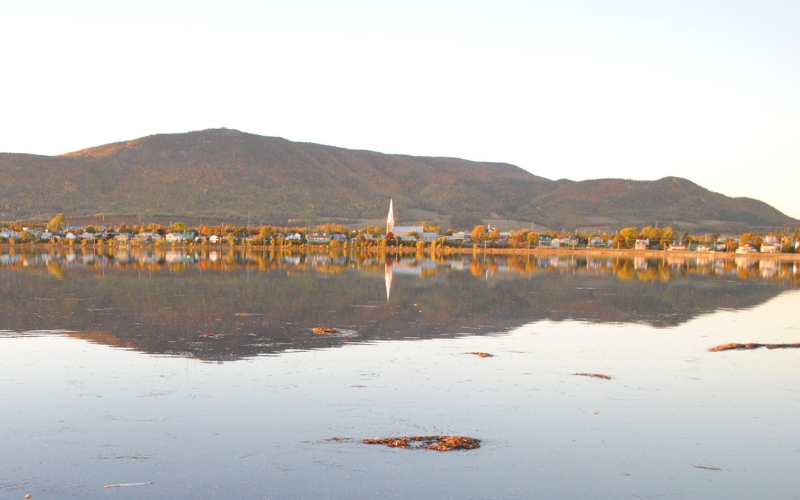
Church of Saint Joseph
Place of interest | 764 Perron Boulevard, Carleton-sur-Mer, Gaspésie.
The oldest Catholic church still standing in the Gaspé Peninsula is located in the Acadian community of Carleton-sur-Mer. The first chapel was built in 1772 to serve the community. A second place of worship, this time a real church, replaced it in 1798. Around 1847, due to its dilapidated condition and the ever-growing population, a more spacious place of worship was needed. It was in this context that the current church was built between 1850 and 1854 by carpenter Pierre Côte, with the help of several local citizens. At that time, it was made entirely of wood and covered with shingles. In 1917, major exterior work was undertaken: the bell tower was removed to make way for an extension of the façade, forming a tower topped by a new bell tower. The church was then covered with bricks.
This place of worship, influenced by Corinthian style due to its many ornaments, stands out for its heritage value and numerous major works of art. The paintings on the vaulted ceiling and in the choir loft were designed by artist Charles Huot, who also decorated the Quebec Parliament Building. Others were created by Antoine Plamondon, an important Quebec painter.
The Saint-Joseph Church was designated a heritage building in 2006 by the Quebec Ministry of Culture and Communications.
Text written or compiled by the Acadian Museum of Quebec
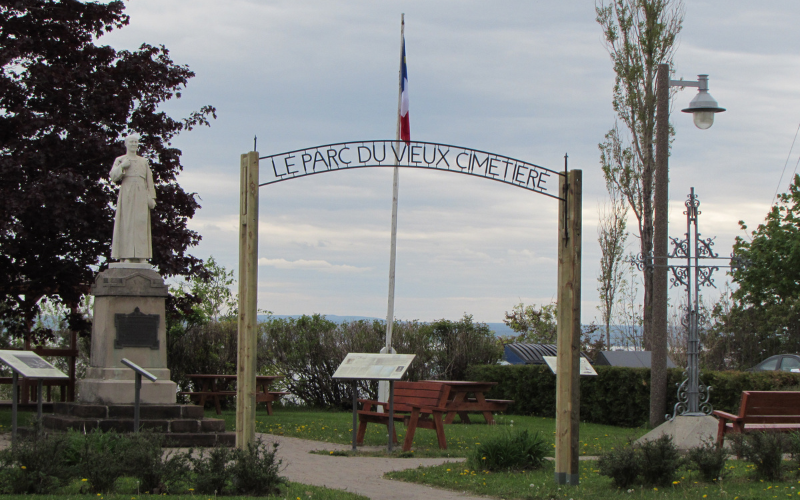
Old Cemetery Park
Located across from the church in Carleton, Carleton-sur-Mer, Gaspésie.
The Old Cemetery Park was Carleton-sur-Mer's first cemetery, which closed in 1962. The founding refugees of this village are buried here. In 1922, to mark the 125th anniversary of the death of Abbé Joseph-Mathurin Bourg, a statue in his honor was erected in the center of the park.
Since 2010, interpretive panels have told the story of the site and the Acadian presence. The bell from the old church is also on display.
Text written or compiled by Pascal Alain, historian, and the Acadian Museum of Quebec
Source: Paul Lemieux, President of the Tracadièche Ecomuseum
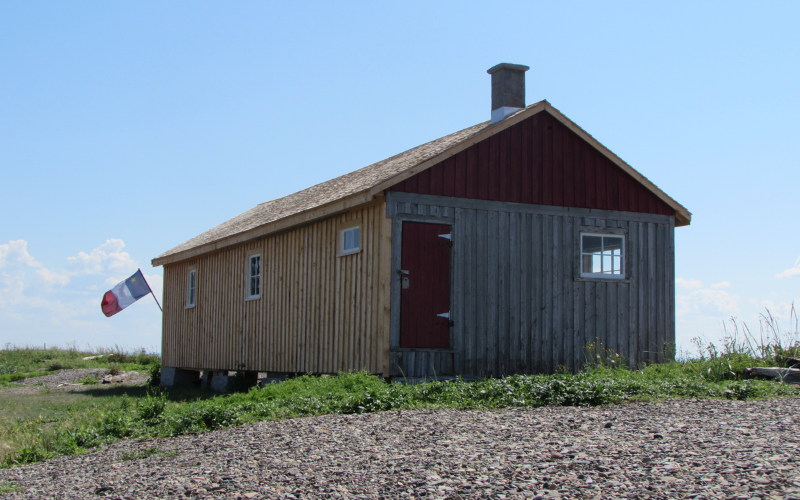
Tracadièche Ecomuseum
Institution | 774 Perron Boulevard, Carleton-sur-Mer, Gaspésie.
ecomuseetracadieche.com
Established in 1997, the Tracadièche Ecomuseum's mission is to preserve and promote the human, historical, cultural, and natural heritage that characterizes Carleton-sur-Mer.
Over the years, a host of projects have channeled the energy of these heritage enthusiasts. These include, among others, the summer lecture series, various productions such as the DVD on the history of Carleton, the Built Heritage Guide, the brochure on Saint Joseph's Church, and exhibitions of archival photos, not to mention an event to mark the Acadian National Day on August 15, the creation of the Old Cemetery Park, and the Leblanc and Landry family celebrations in 2013. Another important achievement of the Ecomuseum is the acquisition of the Cabane à Eudore. This authentic fisherman's cabin is available for certain interpretive activities on the lifestyle of fishermen of yesteryear.
Text written or compiled by Paul Lemieux and the Acadian Museum of Quebec
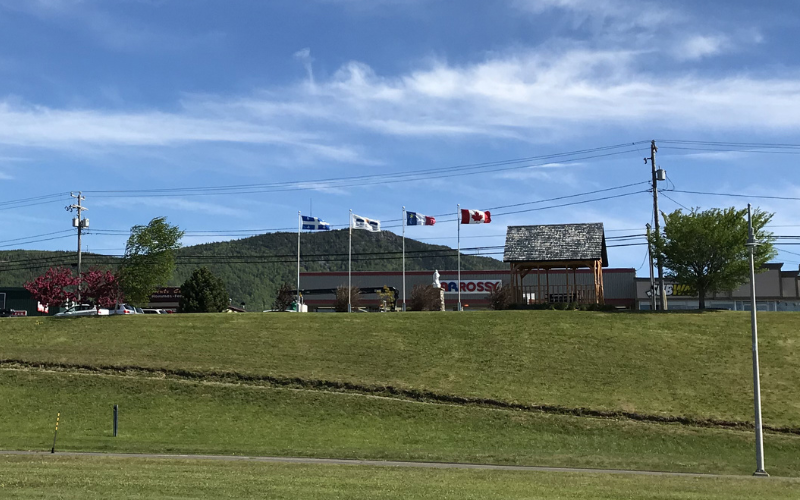
Acadian Park
East of City Hall 629 Perron Boulevard, Carleton-sur-Mer, Gaspésie.
This memorial site highlights the Acadian roots of the town of Carleton-sur-Mer. The park features a monument erected in 1941 by the Société de l’Assomption in memory of the founding families. It commemorates the key events of the deportation and lists the names of the pioneer families.
In 1998, the Tracadièche Ecomuseum added an interpretive panel to dispel certain myths, such as the one about the Acadian founders of the site being only a few years old at the time of the 1755 deportation. The panel refers to the oral tradition that the founding Acadian families spent the winter of 1755 on a small island (called Île aux Acadiens) located in the local barachois.
Text written or compiled by Pascal Alain, historian, and the Acadian Museum of Quebec
Source
Pascal Alain, historian. Histoire de Carleton, Septentrion, 1997
Paul Lemieux, president of the Tracadièche Ecomuseum
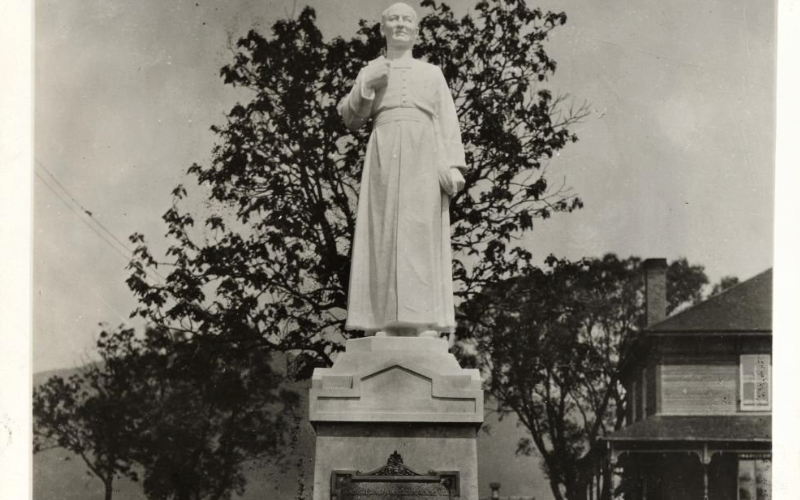
Abbot Joseph-Mathurin Bourg (1744–1797)
Personality
Father Mathurin Bourg, the first permanent priest to reside in Tracadièche, is a key figure in the history of the parish.
Deported to Virginia at the age of 11, the young Bourg traveled to England and then France, where he studied theology. Ordained a priest in Quebec City in 1772, he became the first resident missionary in Tracadie. He ministered to the Acadians of Baie-des-Chaleurs, with a territory extending to Nova Scotia, which earned him the title of Vicar General of Acadia in 1774.
In 1778, at the request of the Nova Scotia authorities, Abbé Bourg intervened with the Maliseet and Micmac peoples of the Saint John River, who were threatening to join the American troops, a mediating role he assumed throughout the American War of Independence.
For two decades, Father Bourg ensured the Catholic Church's presence in Tracadièche and throughout this vast territory, ministering to both Acadians and First Nations peoples. In 1795, he requested to be recalled by his bishop, who appointed him parish priest of Saint-Laurent, near Montreal, where he remained until his death.
Text written or compiled by the Acadian Museum of Quebec
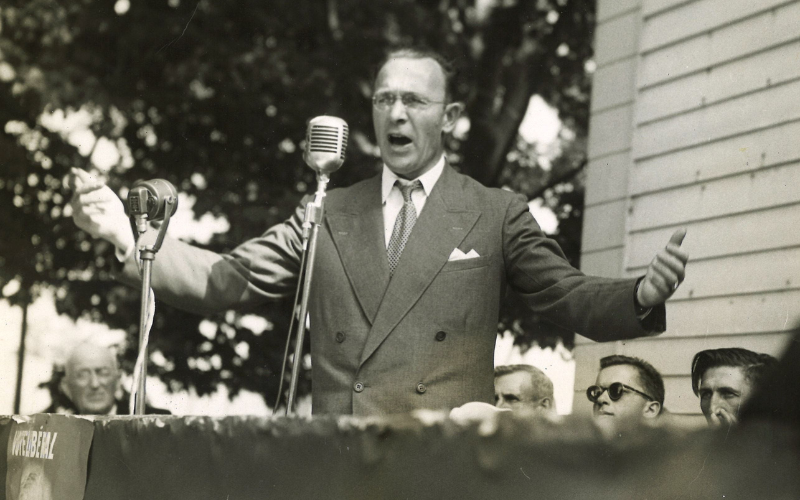
Bona Arsenault (1903–1993)
Personality
Bona Arsenault is one of the illustrious figures who have left their mark on the history of the municipality. Author of numerous works on the history and genealogy of the Acadians, his work has earned him many honors, including the Order of Canada and an honorary doctorate from the University of Moncton. His life's work, published in 1978, is a six-volume, 2,800-page work entitled Histoire et généalogie des Acadiens(History and Genealogy of the Acadians). His publications include L’Acadie des ancêtres, Bonaventure 1760-1960, Histoire et généalogie des Acadiens in two volumes, and Louisbourg 1713-1758.
A politician, he represented Bonaventure County in the federal Parliament from 1945 to 1957 and Matapédia County in the Quebec National Assembly from 1960 to 1976.
Text written or compiled by the Acadian Museum of Quebec
© Bona Arsenault – Acadian Museum of Quebec
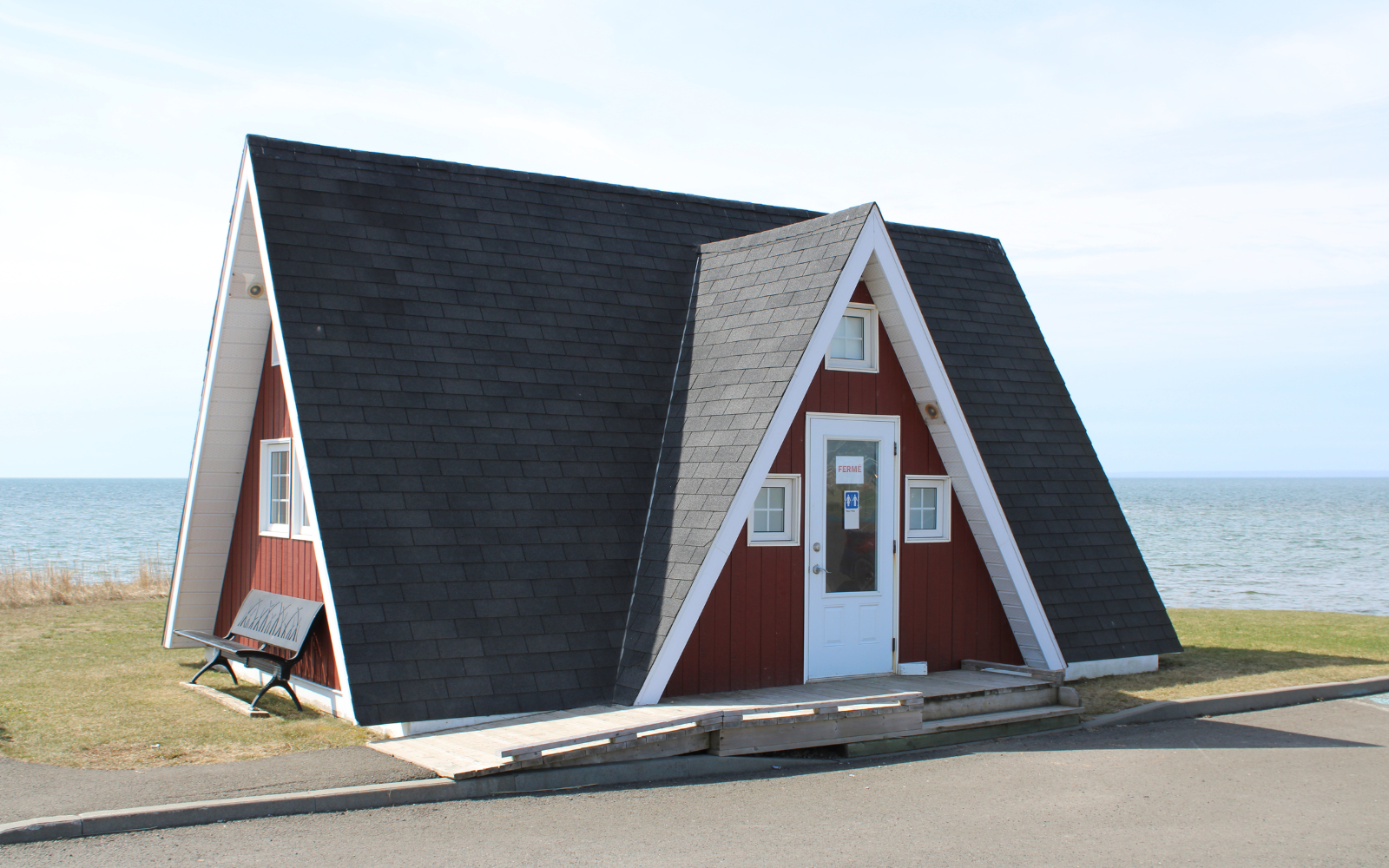
Interpretive panel about Françoise Bujold
Place of interest
Municipal rest stop – 213 Port-Royal Avenue, Bonaventure, Gaspé Peninsula.
Located by the sea, the site features interpretive panels recounting the history of Françoise Bujold, the song club, and the art center known as La Piouke. Destroyed by fire in 1994, the building was rebuilt in 2012 in its original form. Its distinctive architecture has made it a landmark in Bonaventure, as several houses and cottages featuring the same steeply sloping style are inevitably called "Piouke."
Text written or compiled by the Acadian Museum of Quebec
© Interpretive panel on Françoise Bujold – Acadian Museum of Quebec
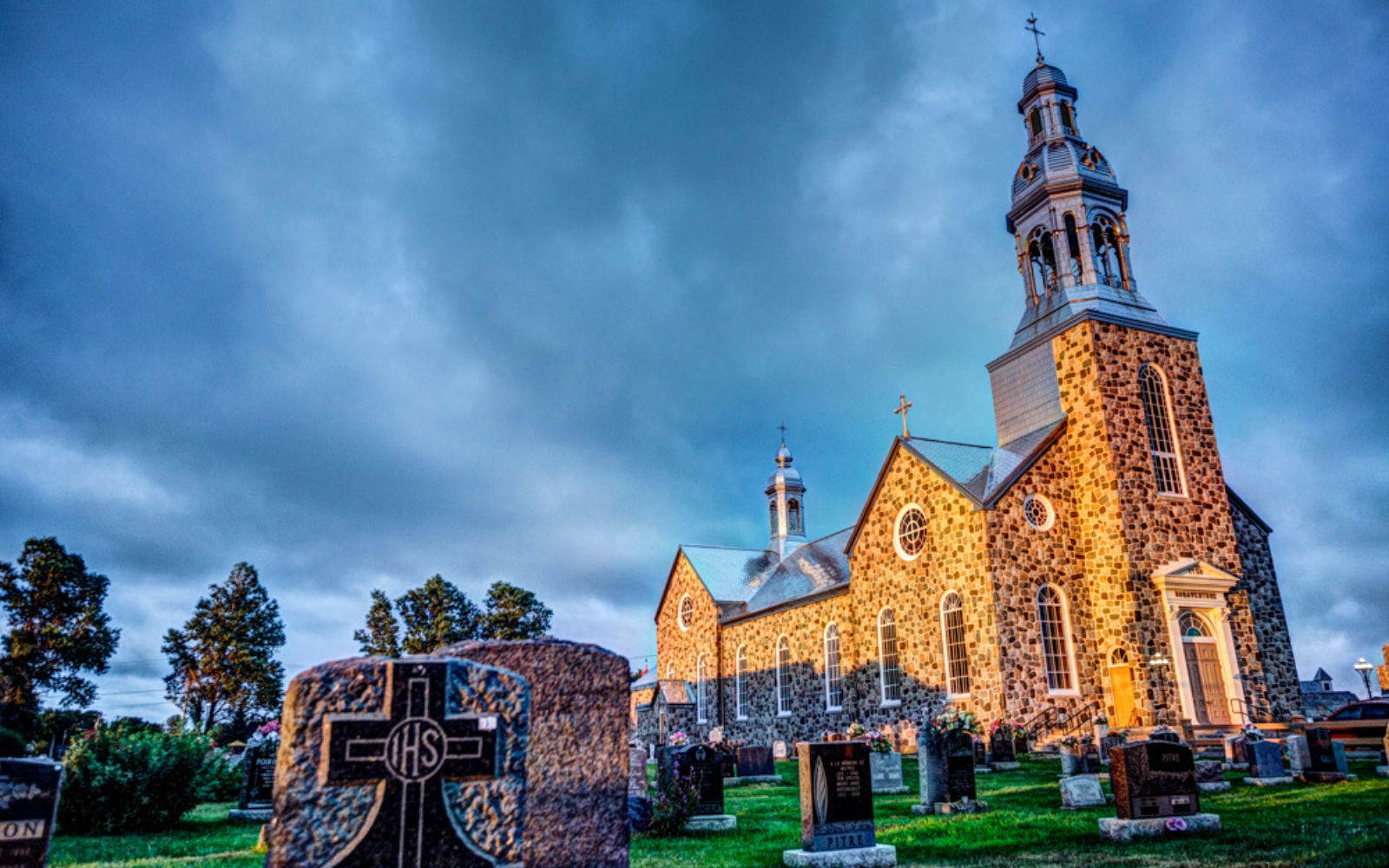
Church of Saint Bonaventure
Place of interest
99 Grand-Pré Avenue, Bonaventure, QC G0C 1E0, Bonaventure, Gaspésie.
The Bonaventure church is the fourth place of worship in the town. The first chapel, built in 1764 on the Beaubassin Point, burned down in 1791. Another chapel was immediately built, then demolished in 1797, while the first church took shape on the current site. A new church was built starting in 1855, on the initiative of Father Jean-Louis Alain, Bonaventure's first parish priest. He had big plans and wanted to establish a bishopric for the Gaspé Peninsula. The size of this new church gave it the appearance of a cathedral. It was inaugurated in 1860, at the same time that the parish was canonically established.
Between 1888 and 1896, the bell tower, with its three bells, was added, as well as a transept topped by a small bell tower at its intersection. In addition, the nave was lengthened. Georges S. Dorval painted the pictures that adorn the ceiling. Over the years, modifications were made and various renovations were carried out. In 1930, the church was equipped with a 31-stop Casavant organ. In 2009, the roof was completely rebuilt. The use of stainless steel gives it a remarkable luster.
The Église-de-Saint-Bonaventure heritage site was established in 2003. The church was designated a heritage building in 2012 by the Quebec Ministry of Culture and Communications.
Text written or compiled by Paul Lemieux and the Acadian Museum of Quebec
© Church of Saint Bonaventure – Dylan Page
Acadian celebrations
Event
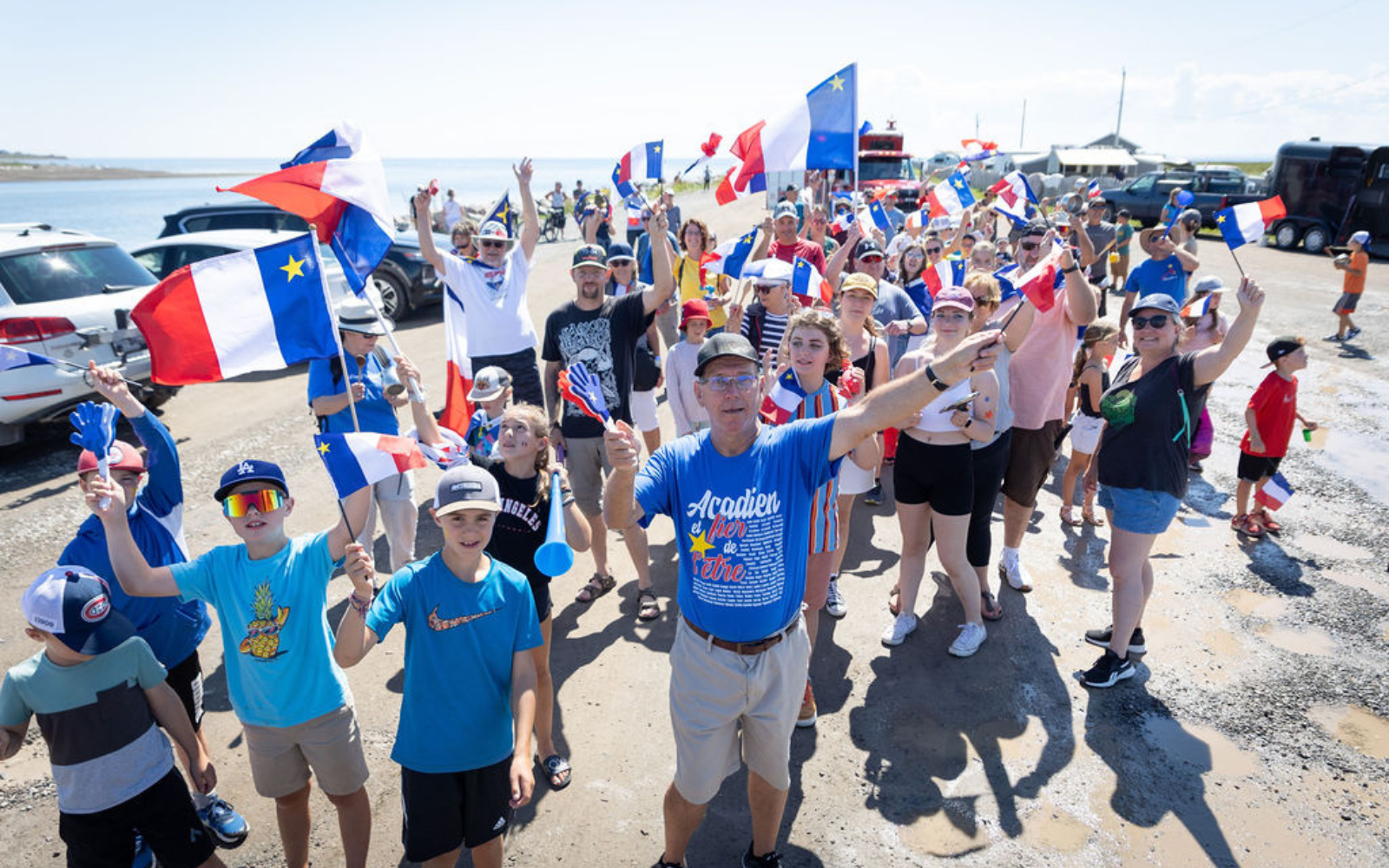
The Acadian community of Bonaventure is proud of its roots and heritage. It was in this spirit that a committee was formed in 2013 to organize the first edition of the Acadian Festival in Bonaventure, with the goal of making it an annual event during the week of August 15.
This event highlights the Acadian heritage of the community. The program is designed for a multigenerational audience. Activities are aimed at local residents, people from surrounding communities, and visitors who join in the festivities.
For the occasion, residents and business owners are invited to decorate their homes and businesses with an Acadian theme. Theater performances, a parade with flags and other effigies, a mass, historical activities centered around the Acadian Museum of Quebec, and shows round out the program.
Text written or compiled by the Acadian Museum of Quebec
© Acadian Festivals 2022 – Acadian Museum of Quebec
Françoise Bujold (1933–1981)
Personality
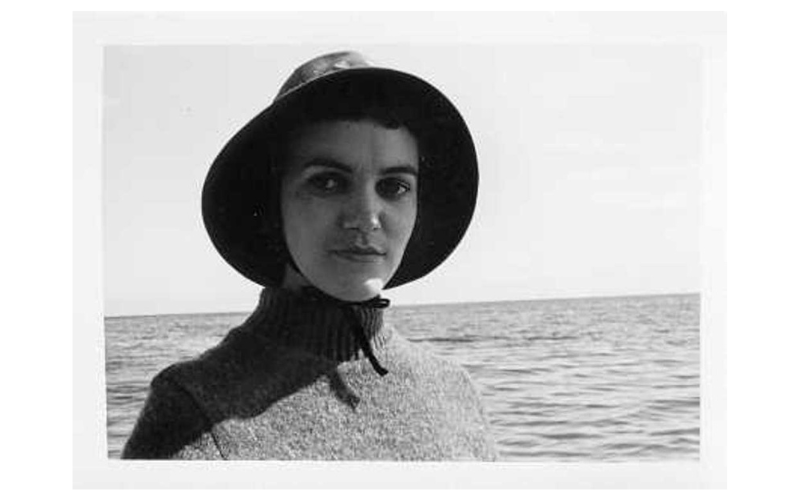
Françoise Bujold stands out for her original and rich approach to several artistic fields: graphic arts, art publishing, poetry, dramaturgy, radio, cinema, teaching, and songwriting. At a time when few women ventured into the arts and literature in Quebec, she was the first female student admitted to the Institut des arts graphiques de Montréal. The Gaspé Peninsula is a recurring theme in all her work, both visual and written. Her pictorial work is featured in numerous private and public collections.
She published five collections of poetry and founded her own publishing house. Between 1959 and 1961, Radio-Canada broadcast eight of her radio dramas. In 1959, she taught engraving to children at the Percé Art Center and to Micmac children at the Gesgapegiag reserve in Maria. This work led to four artists' books. In collaboration with Jacques Godbout, she made a film about these children, produced by the National Film Board.
In July 1961, Françoise Bujold and her husband opened La Piouke, a music venue that doubled as an art center. Quebecois music was still in its infancy at the time, and there were few places to perform on stage. The music venue's adventure came to an end in the fall of 1962.
His memory lives on in Bonaventure thanks to the municipal library that bears his name and features an exhibition on his work.
Text written or compiled by the Acadian Museum of Quebec
© Françoise Bujold – Acadian Museum of Quebec
Musée acadien du Québec
Institution
95 Port-Royal Avenue, G0C 1E0, Bonaventure, Gaspésie.
www.museeacadien.com
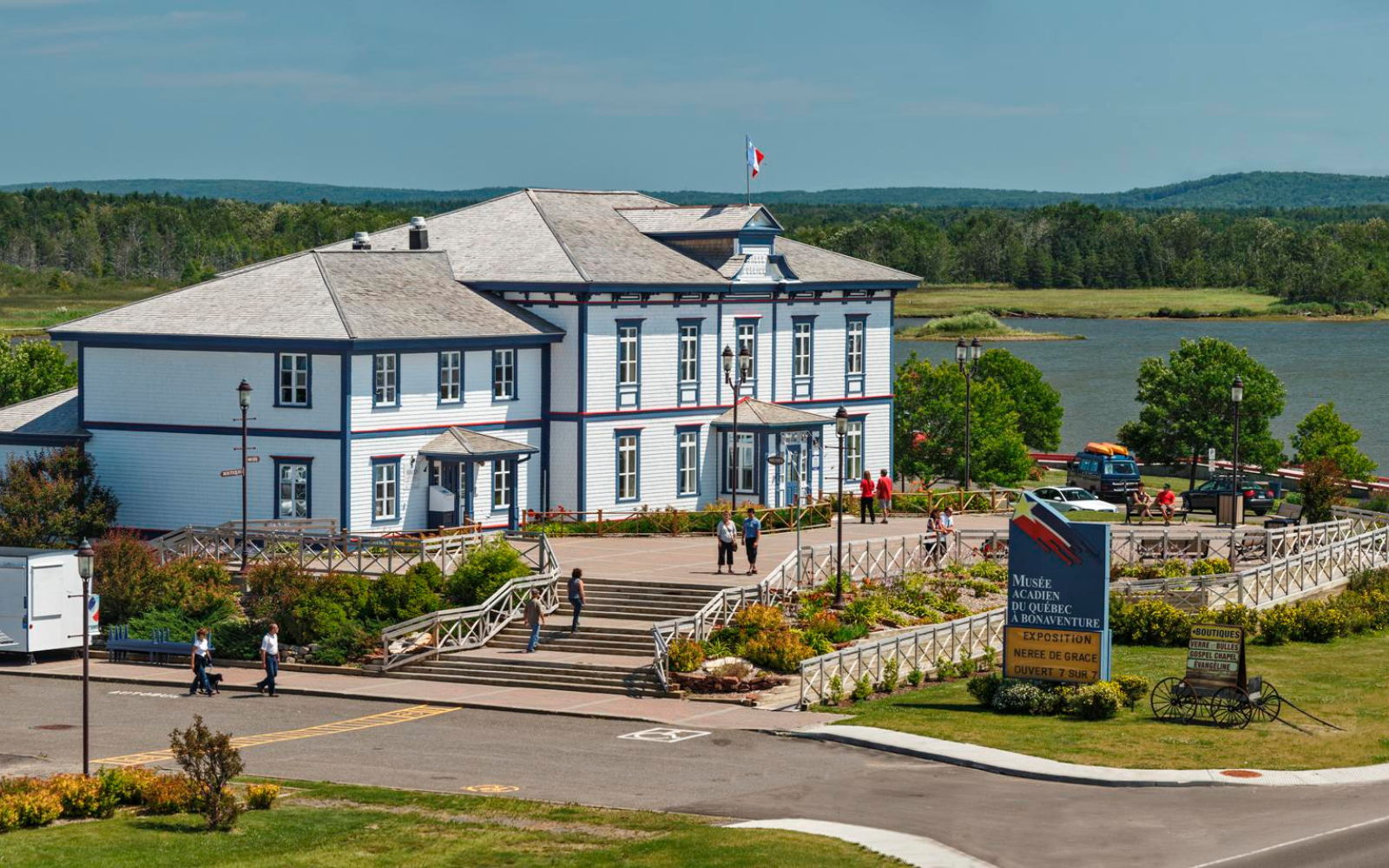
It was thanks to the tenacity and passionate work of Juliette Gauthier-Barette that the Acadian Historical Museum was inaugurated in 1960, on the occasion of Bonaventure's bicentennial. Initially housed in the Robin buildings, it moved to the public hall in 1974. This building, dating from 1914, originally housed a boys' academy and the credit union. In 1977, it was moved from Grand-Pré Avenue to its current location. In 1987, the museum acquired the collection of the Carleton Museum, which had been closed since 1979 and was also founded by a woman, Évelyne Allard-Landry. Finally, in 1990, following its restoration and recognition by the Ministry of Culture and Communications, the Musée acadien du Québec developed its current vocation. The mission of this museum institution is to promote awareness of the Acadian destiny in Quebec by safeguarding, preserving, and disseminating this rich heritage.
The exhibitions, Une Acadie québécoise (A Quebec Acadian) and Secrets d’Acadiens – Les coulisses de la rue Grand-Pré (Secrets of the Acadians – Behind the Scenes of Grand-Pré Street) provide a clear understanding of the history of the Acadians and their contribution to Quebec society. At the same time, the museum is rooted in the cultural reality of the region by organizing temporary exhibitions, conferences, and film screenings.
Text written or compiled by Louise Cyr and the Acadian Museum of Quebec
© Acadian Museum of Quebec – Dylan Page
Family tree park
Place of interest
Grand-Pré Avenue, between the church and the Bonne Aventure Center, Bonaventure, Gaspé Peninsula.
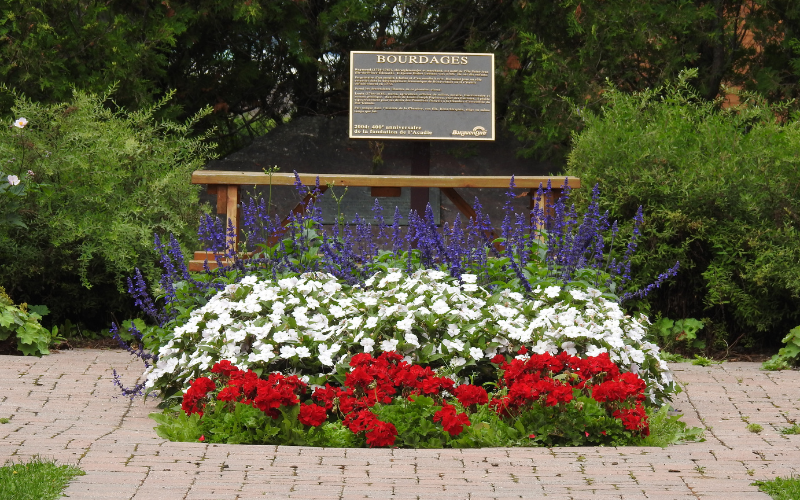
The ancestral family park was inaugurated on August 15, 2004, during Acadian Day celebrations. In addition to landscaping, this recreational area contains six commemorative plaques and two monuments dedicated to the Arsenault, Bourdages, Babin, Bujold, Forest, Henry, and Poirier families, each of which features a brief history of the arrival of their ancestors. Other plaques will be added over the years to highlight the important contributions of other founding families of Bonaventure.
Text written or compiled by Johanne Poulin and the Acadian Museum of Quebec.
© Family Roots Park – City of Bonaventure
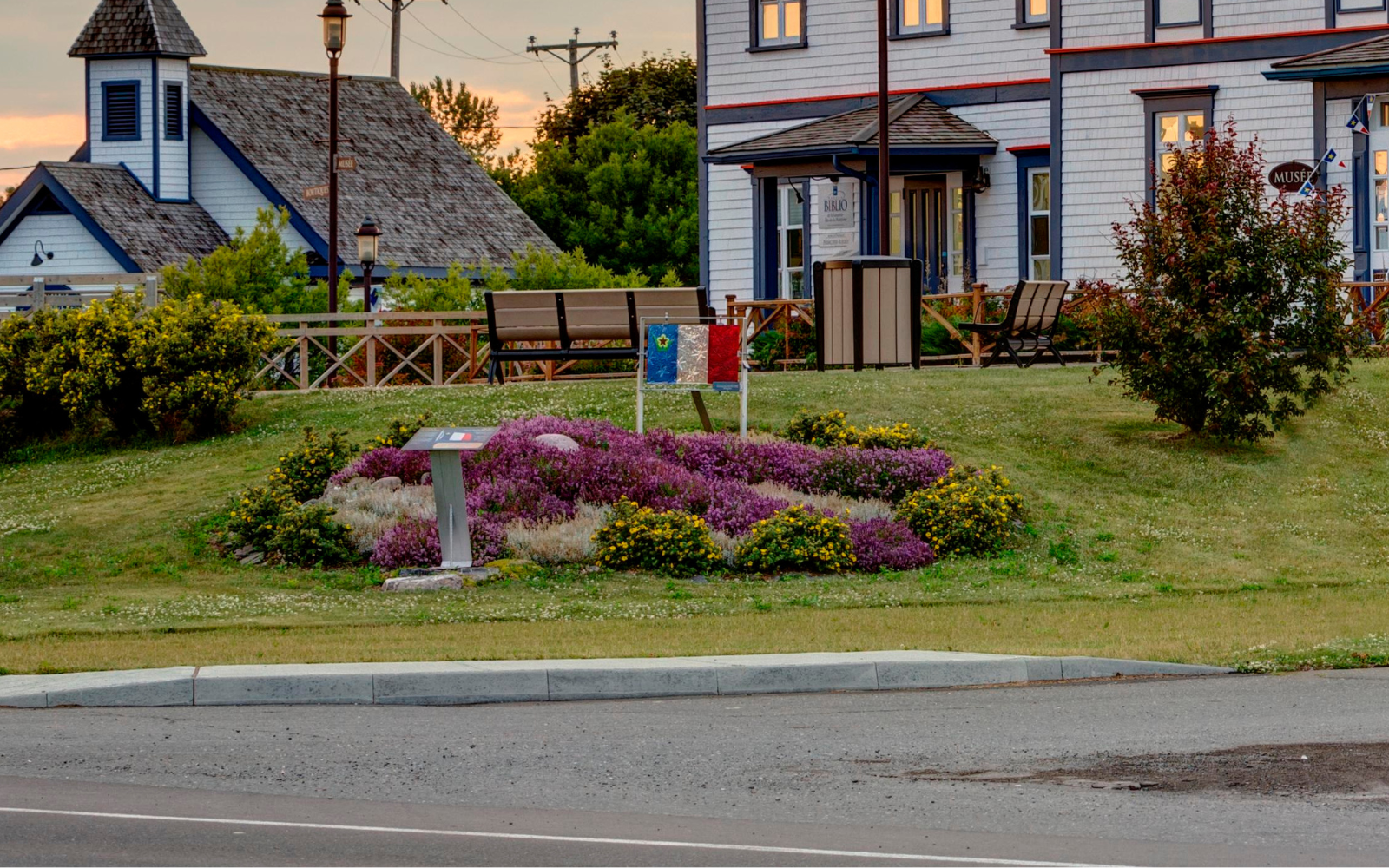
Flower bed
Place of interest
Website of the Acadian Museum of Quebec, Bonaventure, Gaspé Peninsula.
The flower bed, designed by Ghislain Babin, was inaugurated in 2010 on Bonaventure's 250th anniversary. It highlights the Acadian origins of the community. In the center of the flower bed, a large stone, like an island, represents the territory of Bonaventure, which is invaded by the mythical starfish to express the influence of the pioneers. All around, shrubs symbolize the generations descended from the Acadian founders. These cinquefoils display thousands of yellow five-petaled flowers, like the star on the Acadian flag, each representing a citizen of Bonaventure.
An Acadian flag, created by Julie Frappier using fused glass, hangs above the floral creation. The star on the flag has been transformed into a flower that opens its golden petals to welcome citizens from elsewhere. The work symbolizes the blossoming of a modern, diverse community that is confident in its future.
Text written or compiled by Diane Robert and the Acadian Museum of Quebec
© Floral parterre – Acadian Museum of Quebec
Chandler
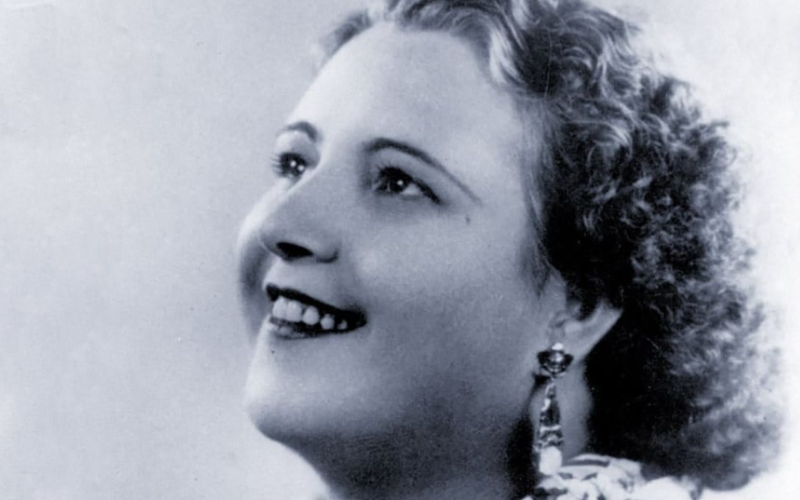
Mary Travers, known as "La Bolduc" (1894–1941)
Personality
A self-taught musician, Mary Travers, known as "La Bolduc," had a profound impact on Quebec folklore. Born in Newport, Mary came from a modest family. Her father, Lawrence Travers, was an English speaker of Irish descent, and her mother, Adéline Cyr, was of Acadian origin. Mary Travers took the name "La Bolduc" from her husband, Édouard Bolduc. With the onset of the Great Depression, she began performing in public to supplement the family income. Her professional career began in 1927 with performances at the Monument-National in Montreal. Her songs recounted the daily lives of ordinary people in cities and rural areas in the language of the people. She composed her tunes in the kitchen during her many pregnancies, drawing inspiration from the folklore she knew. Her songs, sometimes optimistic, also took on an ironic tone. To distinguish herself, La Bolduc added choruses sung with nonsensical syllables or words called "turlutes," a form of folk musical expression.
From a simple housewife living in poverty, she became a legend. In addition to producing records, she undertook major tours in Quebec and New England with other artists. Mary Travers had no formal musical training. Yet, during her career, this woman with an extraordinary background recorded 46 albums containing 91 songs. She died in Montreal at the age of 47.
Text written or compiled by the Acadian Museum of Quebec
© Mary Travers, known as La Bolduc – Musée de la Gaspésie
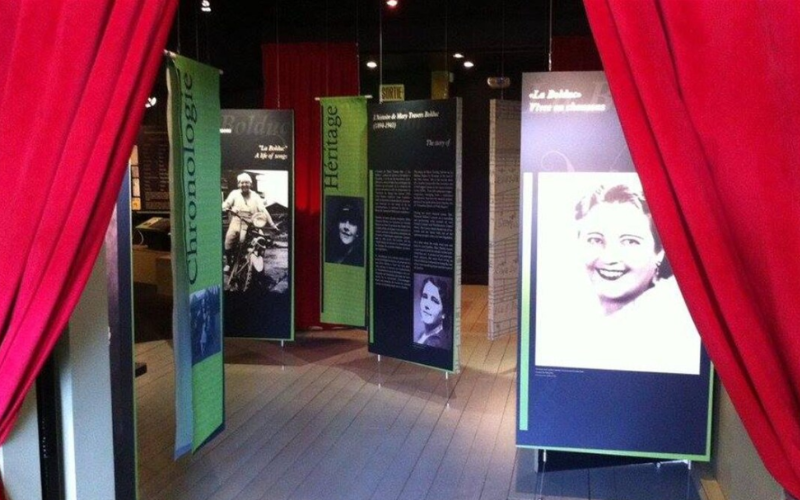
Mary Travers, known as "La Bolduc" website
Institution
342 Route 132, Chandler, Gaspé Peninsula.
The Mary Travers, known as "La Bolduc," site opened in 1994. It recounts the life, work, and career of Quebec and French Canada's first singer-songwriter. A narrative and musical presentation recounts La Bolduc's life and songs, notably with the "Soirées du bon vieux temps" (Good Old Days Evenings) activity, a concept that combines music and theater and includes anecdotes from yesteryear.
Text written or compiled by the Acadian Museum of Quebec
© Mary Travers, known as La Bolduc, exhibition in Newport – Photo from the Mary Travers (La Bolduc) Facebook page
Gaspé
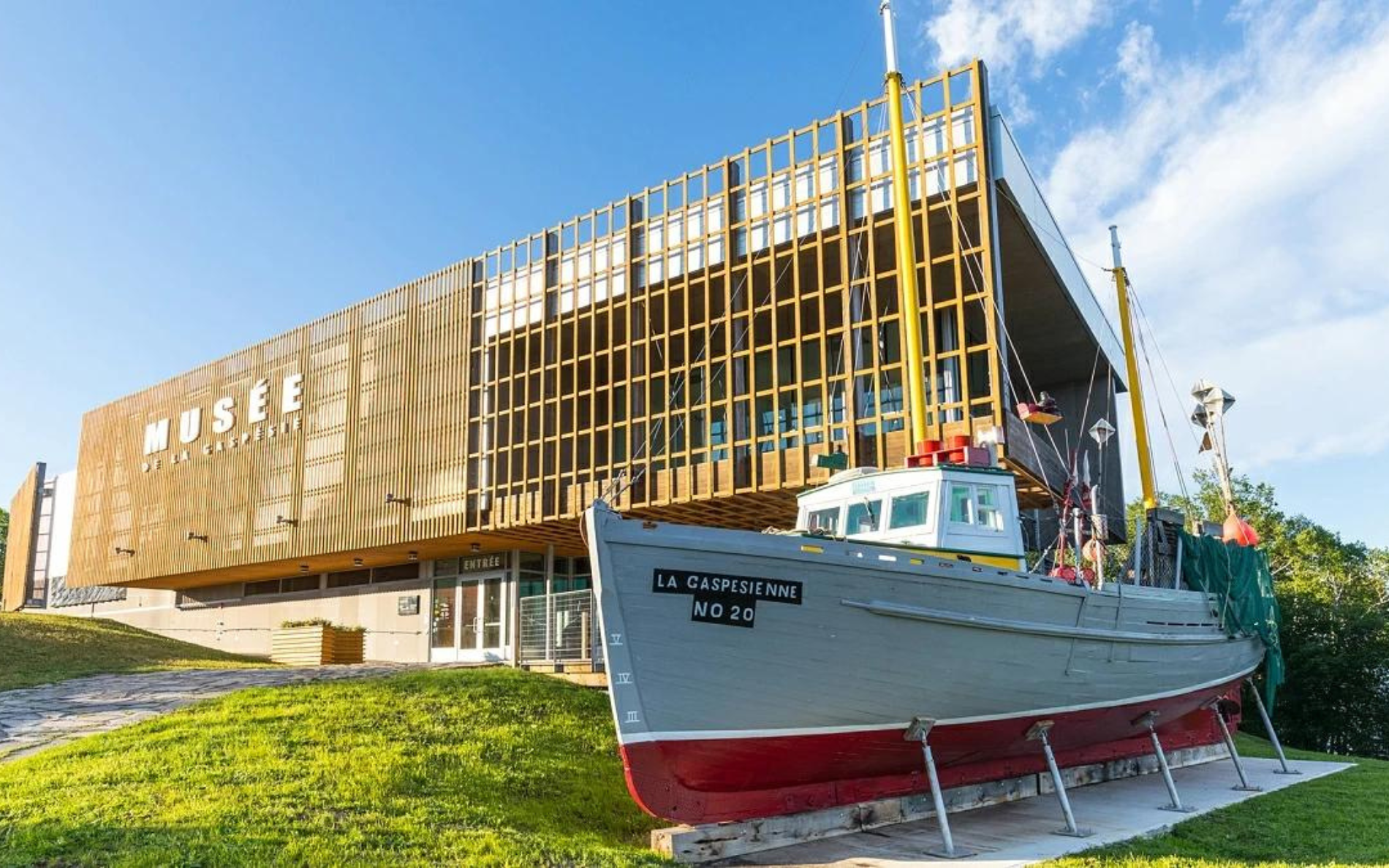
Gaspé Peninsula Museum
Institution | 80 Gaspé Blvd., Gaspé, Gaspésie.
www.museedelagaspesie.ca
The Musée de la Gaspésie is the place to discover or rediscover the history of the peninsula. The exhibition, entitled Gaspésie… Le grand voyage! (Gaspésie… The Great Journey!), as well as other exhibitions, focus on the history, art, heritage, and culture of the Gaspesians, many of whom are of Acadian origin. The museum also offers various activities such as conferences, special events, and educational programs. It houses the Centre d'archives de la Gaspésie (Gaspésie Archives Center). In addition, the museum publishes Magazine Gaspésie, the oldest history magazine in Quebec.
Text written or compiled by Amélia Giroux-Gagné and the Acadian Museum of Quebec.
© Gaspésie Museum
Contact us
95 Port-Royal Avenue, Bonaventure, G0C 1E0
[email protected]
418-534-4000 | Toll-free: 1-833-920-3900
SCHEDULE
mardi au vendredi : 9 h à 12 h et 13 h à 16 h
dimanche : 13 h à 16 h

NEWSLETTER
Sign up to our newsletter now.
ABOUT US
Our purpose
Team
Career
Our partners
INFORMATION
News
Annual reports
Learn about Acadia
General policies
GROUP VISIT
School trip
Tour operator
CORPORATE
Room rental
Call for projects