
This work is protected by copyright and/or related rights. Its use requires the authorization of the rights holder(s).
Download image
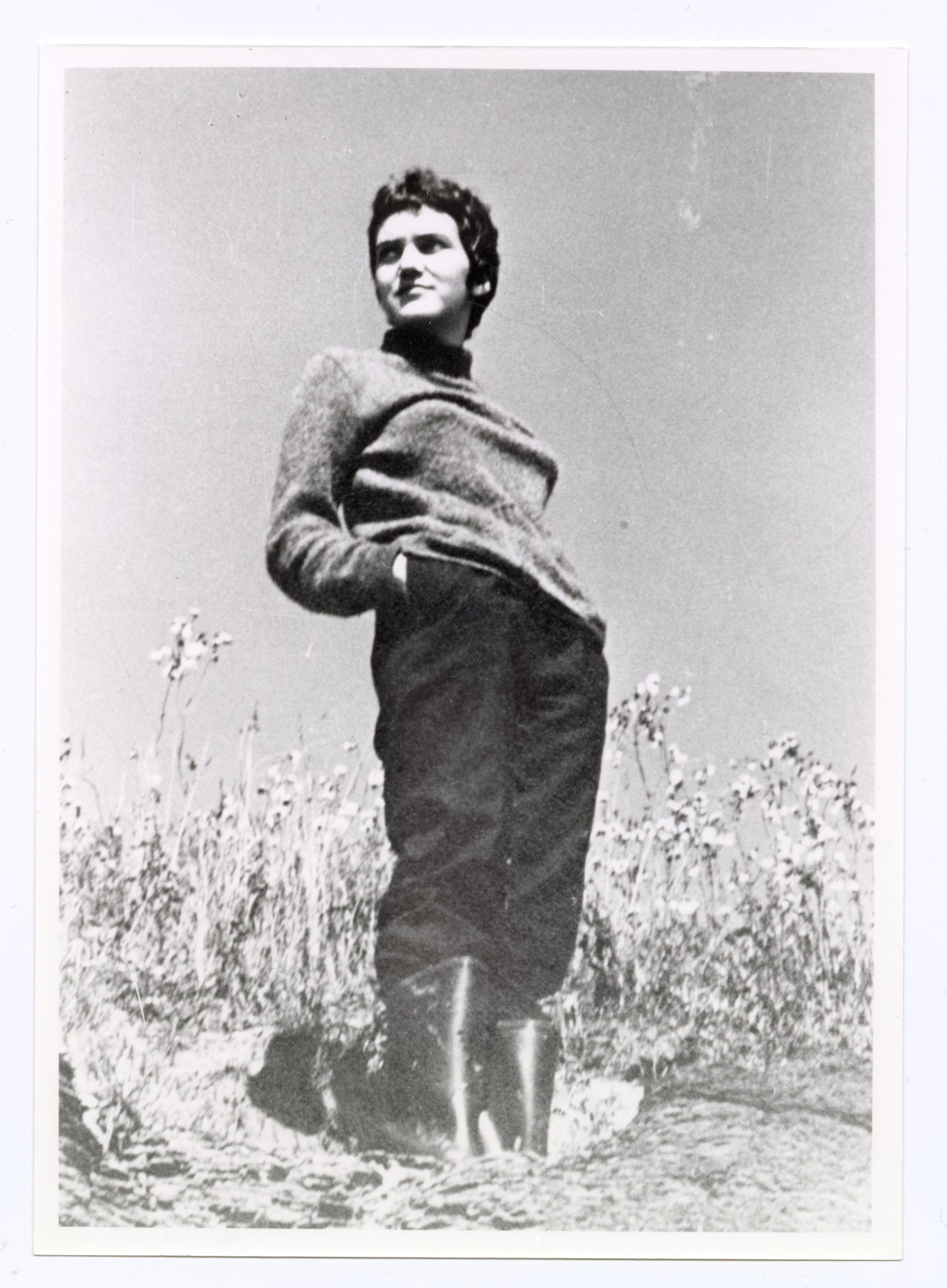
Photograph by Françoise Bujold
Information about the object
Historical period
c. 1950
Dimensions
Height: 17.8 cm. Width: 12.8 cm.
Classification
Fine arts -- Photography
Accession number
P2.1a.11
Division
Iconography -- Means of expression -- Photography
Collection
Sylvio Gauthier
Donor
Sylvio Gauthier
Category/theme
Description of the object
Black and white portrait photograph of Françoise Bujold. Front view of Françoise standing and looking at the horizon in a field (oat crop?). Location unknown. Printed on glossy paper.
Photograph protected by copyright. Reproduction prohibited.
Photograph protected by copyright. Reproduction prohibited.
Value of the item
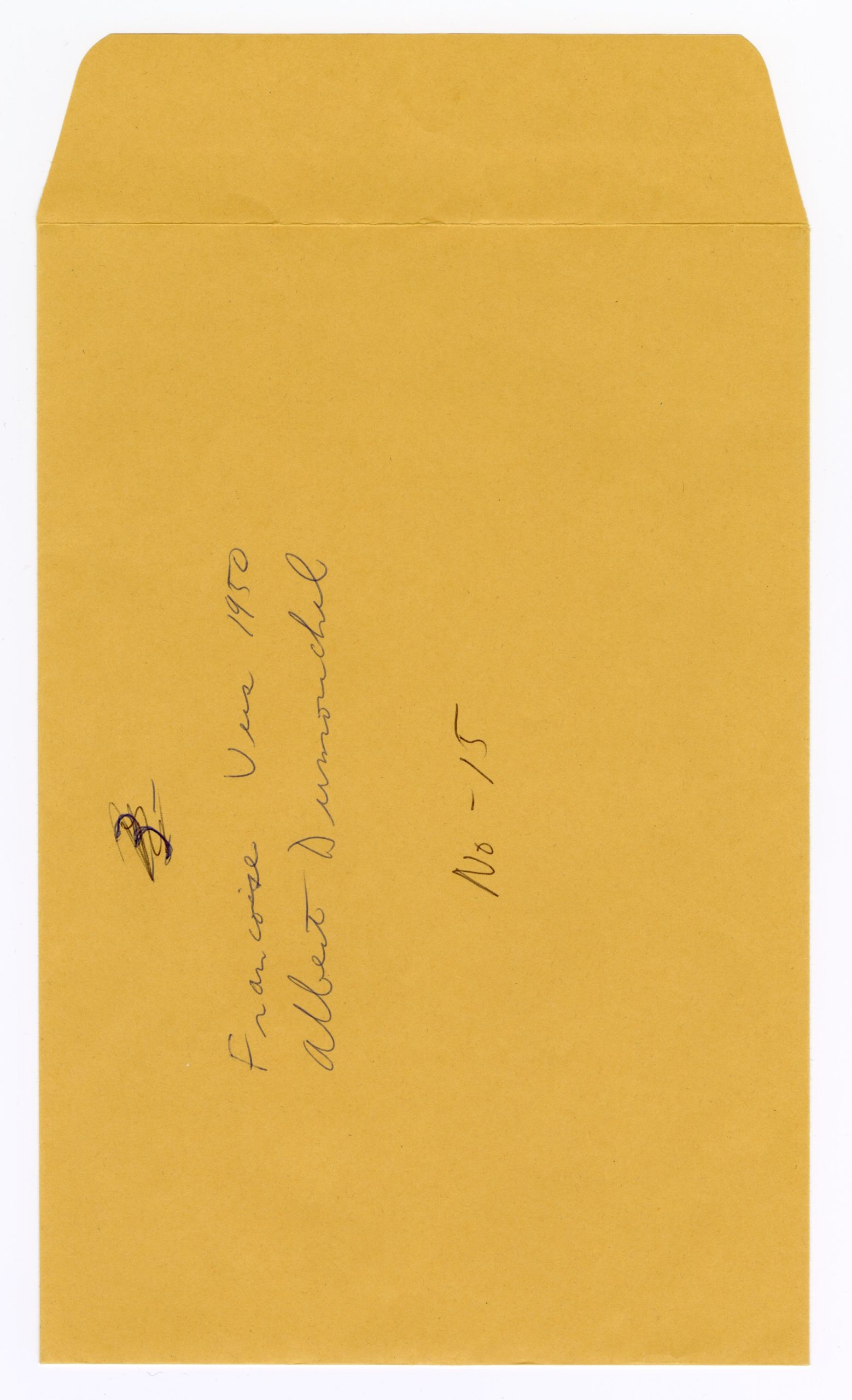
The object bears witness to the participation of people of Acadian origin in Quebec's artistic, political, and social effervescence. Indeed, the object bears witness to the work of Françoise Bujold, an Acadian artist from Bonaventure. Throughout her work, Françoise Bujold highlights the cultural characteristics of the Gaspé Peninsula, beginning with the communities that make up the region, the richness of the Gaspé language, and its territory. The photograph attests to the ties between Françoise Bujold and one of her teachers, sculptor Alfred Dumouchel, a professor at the Institut des arts graphiques de Montréal.
Learn more
Albert Dumouchel (1916-1971) was a Canadian engraver, photographer, and art teacher. He came from a family of artisans and workers. He completed his classical studies at the Seminary in the same city, which is now the College of Valleyfield. From the age of 8, he studied violin, singing, and piano, perfecting his singing skills with the master Rodolphe Plamondon. In 1936, the Séminaire de Valleyfield entrusted him with its art studio, where he taught until 1949. In 1940, he became a fabric designer at Montréal Cottons in Valleyfield. In 1942, he also became a professor of drawing, art history, advertising, and photography at the newly founded École des arts graphiques de Montréal (which became the Institut des arts graphiques in 1958). There, he set up an engraving workshop that was the envy of all of Canada and became its artistic director.
Françoise Bujold (1933-1981) was the daughter of Oscar Bujold and Elise Grenier. She was a multidisciplinary artist from Bonaventure; a writer, poet, and artist. She was the first woman, along with Marie Anastasie, to study at the Institut des arts graphiques de Montréal. She studied graphic arts with Albert Dumouchel, graphic design and layout with Gilles Robert, and color separation with Arthur Gladu. During her lifetime, she published nine collections of poetry, five articles, and wrote short stories. She hosted and exhibited at the Percé Art Center for nearly twenty years. She also gave engraving workshops with the Mi'gmaqs of Gesgapegiag, which resulted in two collections: Une fleur debout dans un canot (1962) and La naissance du soleil (1966). She also made a film with Jacques Godbout featuring the Mi'gmaq people of Gesgapegiag, Le monde va nous prendre pour des sauvages (The world will take us for savages). In the final years of her career, in 1979, she stayed in Miguasha to draw fossils. She died in January 1981.
Françoise Bujold (1933-1981) was the daughter of Oscar Bujold and Elise Grenier. She was a multidisciplinary artist from Bonaventure; a writer, poet, and artist. She was the first woman, along with Marie Anastasie, to study at the Institut des arts graphiques de Montréal. She studied graphic arts with Albert Dumouchel, graphic design and layout with Gilles Robert, and color separation with Arthur Gladu. During her lifetime, she published nine collections of poetry, five articles, and wrote short stories. She hosted and exhibited at the Percé Art Center for nearly twenty years. She also gave engraving workshops with the Mi'gmaqs of Gesgapegiag, which resulted in two collections: Une fleur debout dans un canot (1962) and La naissance du soleil (1966). She also made a film with Jacques Godbout featuring the Mi'gmaq people of Gesgapegiag, Le monde va nous prendre pour des sauvages (The world will take us for savages). In the final years of her career, in 1979, she stayed in Miguasha to draw fossils. She died in January 1981.