
Download image
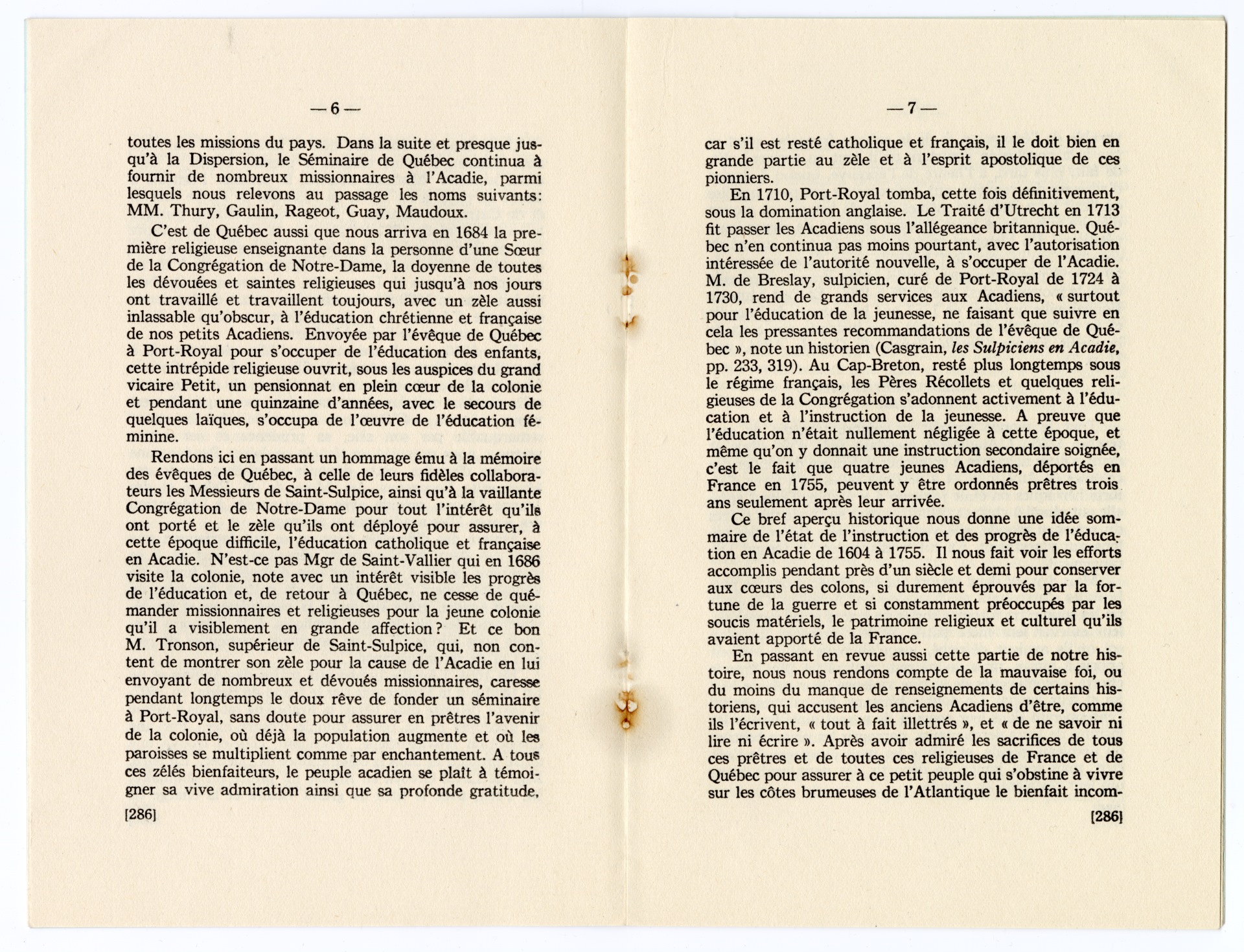
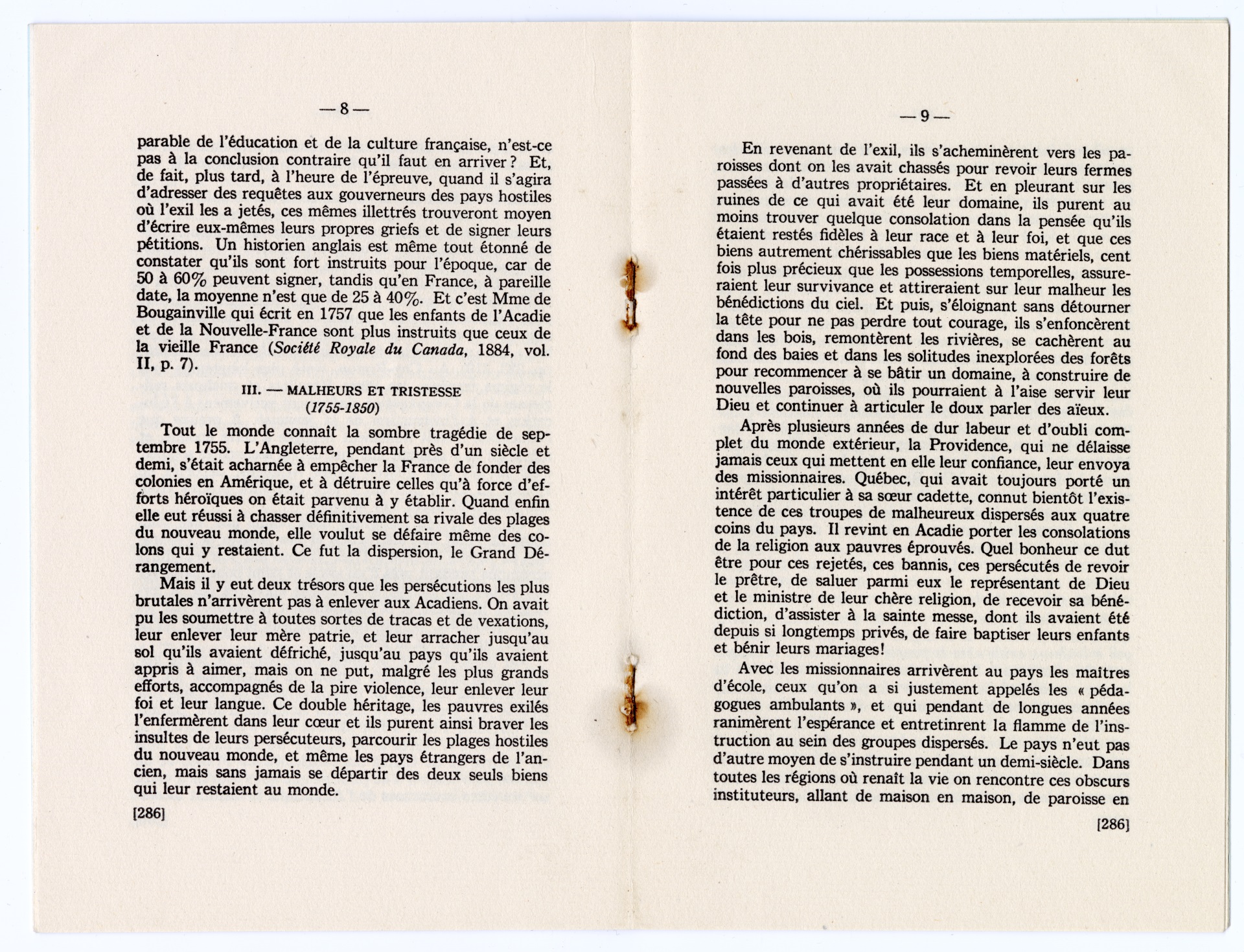
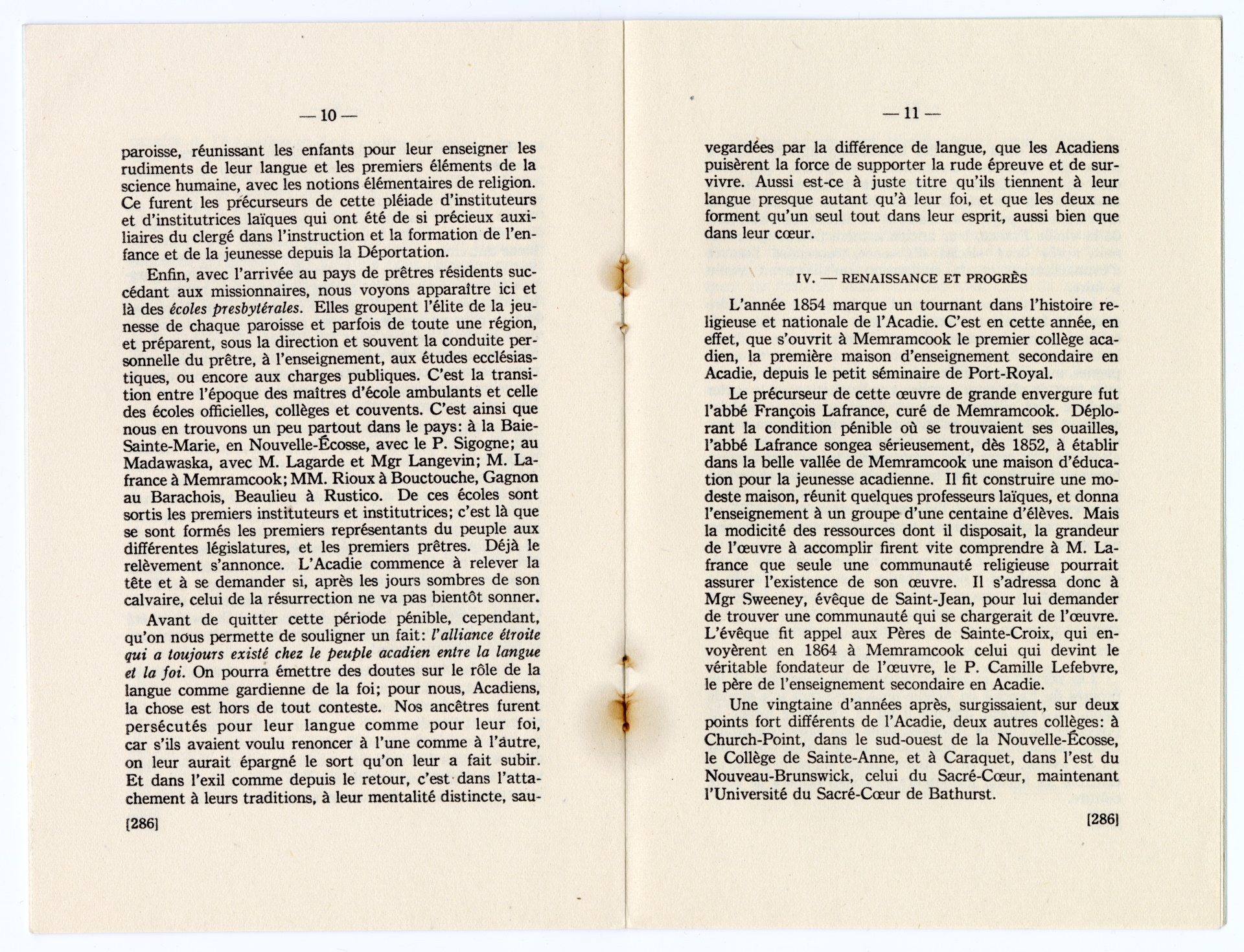
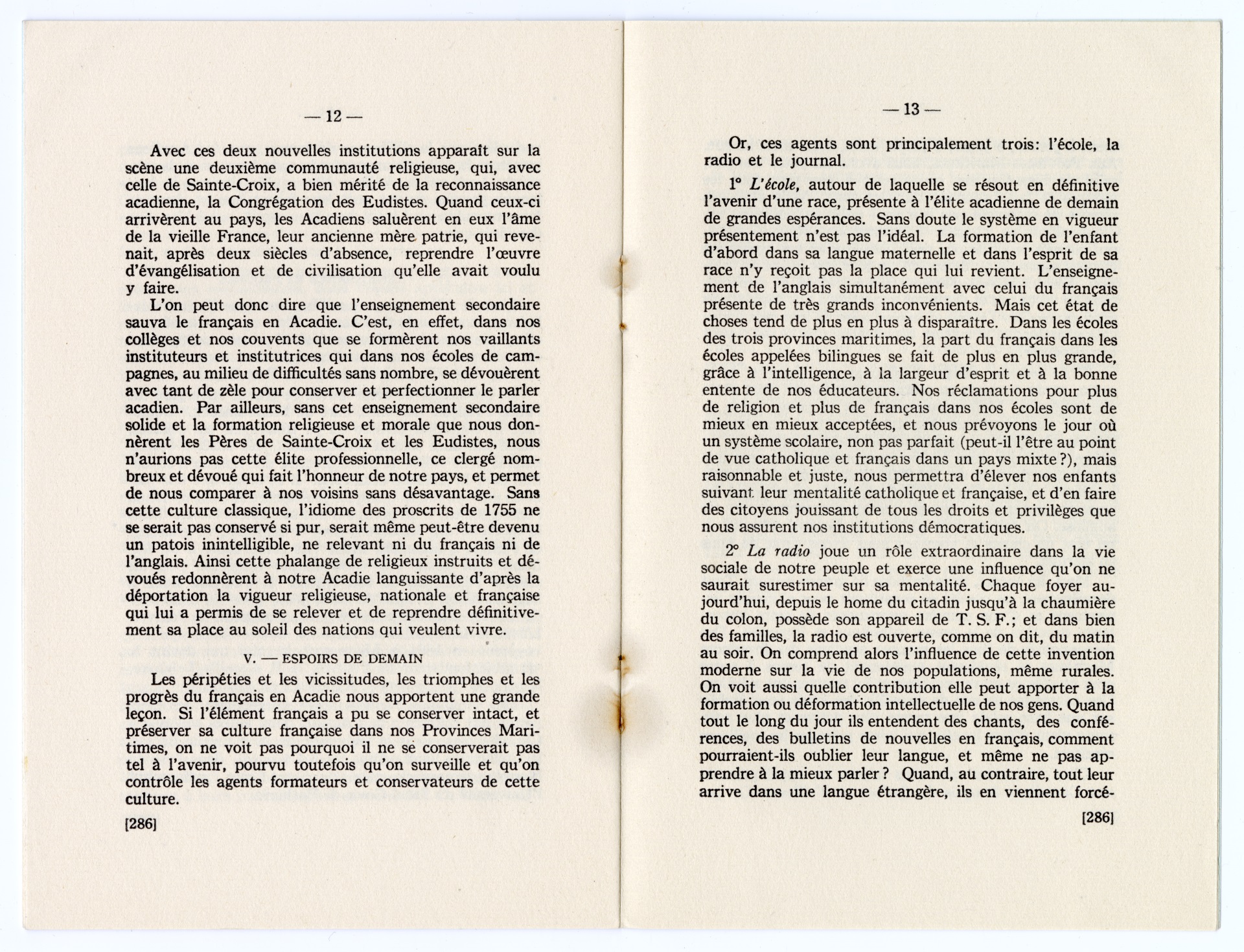
Leaflet "French in Acadia" | Leaflet |
Information about the object
Historical period
1943
Dimensions
Unknown
Classification
Communications -- Book
Accession number
No number
Division
Means of expression -- Books
Collection
Bona Arsenault
Donor
Bona Arsenault?
Category/theme
Description of the object
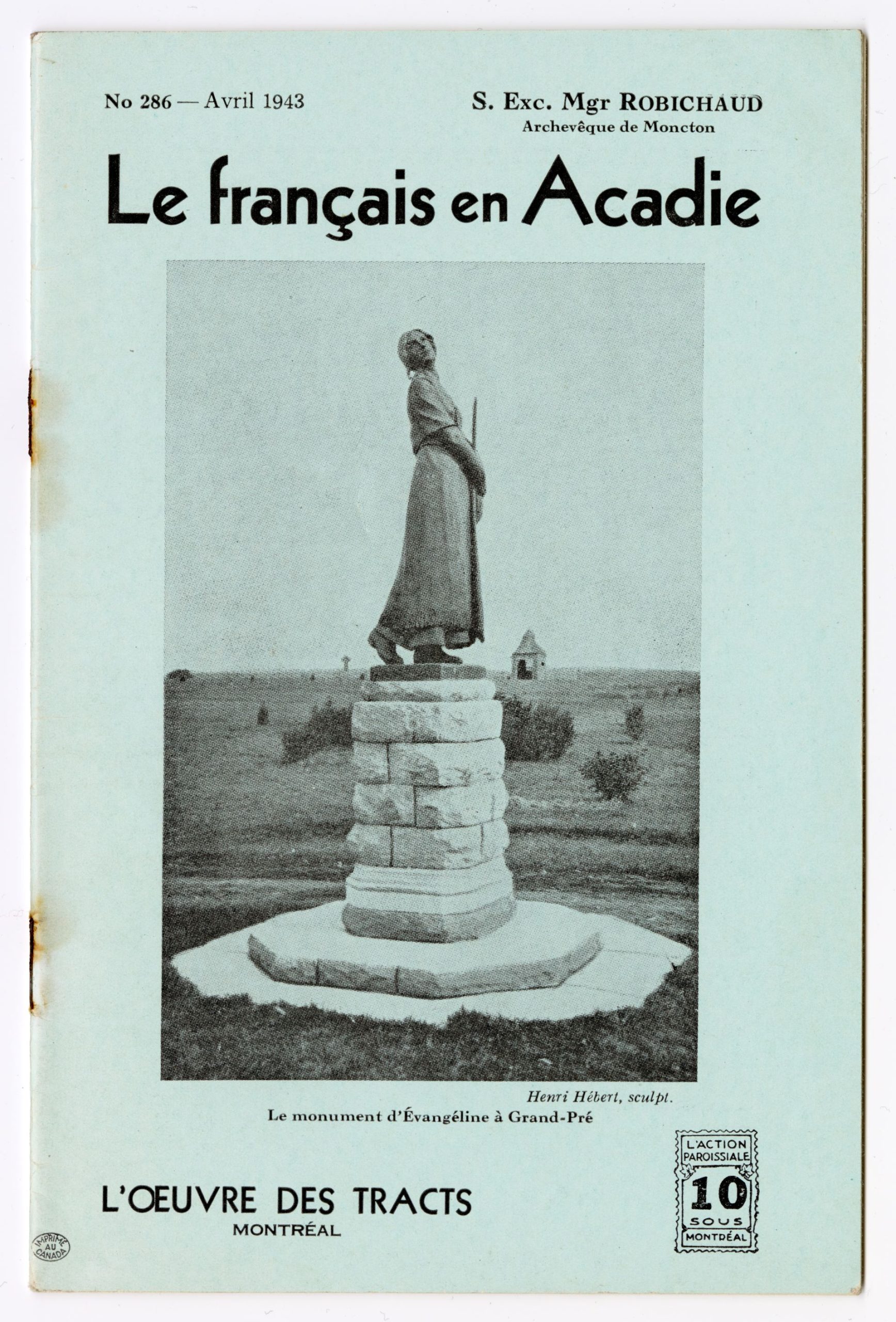
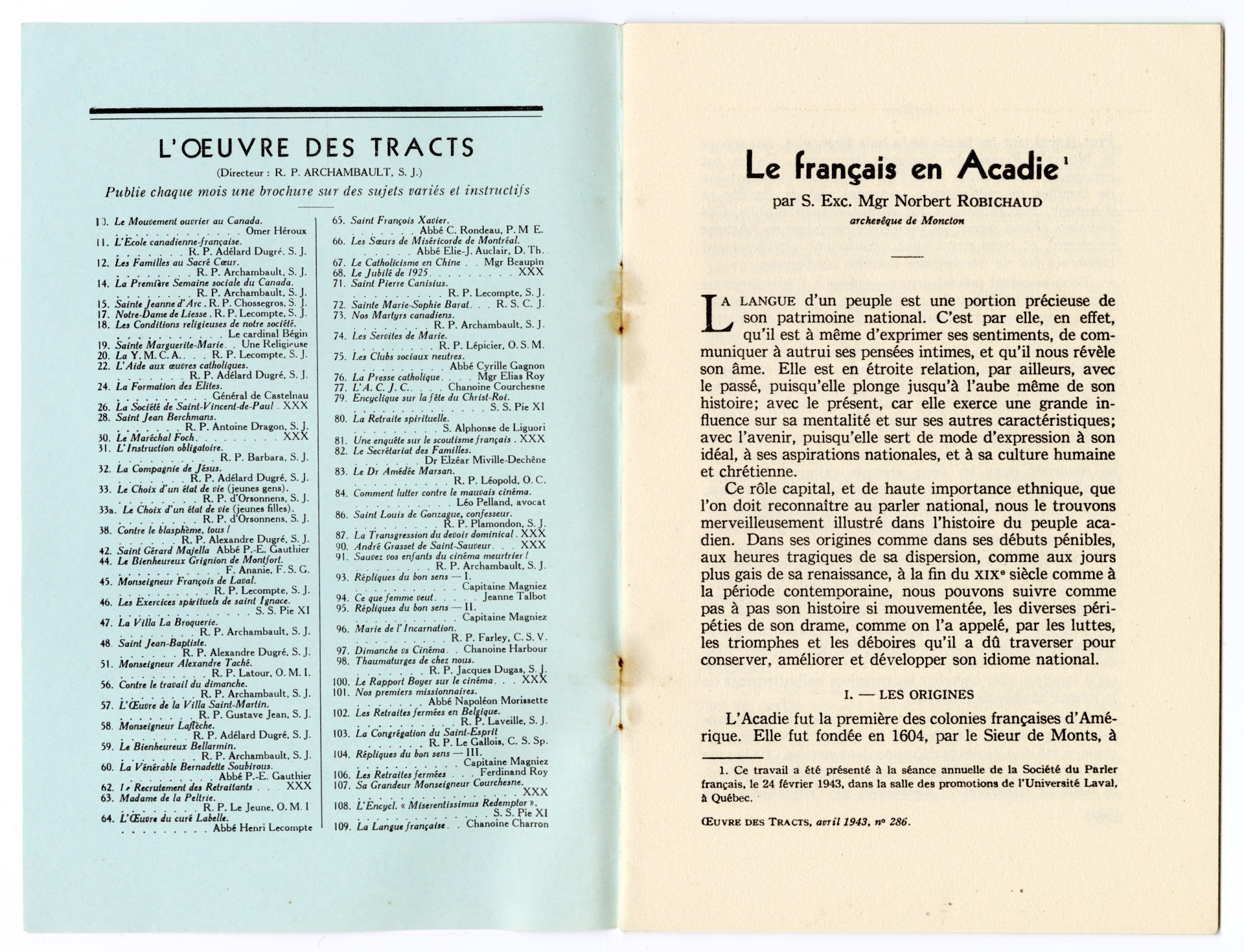
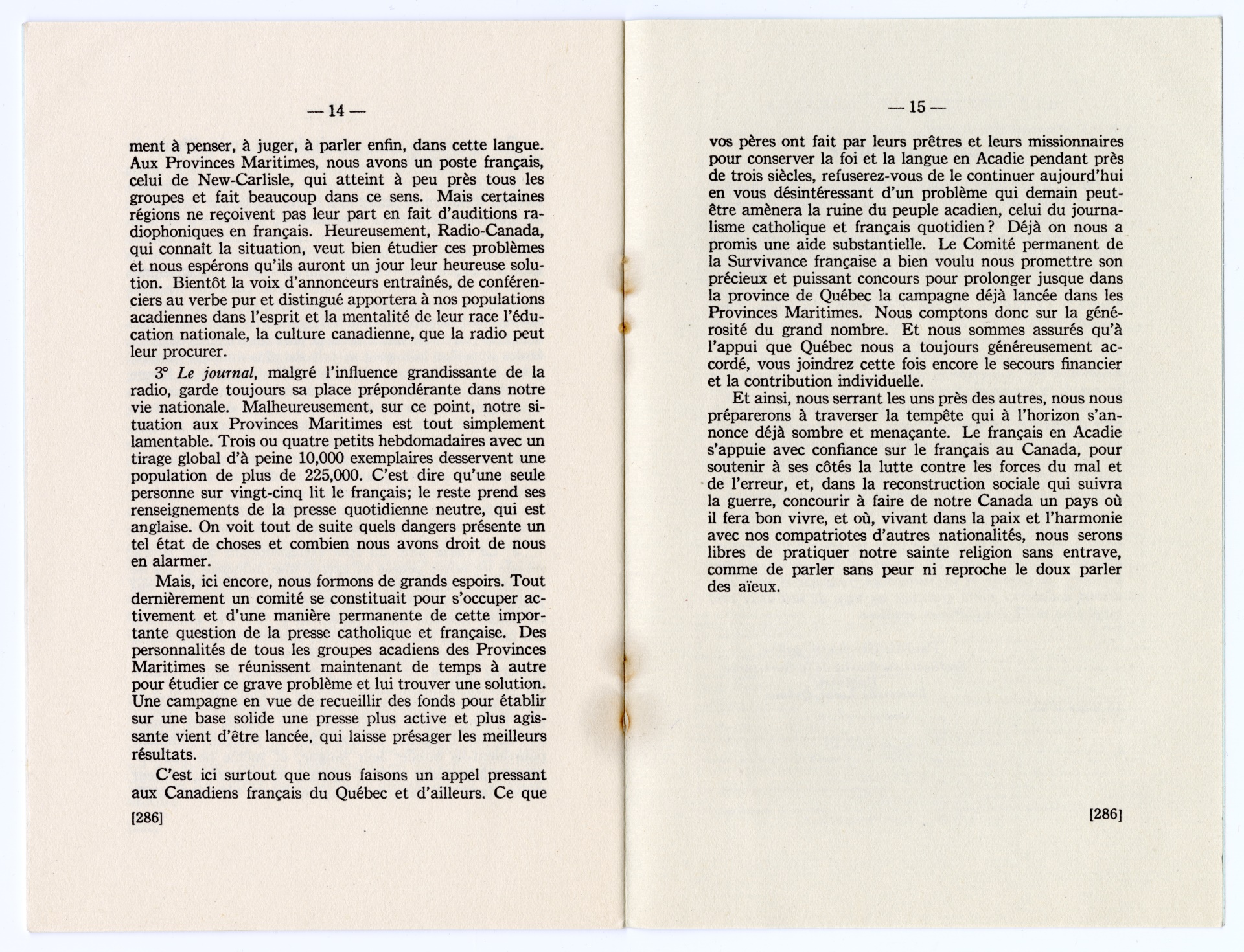
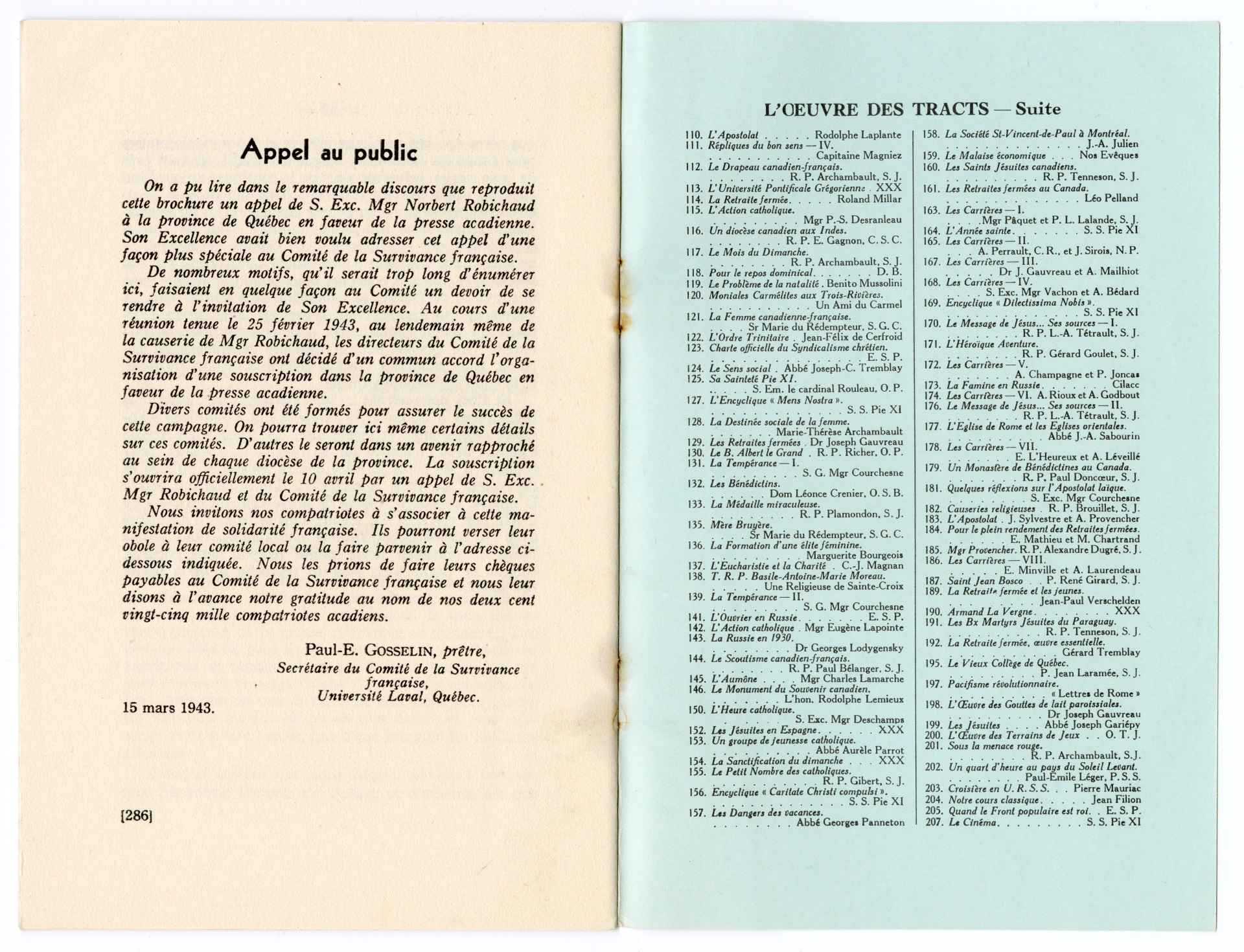
Booklet printed and distributed by the Œuvre des tracts de Montréal, and published by Action paroissiale. It is issue number 286.
Value of the item
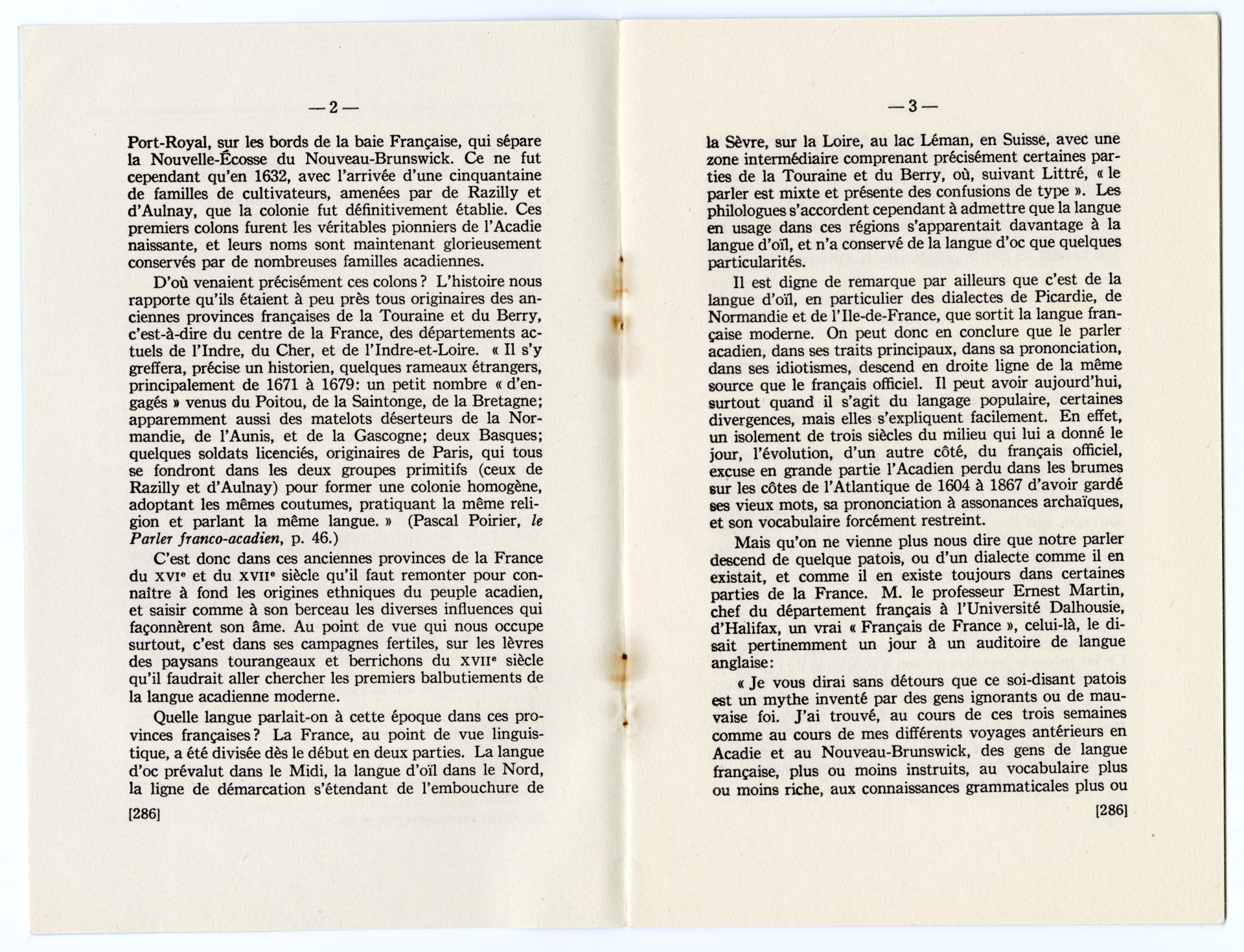
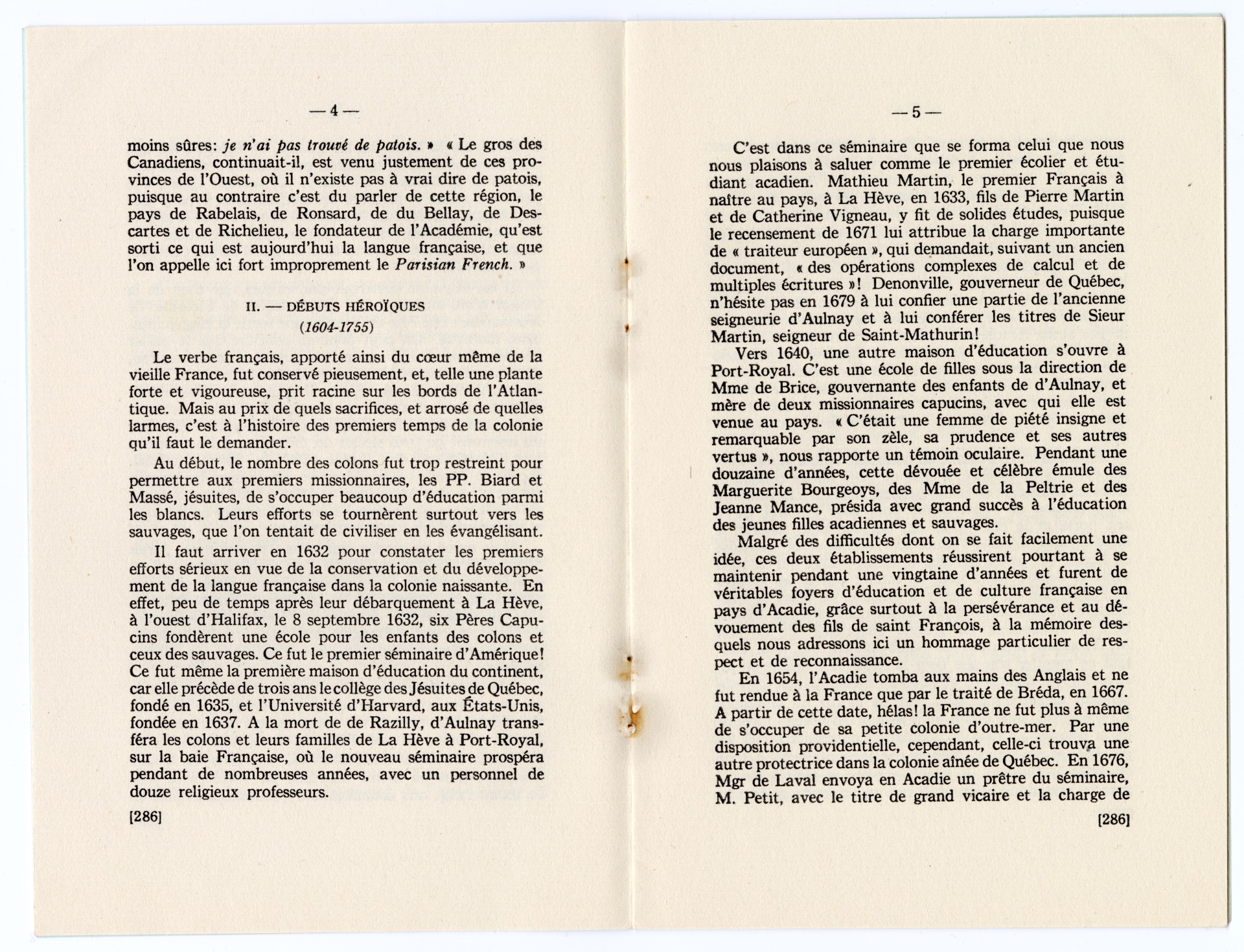
The object bears witness to research carried out on Acadia, and in this case, research carried out by a descendant of an Acadian family, Archbishop Robichaud of Moncton. The work presents a brief and succinct sociolinguistic perspective.
The document also presents interesting aspects of the development of Acadian society, namely language. The correspondence bears witness to the development of Acadian society in terms of knowledge.
Finally, this brochure echoes a social and cultural development attributable to the Acadian Renaissance (1867-1960), a phenomenon of self-appropriation of Acadian culture by its heirs, engendering a sense of Acadian belonging. Here, around the Acadian language.
The document also presents interesting aspects of the development of Acadian society, namely language. The correspondence bears witness to the development of Acadian society in terms of knowledge.
Finally, this brochure echoes a social and cultural development attributable to the Acadian Renaissance (1867-1960), a phenomenon of self-appropriation of Acadian culture by its heirs, engendering a sense of Acadian belonging. Here, around the Acadian language.
Learn more
Monseigneur Norbert Robichaud (1905-1979) was a Canadian priest and the second archbishop of Moncton. During his priesthood, he contributed to the social and cultural development of Acadians in New Brunswick by becoming involved with the newspaper L'Évangéline and helping to establish the Tintamarre tradition in 1955. Monsignor Robichaud was in office when the bicentennial celebrations of the Acadian Deportation took place.
The Acadian Renaissance was a phenomenon that occurred between 1850 and 1881—sometimes considered to be between 1867 and 1960—associated with a collective awareness of Acadian identity. Two literary works were particularly important in this movement: the poem Evangeline, published by American author Henry Longfellow in 1847, and Rameau de Saint-Père's La France aux colonies: Acadiens et Canadiens, the first of whose two parts deals with the history of the Acadians. Finally, the publication of the first Acadian newspaper, Le Moniteur Acadien, was also one of the highlights of this renaissance. In general, this period saw a significant boom in the literary and scientific arts, education, political life, and new economic sectors such as tourism. In the development of these areas, Acadian pride and a sense of belonging were valued and promoted.
The Acadian Renaissance was a phenomenon that occurred between 1850 and 1881—sometimes considered to be between 1867 and 1960—associated with a collective awareness of Acadian identity. Two literary works were particularly important in this movement: the poem Evangeline, published by American author Henry Longfellow in 1847, and Rameau de Saint-Père's La France aux colonies: Acadiens et Canadiens, the first of whose two parts deals with the history of the Acadians. Finally, the publication of the first Acadian newspaper, Le Moniteur Acadien, was also one of the highlights of this renaissance. In general, this period saw a significant boom in the literary and scientific arts, education, political life, and new economic sectors such as tourism. In the development of these areas, Acadian pride and a sense of belonging were valued and promoted.