
Download image

Rolling pin | Rolling pin |
Information about the object
Historical period
c. 1825–1875
Dimensions
Height: 27 cm.
Classification
Tools and equipment -- Food production
Accession number
1987.1.1136
Division
Material culture -- Tools and equipment for processing raw materials -- Food processing
Collection
Evelyne Allard Landry
Donor
Evelyne Allard Landry
Category/theme
Description of the object
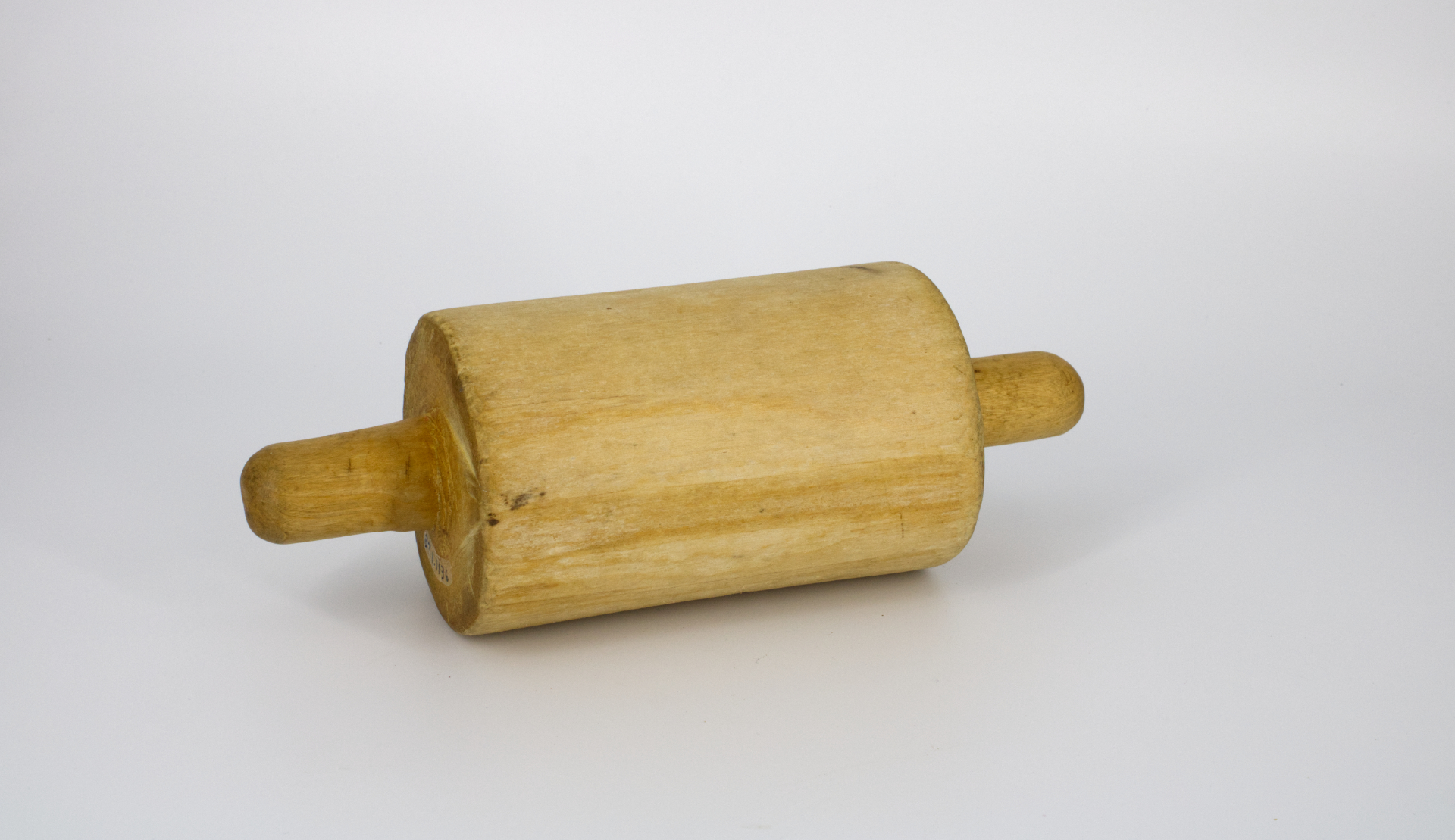
Small wooden cylinder with two handles at either end.
Belonged to Joseph Bélanger.
Belonged to Joseph Bélanger.
Value of the item
The object reflects a skill traditionally associated with or practiced by the Acadian population. More specifically, it reflects the development of culinary arts. The artisanal production of bread and other doughs was also carried out by women.
A rolling pin is a cylindrical kitchen utensil used to stretch and flatten dough. Equipped with handles at both ends, the utensil is held with both hands and moved back and forth over the dough.
The object also bears witness to an Acadian family, that of Joseph Bélanger, who was probably from Carleton.
A rolling pin is a cylindrical kitchen utensil used to stretch and flatten dough. Equipped with handles at both ends, the utensil is held with both hands and moved back and forth over the dough.
The object also bears witness to an Acadian family, that of Joseph Bélanger, who was probably from Carleton.
Learn more
Meat pie is a meat tart found throughout Acadia. The crust refers to the dough recipe used as the base for the dish, which is baked in a pie pan.
2 cups (500 ml) all-purpose flour
Salt
1 1/2 teaspoons (7.5 ml) baking powder
1/2 cup (125 ml) vegetable shortening
1/2 cup (125 ml) 2% milk
1/4 cup (60 ml) cooled meat broth (from cooking the meat)
1 egg (beaten) + 1 teaspoon (5 ml) water for brushing the dough
To make the crust, combine the dry ingredients in a mixing bowl. Stir in the vegetable shortening until the mixture resembles coarse crumbs. Combine the mixture and 1/4 cup (60 ml) of broth and gradually add this liquid to the dry ingredients. Mix until the dough reaches a smooth consistency. Divide the dough into 4 and roll out 2 double crusts. Place the bottom crusts in prepared pie plates.
The crust is also used to make Pets-de-soeurs. These little cousins of cinnamon buns have been a treat for Acadians for several generations. In some regions, these plump, spiral-shaped rings topped with brown sugar are called "bourriques," which means "belly button" in Old Acadian.
In Quebec, the word "tourtière" is a generic term for pâté en croûte.
From the early days of colonization in Acadia and Quebec, bread was an integral part of the settlers' diet. Baked mainly by women, it was called "pain du pays" (country bread). Bread accompanied the main dish, such as fricot aux pattes de cochon (pork trotters stew). Other types of baking were practiced in Acadia, including the making of ployes (buckwheat pancakes); galettes chaudes (small instant bread rolls); poutine en sac (balls of bread dough placed in a bag and cooked in boiling water); and tortaux (bread made from leftover bread dough). Until the early 20th century, bread was often baked in outdoor ovens. This bread was sold to tourists visiting the region, among others. A bread oven can still be found in the Gaspé Village of British Heritage.
2 cups (500 ml) all-purpose flour
Salt
1 1/2 teaspoons (7.5 ml) baking powder
1/2 cup (125 ml) vegetable shortening
1/2 cup (125 ml) 2% milk
1/4 cup (60 ml) cooled meat broth (from cooking the meat)
1 egg (beaten) + 1 teaspoon (5 ml) water for brushing the dough
To make the crust, combine the dry ingredients in a mixing bowl. Stir in the vegetable shortening until the mixture resembles coarse crumbs. Combine the mixture and 1/4 cup (60 ml) of broth and gradually add this liquid to the dry ingredients. Mix until the dough reaches a smooth consistency. Divide the dough into 4 and roll out 2 double crusts. Place the bottom crusts in prepared pie plates.
The crust is also used to make Pets-de-soeurs. These little cousins of cinnamon buns have been a treat for Acadians for several generations. In some regions, these plump, spiral-shaped rings topped with brown sugar are called "bourriques," which means "belly button" in Old Acadian.
In Quebec, the word "tourtière" is a generic term for pâté en croûte.
From the early days of colonization in Acadia and Quebec, bread was an integral part of the settlers' diet. Baked mainly by women, it was called "pain du pays" (country bread). Bread accompanied the main dish, such as fricot aux pattes de cochon (pork trotters stew). Other types of baking were practiced in Acadia, including the making of ployes (buckwheat pancakes); galettes chaudes (small instant bread rolls); poutine en sac (balls of bread dough placed in a bag and cooked in boiling water); and tortaux (bread made from leftover bread dough). Until the early 20th century, bread was often baked in outdoor ovens. This bread was sold to tourists visiting the region, among others. A bread oven can still be found in the Gaspé Village of British Heritage.