
Download image
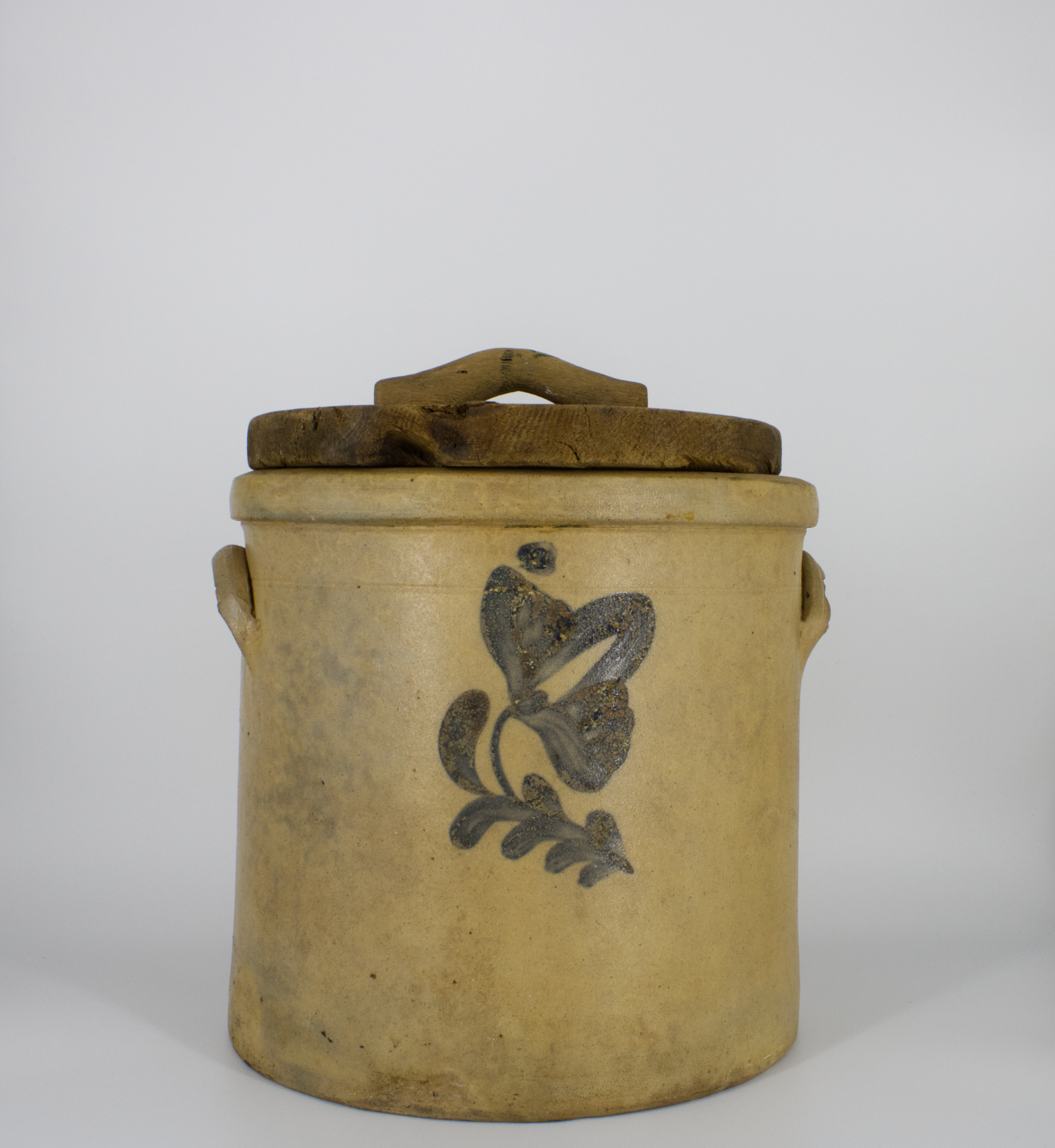
Patterned storage jar | Pu’tai
Information about the object
Historical period
Unknown
Dimensions
Height: 28 cm. Outside diameter: 28 cm.
Classification
Tools and equipment -- Food production
Accession number
1987.1.890
Division
Material culture -- Tools and equipment for processing raw materials -- Food processing
Collection
Evelyne Allard Landry
Donor
Evelyne Allard Landry
Category/theme
Description of the object
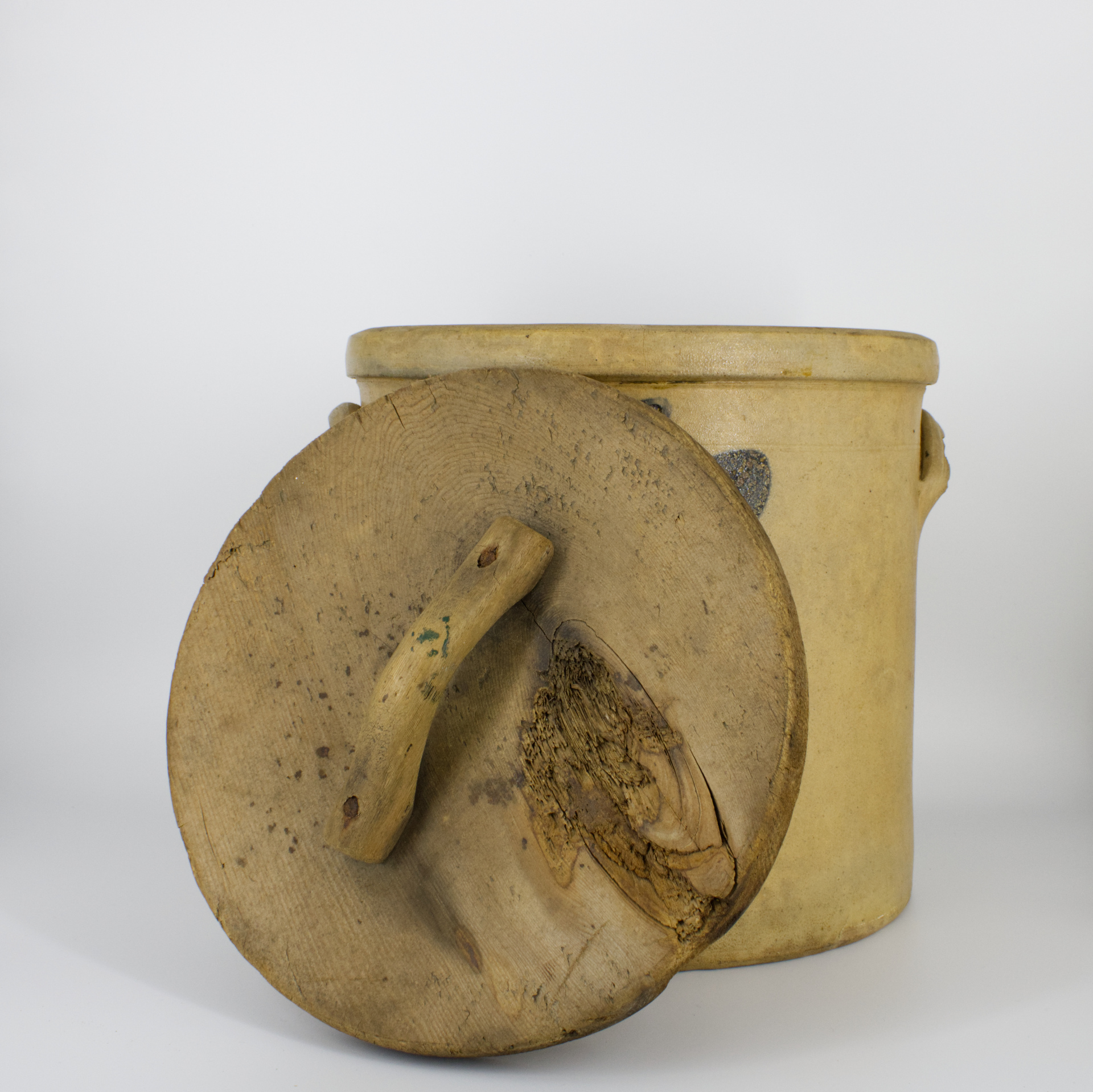
Wooden jar (or croque) with wooden lid, 2-gallon capacity, with beige glaze and blue floral pattern.
Value of the item
The object reflects the traditional skills and practices of the Acadian people and the development of Acadian and Gaspé culinary arts. More specifically, it provides insight into the practices of preserving and storing liquids and food. Such a jar could have been used to preserve food, including butter. In fact, the Acadians who used it tended to refer to this object as a "croque."
The materials used, particularly the lid and its wooden handle (rather than cork), suggest that the jar is quite old.
The object also bears witness to an Acadian family. The jar is believed to have belonged to the Allard family (no further details available), probably the Allards of Carleton.
The materials used, particularly the lid and its wooden handle (rather than cork), suggest that the jar is quite old.
The object also bears witness to an Acadian family. The jar is believed to have belonged to the Allard family (no further details available), probably the Allards of Carleton.
Learn more
From the 17th to the 19th century, sandstone and pottery were generally imported from Scotland or England. Canadian stoneware really came into its own in the mid-19th century, when the Farrar family, originally from New England, settled in Saint-Jean-sur-Richelieu and began producing salted stoneware. Other pottery factories, such as Burns & Campbell, Eberhard & Halm, and W. E. Welding, were established in Ontario. At the end of the 19th century, glass replaced stoneware as a material for food storage.
The cobalt pattern is found on several jars. In Alsace, this pattern is well known and is obtained from salt. A salt glaze was applied to the pottery before firing at 1230 degrees to obtain a cobalt blue pattern. A famous Alsatian brand that manufactured this type of pottery was Betschdorf.
The cobalt pattern is found on several jars. In Alsace, this pattern is well known and is obtained from salt. A salt glaze was applied to the pottery before firing at 1230 degrees to obtain a cobalt blue pattern. A famous Alsatian brand that manufactured this type of pottery was Betschdorf.