
Download image

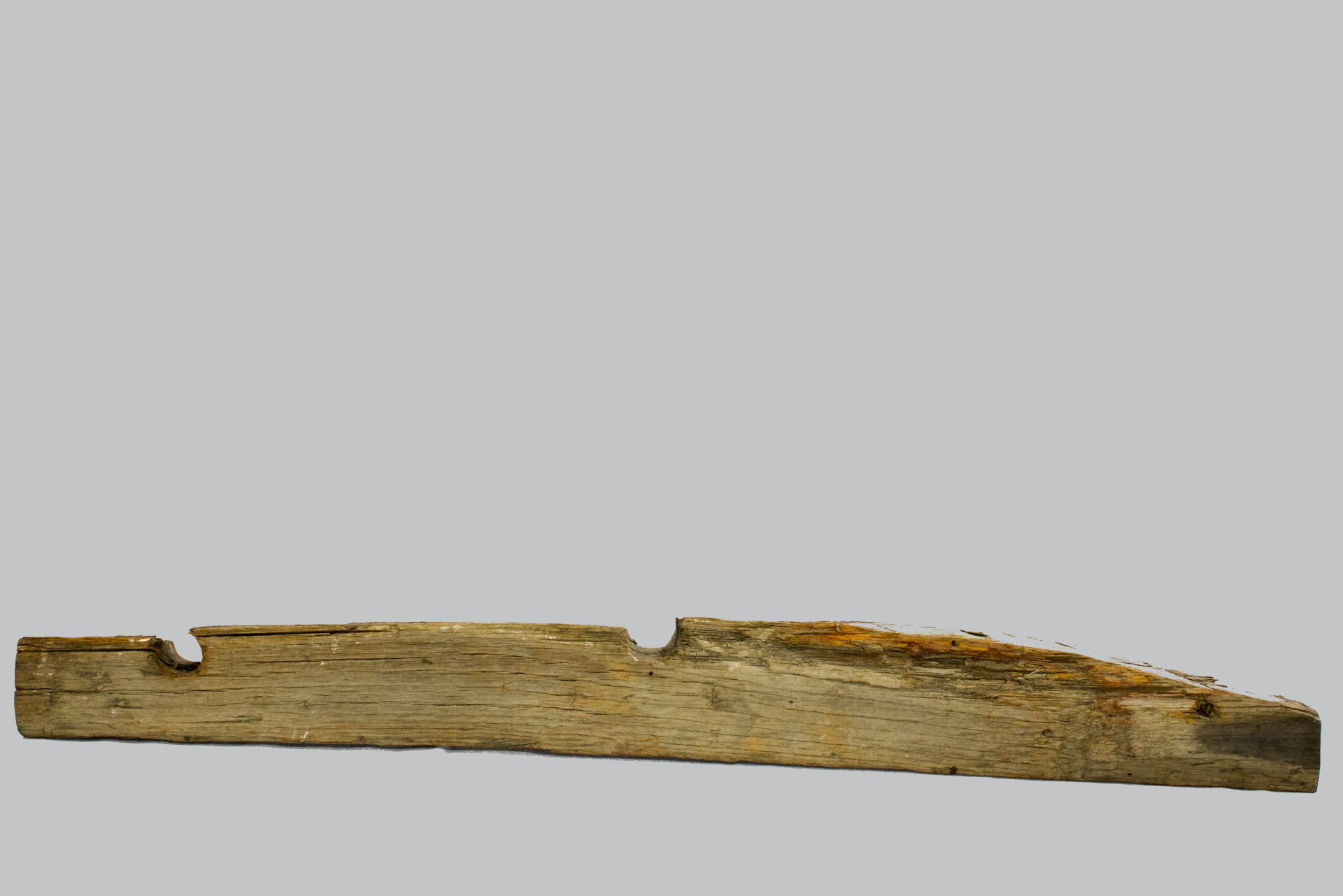
Fragment of the wreck of the Marquis de Malauze
Information about the object
Historical period
c. 1745–1760
Dimensions
Height: 9 cm. Width: 86.30 cm. Depth: 5 cm.
Classification
Tools and equipment -- War
Accession number
1980.1.105
Division
Material culture -- Transportation and handling
Collection
Juliette Gauthier Barette
Donor
Juliette Gauthier Barette
Category/theme
Description of the object
Fragment of black oak wood from the wreck of the Marquis de Malauze.
Value of the item
The object bears witness to a major historical event in the history of Quebec. Specifically, it refers to the Battle of Restigouche, which took place in 1760 at the mouth of the river of the same name. This battle marked the last stand of French forces in their colony, but also a pivotal moment in the migration of the Acadian population to the shores of Chaleur Bay. The Marquis de Malauze was one of three French ships that took part in the Battle of Restigouche, along with the Machault and the Bienfaisant.
The object also bears witness to an important figure from the Gaspé Peninsula, Father Pacifique de Valigny, who was a missionary to the Mi'gmaqs of Listuguj from 1894 to 1931. He also served the parishes of Pointe-à-la-Garde and Saint-Fidèle. Pacifique de Valigny was also a linguist of the Mi'kmaq language and, with the help of the parishioners of Listuguj, took the earliest action in favor of submerged heritage in Quebec, namely the removal of the Marquis de Malauze from the water.
The object also bears witness to an important figure from the Gaspé Peninsula, Father Pacifique de Valigny, who was a missionary to the Mi'gmaqs of Listuguj from 1894 to 1931. He also served the parishes of Pointe-à-la-Garde and Saint-Fidèle. Pacifique de Valigny was also a linguist of the Mi'kmaq language and, with the help of the parishioners of Listuguj, took the earliest action in favor of submerged heritage in Quebec, namely the removal of the Marquis de Malauze from the water.
Learn more
Between 1936 and 1939, Father Pacifique of the Sainte-Anne-de-Restigouche mission took the initiative to remove the bottom of the ship believed to be the Marquis de Malauze from the water, including parts of the cabins, masts, decks, hull, and keel. The wreck was reconstructed for display in the village of Listuguj, but exposure to the elements caused the hull and metal pegs to deteriorate.
Archaeological work was carried out on the Restigouche River beginning in 1966 by the Canadian Parks Service. In 1969, the wreck of the Machault was located using a magnetometer survey on the ice, at the same time as that of the Bienfaisant. The Machault was chosen for archaeological work because of its better state of preservation and its military function. Major excavations were carried out there from 1969 to 1972, the first large-scale underwater excavations in Canada.
In 1985, the curator of the Musée maritime du Québec studied the architectural remains. He recommended dismantling them and storing the ship's parts in a hangar to limit damage caused by weather and vandalism. In 1987, the wreck was dismantled and has since been stored in a shed next to Sainte-Anne Church in Listuguj. (https://www.patrimoine-culturel.gouv.qc.ca/rpcq/detail.do?methode=consulter&id=93215&type=bien)
The wreck of the Marquis de Malauze is the remains of a wooden frigate (a 354-ton merchant ship) built around 1745 and sunk on July 8, 1760. The wreck consists of the hull bottom, decks, and a few artifacts, including two cannons, cannonballs, bullets, metal hardware, and a barrel of tar. Most of the wreck, consisting of 130 pieces of wood, has been removed from the water and is stored in pieces in a shed next to the church of the Mi'gmaq community of Listuguj in the Gaspé Peninsula.
Archaeological work was carried out on the Restigouche River beginning in 1966 by the Canadian Parks Service. In 1969, the wreck of the Machault was located using a magnetometer survey on the ice, at the same time as that of the Bienfaisant. The Machault was chosen for archaeological work because of its better state of preservation and its military function. Major excavations were carried out there from 1969 to 1972, the first large-scale underwater excavations in Canada.
In 1985, the curator of the Musée maritime du Québec studied the architectural remains. He recommended dismantling them and storing the ship's parts in a hangar to limit damage caused by weather and vandalism. In 1987, the wreck was dismantled and has since been stored in a shed next to Sainte-Anne Church in Listuguj. (https://www.patrimoine-culturel.gouv.qc.ca/rpcq/detail.do?methode=consulter&id=93215&type=bien)
The wreck of the Marquis de Malauze is the remains of a wooden frigate (a 354-ton merchant ship) built around 1745 and sunk on July 8, 1760. The wreck consists of the hull bottom, decks, and a few artifacts, including two cannons, cannonballs, bullets, metal hardware, and a barrel of tar. Most of the wreck, consisting of 130 pieces of wood, has been removed from the water and is stored in pieces in a shed next to the church of the Mi'gmaq community of Listuguj in the Gaspé Peninsula.