
Bas Saint-Laurent
Cette région est un lieu important de passage pour les familles acadiennes lors de leur fuite vers le Québec. Elles suivent la rivière Saint-Jean et le sentier du Portage dans le Témiscouata. À l’époque, ce sentier constitue la seule voie terrestre entre l’Acadie et la Nouvelle-France.
Après avoir échappé à la déportation, un premier groupe d’Acadiens arrive à Cacouna en 1758. Quelques-uns restent dans la région, tandis que d’autres repartent le printemps suivant pour le Centre-du-Québec. Un deuxième groupe, dirigé par Michel Saindon, notaire et arpenteur, prend le même chemin et arrive en 1763 à Cacouna. Plusieurs familles s’installent un peu partout dans la région, notamment à Kamouraska, à Saint-Jean-Port-Joli, à Trois-Pistoles et à Rivière-Ouelle.
Des familles pionnières encore présentent aujourd’hui, nous retrouvons des Albert, Landry, Martin, Richard, Saindon et Thériault.
Please click on a name in the list below to go directly to its designated section.
Pohénégamook
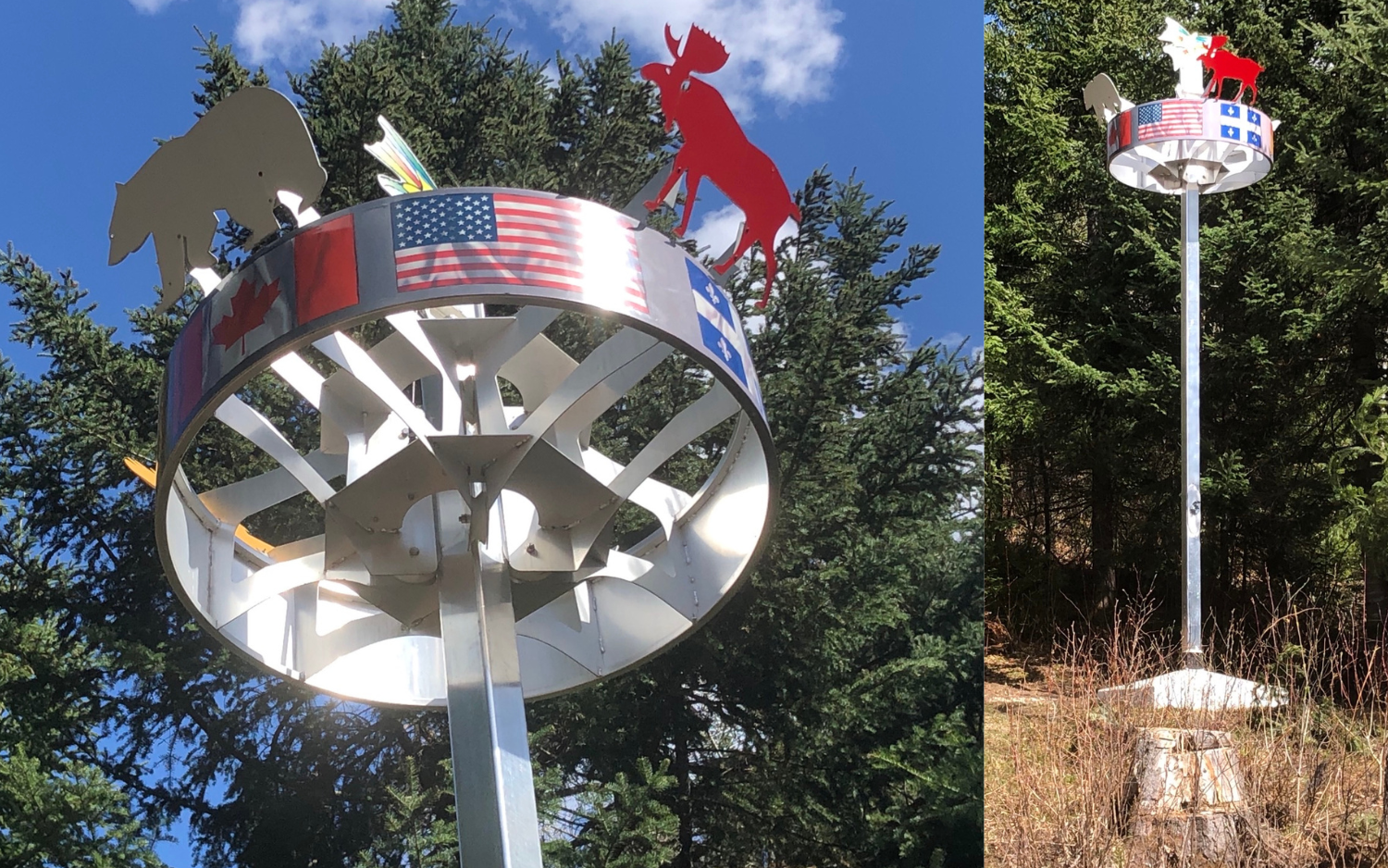
Triple Frontier
Place of interest | Blue River Park
This marker marks the meeting point between Quebec, New Brunswick, and Maine. The population of Madawaska, as this Acadian-inhabited territory was once known, is divided by the international border between Canada and the United States established by the Webster-Ashburton Treaty in 1842 and by a decision of the Privy Council in London setting the border between Quebec and New Brunswick in 1851.
On August 8, 2014, representatives of First Nations and the three territories opened the 5th World Acadian Congress at this location.
Text written or compiled by the Acadian Museum of Quebec.
Témiscouata-on-the-Lake
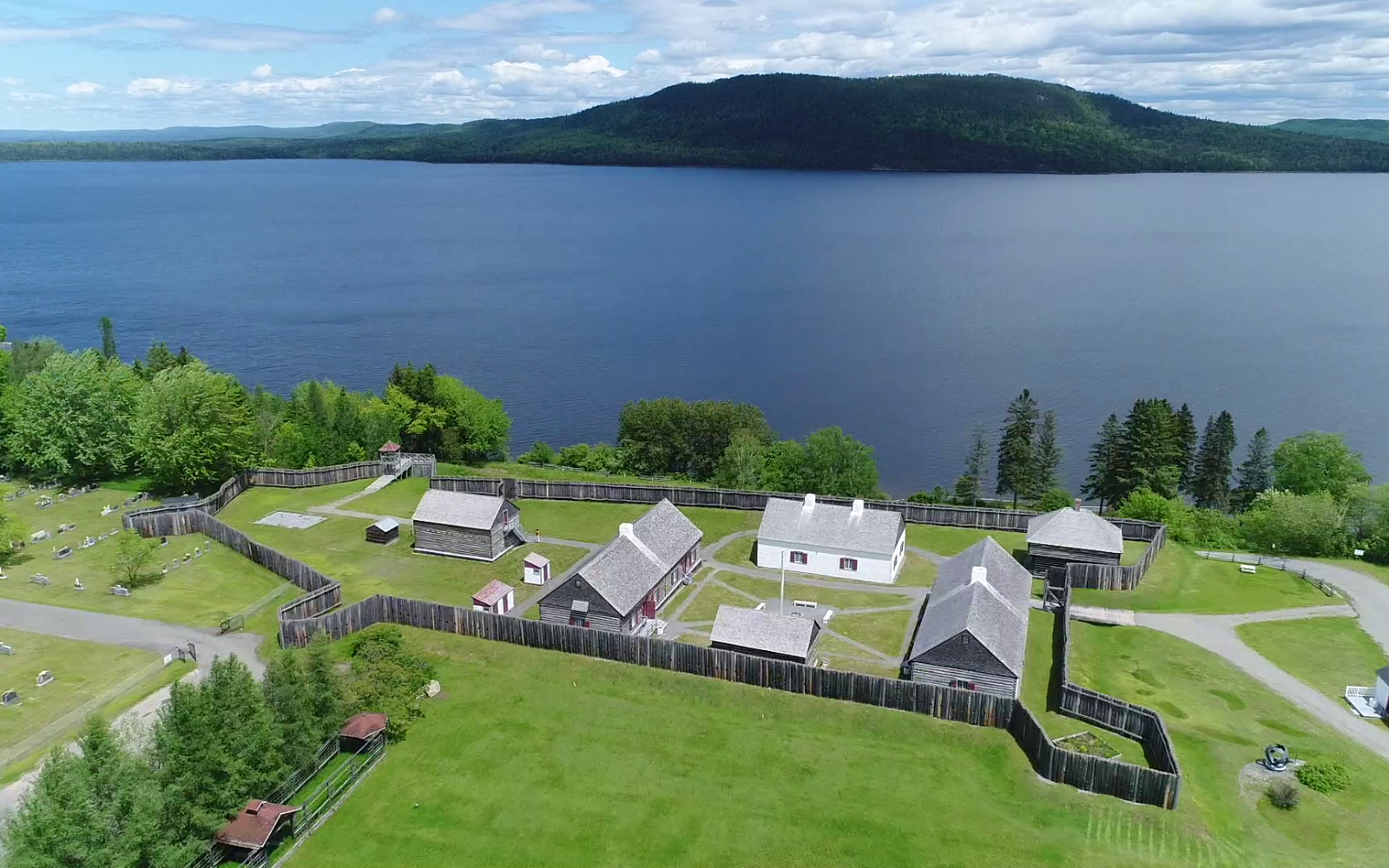
Fort Ingall
Institution | 81, rue Caldwell, Témiscouata-sur-le-Lac, Bas-Saint-Laurent
Fort Ingall, built around 1839, is a museum, historical site, and archaeological site. Dressed in military and civilian clothing from the period, the guides recreate life within this rural fortification. The exhibition presents a human perspective on a border conflict that took place nearly 175 years ago, the Aroostook War. The Témiscouata region was at the heart of a border dispute between the British and Americans.
The connection between this site and Acadian history is rather anecdotal, but interesting nonetheless. The wood used to build the fort was cut by Israël Robichaud, the first Acadian to settle permanently in Témiscouata. An exhibition features Jean-Étienne Landry, the fort's doctor, who was originally from Carleton (Gaspésie) and was the only French speaker stationed at this British fort.
Text written or compiled by Samuel Moreau and the Acadian Museum of Quebec
Acadia Square
Place of interest
Clair Soleil Park, Commercial Street, Témiscouata-sur-le-Lac, Lower St. Lawrence
The inauguration of Place de l’Acadie took place on August 24, 2014, during the closing ceremonies of the 2014 World Acadian Congress (WAC).
This site consists of three water basins representing the three territories of the 2014 CMA: northwestern New Brunswick, Aroostook in Maine, and Témiscouata in Quebec. These are three regions with common roots, arbitrarily divided by borders in 1842, but which together form a whole: the Acadia of lands and forests.
At the heart of Place de l'Acadie stands a monumental sculpture by François Maltais, a renowned artist from Pohénégamook, which pays tribute to the Acadian roots of the people who live in these territories. The mosaic at the foot of the sculpture is the result of collaboration between the three regions.
Interpretive panels provide information about the history of this area.
Text written or compiled by François Maltais and the Acadian Museum of Quebec.
Acadian National Day in Témiscouata
Event
Since 2010, Témiscouata has celebrated its Acadian roots on August 15 with a traditional tintamarre at 5:55 p.m. The choice of this time highlights the year of the Acadian deportation. Citizens and visitors of all ages, most of whom are dressed in the colors of the Acadian flag, gather at a chosen location in the region to parade through the streets, make noise, and have fun with their families. Community organizations come together to offer participants a communal meal. In the evening, a musical show features Quebec artists of Acadian descent.
Text written or compiled by Renée-Anique Francoeur and the Acadian Museum of Quebec
Cacouna
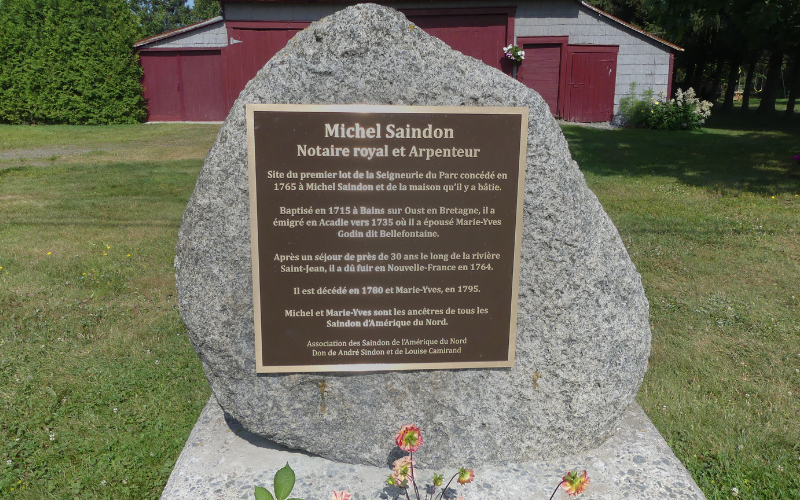
Michel Saindon Monument
Place of interest | 1073 Heritage Street
This monument was erected in 1995 on a plot of land granted to Michel Saindon on August 7, 1765. That same year, Michel Saindon built his house on this first plot of land granted in the region, which has now been converted into a bed and breakfast.
Michel Saindon
1717–1780*
Ancestors of the Saindons of North America
First settler in Cacouna
Lot 108
Donated by Thérèse Fontaine and Yvon Saindon – 1996
The Michel Saindon monument is part of Cacouna's four interpretive trails. For more information, visit: Saindon Ancestral Home | Discovery Podcast
Text written or compiled by André Saindon and the Acadian Museum of Quebec.
Our Lady of Portage
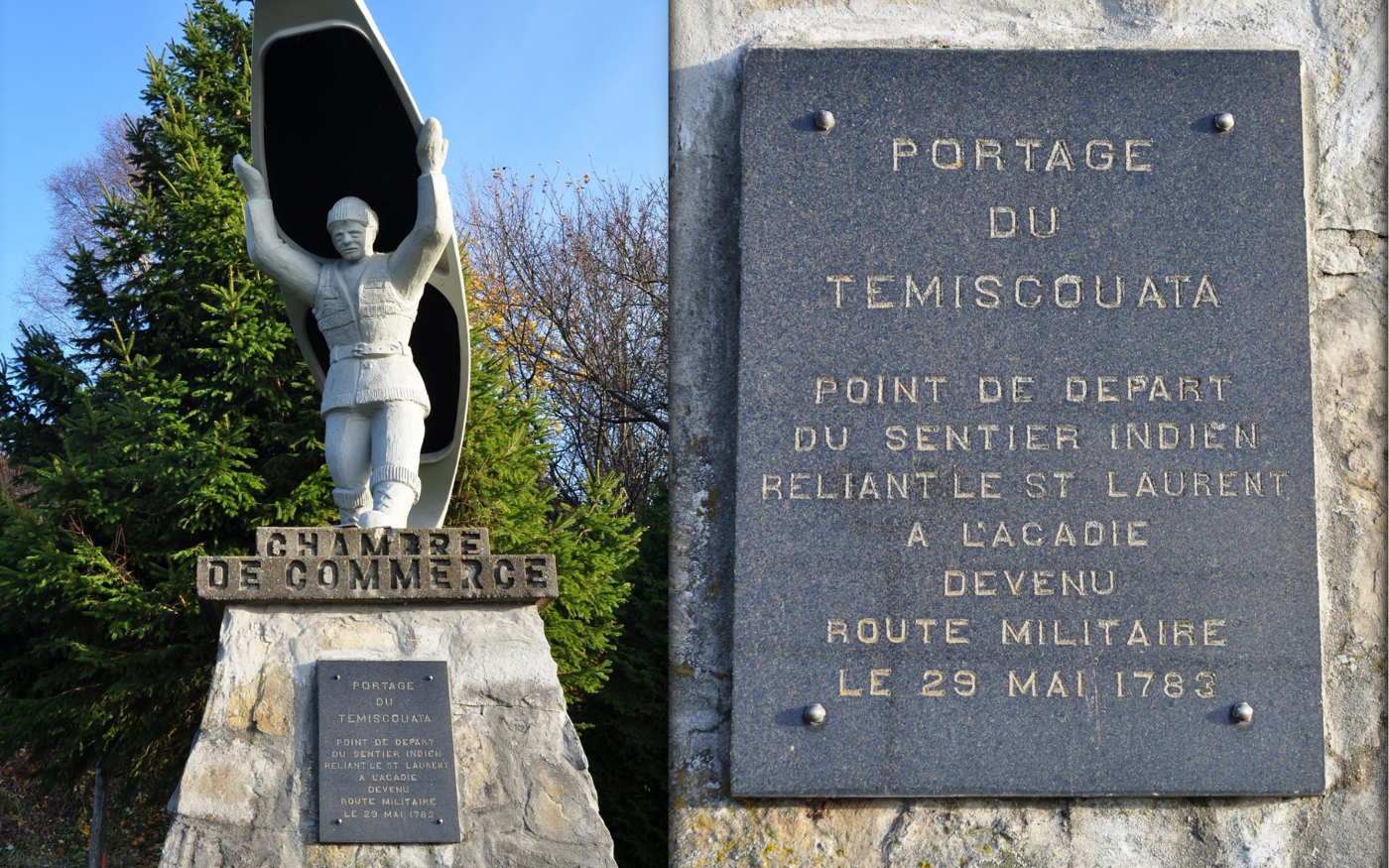
Monument to the Portageur
Place of interest | Next to 640 Route du Fleuve
The Portageur monument, designed by Joseph Dickner and created by Jean-Marc de Courval, was erected by the Commission des monuments nationaux on June 29, 1975.
This monument refers to the Portage Trail, a historic route made up of waterways and dirt roads. For thousands of years, Native Americans traveled between the Bay of Fundy and the St. Lawrence River by canoeing on Lake Témiscouata and the Madawaska River or, more often, on the St. Francis River and Lake Pohénégamook. The trail was used for civil, military, religious, and commercial purposes. Mail carriers, soldiers, and missionaries traveled along it. Acadians used this route when fleeing to Quebec.
Portage du Témiscouata
Starting point of the Indian trail connecting the St. Lawrence River to Acadia which became a military road on May 29, 1783
Text written or compiled by Mario Ouimet and the Acadian Museum of Quebec
Kamouraska
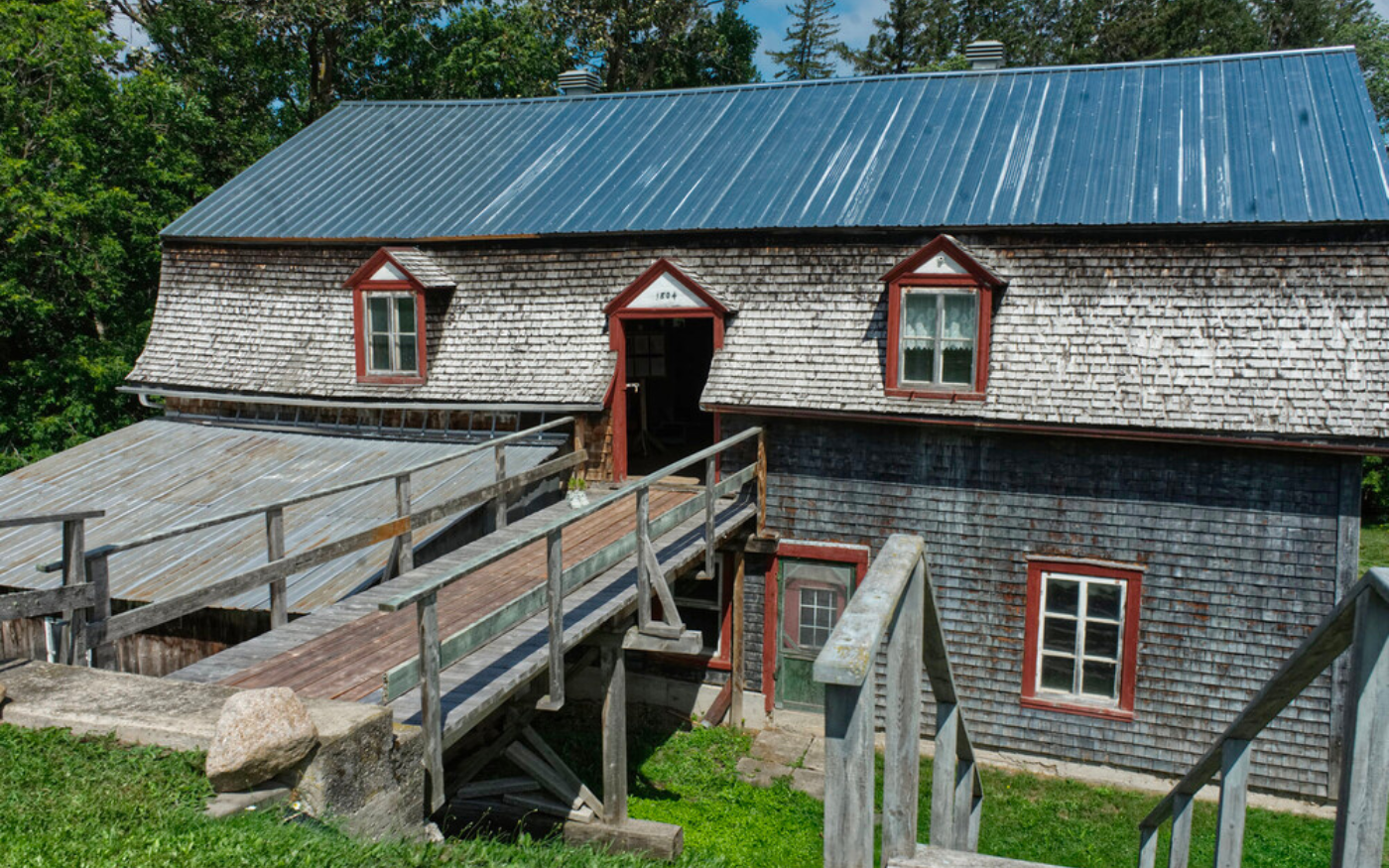
Kamouraska Regional Museum
Institution | 69 Morel Avenue, Place de l'Église
www.museekamouraska.com
Nestled between the river and the mountains, the village of Kamouraska is renowned for its beautiful landscapes and rich architectural heritage. At its heart stands a convent built in 1851 and carefully restored to house the Kamouraska Regional Museum. Explore three floors of exhibits showcasing the region's history with our costumed guides, or choose one of our outdoor excursions. An essential historical site in the Kamouraska region, the Moulin Paradis heritage site bears witness to the history and evolution of the region's water mills and invites you to discover its century of history. Don't miss this opportunity to satisfy your curiosity and bring the past to life on the banks of the Kamouraska River.
For the second consecutive year, the Museum received Trip Adventure's Travelers Choice award.
- Guided tour of the village and museum – Guided tour of the MoulinParadis
- Geological excursion – Interpretive hike
- Genealogy service – Collation service
Text written or compiled by the Acadian Museum of Quebec

Anne Hébert (1916–2000)
Personality
Anne Hébert was born in Sainte-Catherine-de-la-Jacques-Cartier into a family that loved literature. During her youth, she stayed many times with relatives in Kamouraska. As a teenager, she staged plays with her cousin, Hector de Saint-Denys Garneau.
This poet, playwright, and novelist lived in Quebec City until the early 1950s. It was there that she published her first poems in magazines and, in 1942, her poetry collection Les songes en équilibre. From 1950 to 1954, she worked for Radio-Canada and the National Film Board as a screenwriter.
Thanks to a grant from the Royal Society of Canada, she stayed in Paris to write her first novel, Les chambres de bois, which was published in 1958. In June 1960, she was honored to be elected a member of the Royal Society of Canada. In 1970, she published her famous novel Kamouraska, which was adapted for the screen by Claude Jutra in 1973 and for which she received the Prix des libraires de France. Her novel Les Fous de Bassan (1982) was also adapted for the screen by Yves Simoneau in 1987. With this novel, she won the Prix Fémina, a major French literary prize.
His latest work, Un habit de lumière, was published in 2000. His career has been marked by numerous literary awards, including the Duvernay Prize from the Société Saint-Jean-Baptiste, the Athanase-David Prize, and the France-Québec Prize for his entire body of work.
She died in Montreal and was buried in her home parish.
Text written or compiled by the Acadian Museum of Quebec.
© LA PRESSE PHOTO ARCHIVES PC
Berceau-de-Kamouraska site
Place of interest
Route 132 East
The Berceau-de-Kamouraska site was the first civil and religious center in Kamouraska, developed between 1692 and 1791. This vast landscaped area includes the old cemetery, a memorial chapel built of fieldstone, and several wooden crosses marking the locations of the old churches and presbyteries.
This site also features an imposing memorial dedicated to the pioneers of Kamouraska, commemorating the burial of more than 1,450 of them in the old cemetery. The large number of surnames found there, including several Acadian names such as Albert, Bergeron, Cyr, Doucet, Landry, Martin, and Mignault, clearly demonstrates the importance of this place of remembrance.
In addition, numerous commemorative plaques have been installed by family associations in tribute to their ancestors. The Association des Saindon de l’Amérique du Nord installed a plaque in 2005 in tribute to Michel Saindon, a pioneer in the Cacouna region. The Thériault family, for its part, unveiled a plaque in honor of Paul Thériault, one of the family's Acadian ancestors, at the first Congress of the Thériault Family of America in 1974.
On February 7, 1994, the Municipality designated the site as a heritage site under the Cultural Property Act.
Text written or compiled by the Répertoire du patrimoine culturel du Québec. Jean-François Rodrigue 2006, © Ministère de la Culture et des Communications and the Musée acadien du Québec
Contact us
95 Port-Royal Avenue, Bonaventure, G0C 1E0
[email protected]
418-534-4000 | Toll-free: 1-833-920-3900
SCHEDULE
mardi au vendredi : 9 h à 12 h et 13 h à 16 h
dimanche : 13 h à 16 h

NEWSLETTER
Sign up to our newsletter now.
ABOUT US
Our purpose
Team
Career
Our partners
INFORMATION
News
Annual reports
Learn about Acadia
General policies
GROUP VISIT
School trip
Tour operator
CORPORATE
Room rental
Call for projects