
Download image
Seed vials | Sgilminn
Information about the object
Historical period
Unknown
Dimensions
Unknown
Classification
Tools and equipment -- Agriculture
Accession number
No number
Division
Natural sciences -- Tools and equipment for processing raw materials -- Seeds
Collection
Unknown
Donor
Unknown
Category/theme
Description of the object
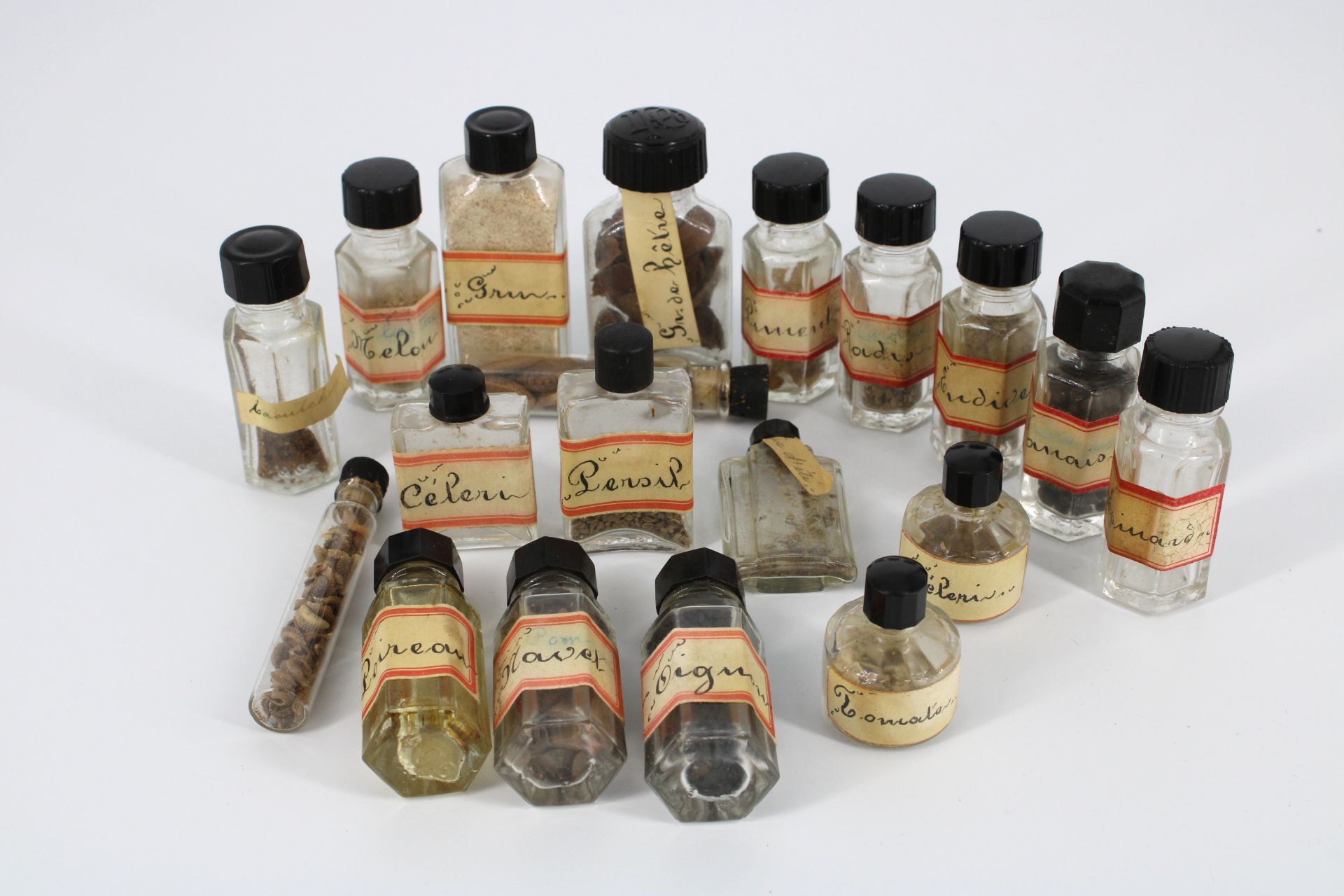
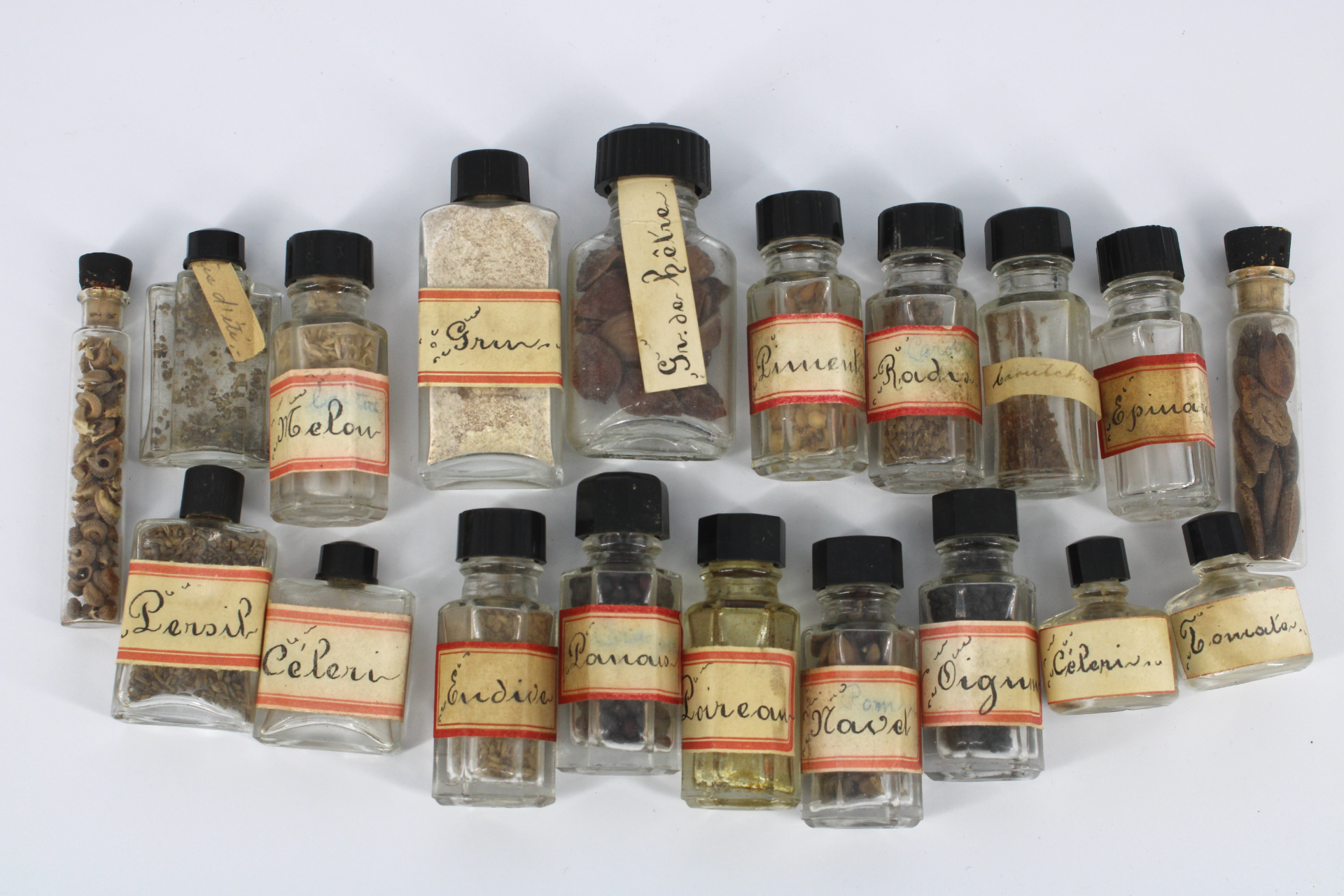
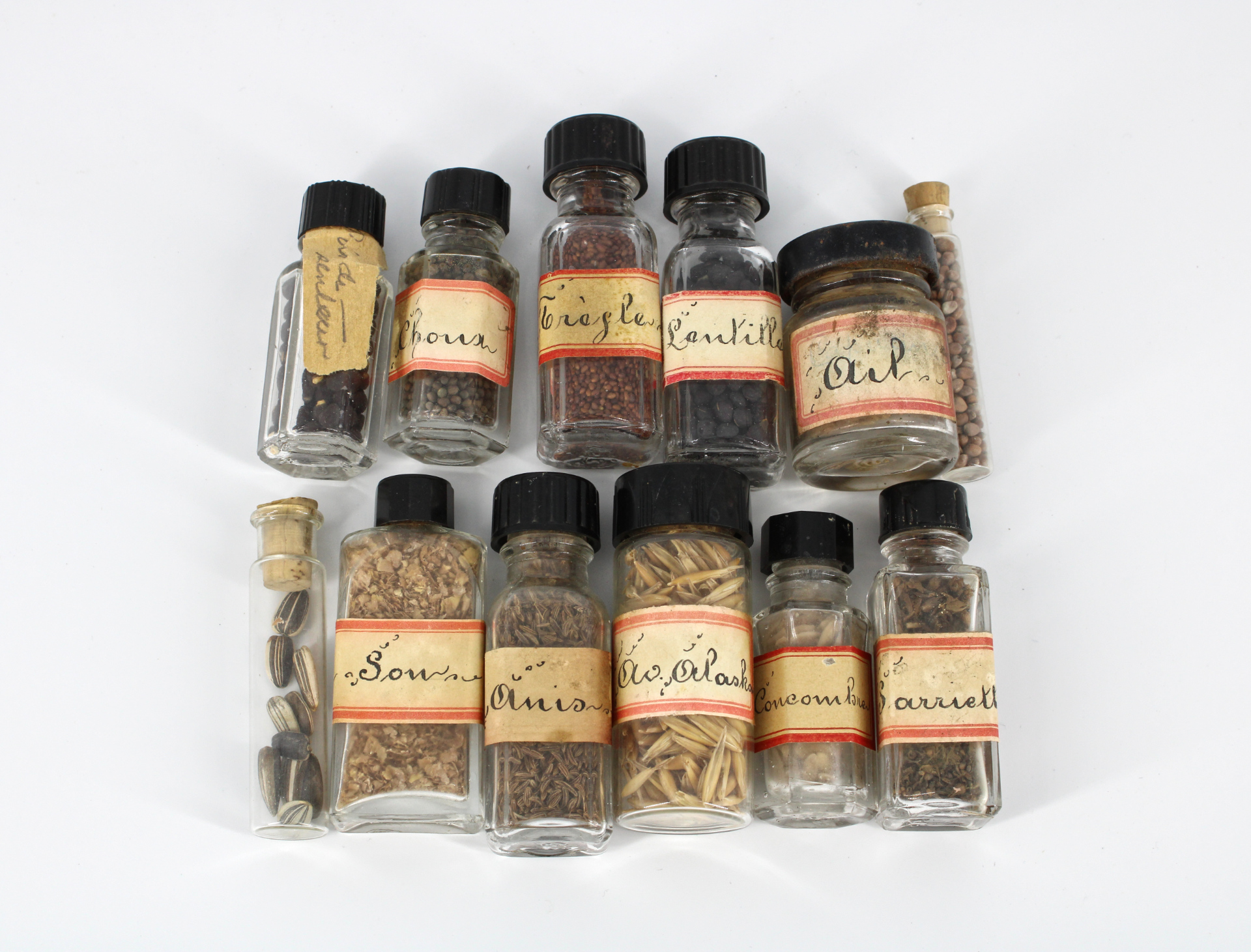
31 vials of seeds, some with labels and calligraphic writing indicating what they are. Some vials have cork stoppers, others have plastic stoppers.
Here are the identified seeds:
1. Melon
2. Unknown seed (Possible transliteration: "Grin"?)
3. Beech nut
4. Chili pepper
5. Radish
6. Rubber
7. Celery
8. Endive
9. Parsnip
10. Leek
11. Turnip
12. Onion
13. Cardamom? (Unidentified)
14. Parsley
15. Celery
16. Tomato
17. Summer [ès] (Possible transliteration)
18. Spinach
19. Marigold
20. Sweet pea
21. Cabbage
22. Clover
23. Lentils
24. Garlic
25. Unknown seed
26. Sunflower?
27. Bran
28. Anise
29. Alaska oats
30. Cucumber
31. Savory
Here are the identified seeds:
1. Melon
2. Unknown seed (Possible transliteration: "Grin"?)
3. Beech nut
4. Chili pepper
5. Radish
6. Rubber
7. Celery
8. Endive
9. Parsnip
10. Leek
11. Turnip
12. Onion
13. Cardamom? (Unidentified)
14. Parsley
15. Celery
16. Tomato
17. Summer [ès] (Possible transliteration)
18. Spinach
19. Marigold
20. Sweet pea
21. Cabbage
22. Clover
23. Lentils
24. Garlic
25. Unknown seed
26. Sunflower?
27. Bran
28. Anise
29. Alaska oats
30. Cucumber
31. Savory
Value of the item
The object bears witness to a skill traditionally associated with or practiced by the Acadian population, namely agriculture, both family-based (gardens, vegetable patches, livestock farming) and commercial. The object bears witness to the agricultural production tools used by the Acadian population; in this case, a "natural" tool, namely seeds. Although its origin is unknown, this heritage is generally identified with the Acadian people.
The vials also provide information about what was growing in the Gaspé region at the time: melons, rubber, and Alaskan oats are just a few of the many different species.
The vials also provide information about what was growing in the Gaspé region at the time: melons, rubber, and Alaskan oats are just a few of the many different species.
Learn more
In 2021, the Acadian Museum of Quebec inaugurated its second temporary exhibition, Maisons mémoire (Memory Houses), which lifts the veil on the past of Acadian houses in the region. The home of Mrs. Rose Bujold and its large 130-year-old garden, which fed several families—four in total—for years, bears witness to the region's essential agricultural heritage. When the house was built, it was a subsistence garden. There is no record of the seeds that were sown, but we can imagine that there were cabbages, turnips, beets, and potatoes—vegetables that are consumed year-round—and that the vegetables harvested had to reflect the tastes and food traditions in vogue at the time and therefore evolve in line with them.