
Download image

Book "Tributes to Acadian Tradition" | Book | Wi’gatign
Information about the object
Historical period
1948
Dimensions
Unknown
Classification
Communications -- Book
Accession number
P1.1e.2
Division
Documents and archives -- Means of expression -- Books
Collection
Bona Arsenault
Donor
Bona Arsenault?
Category/theme
Description of the object
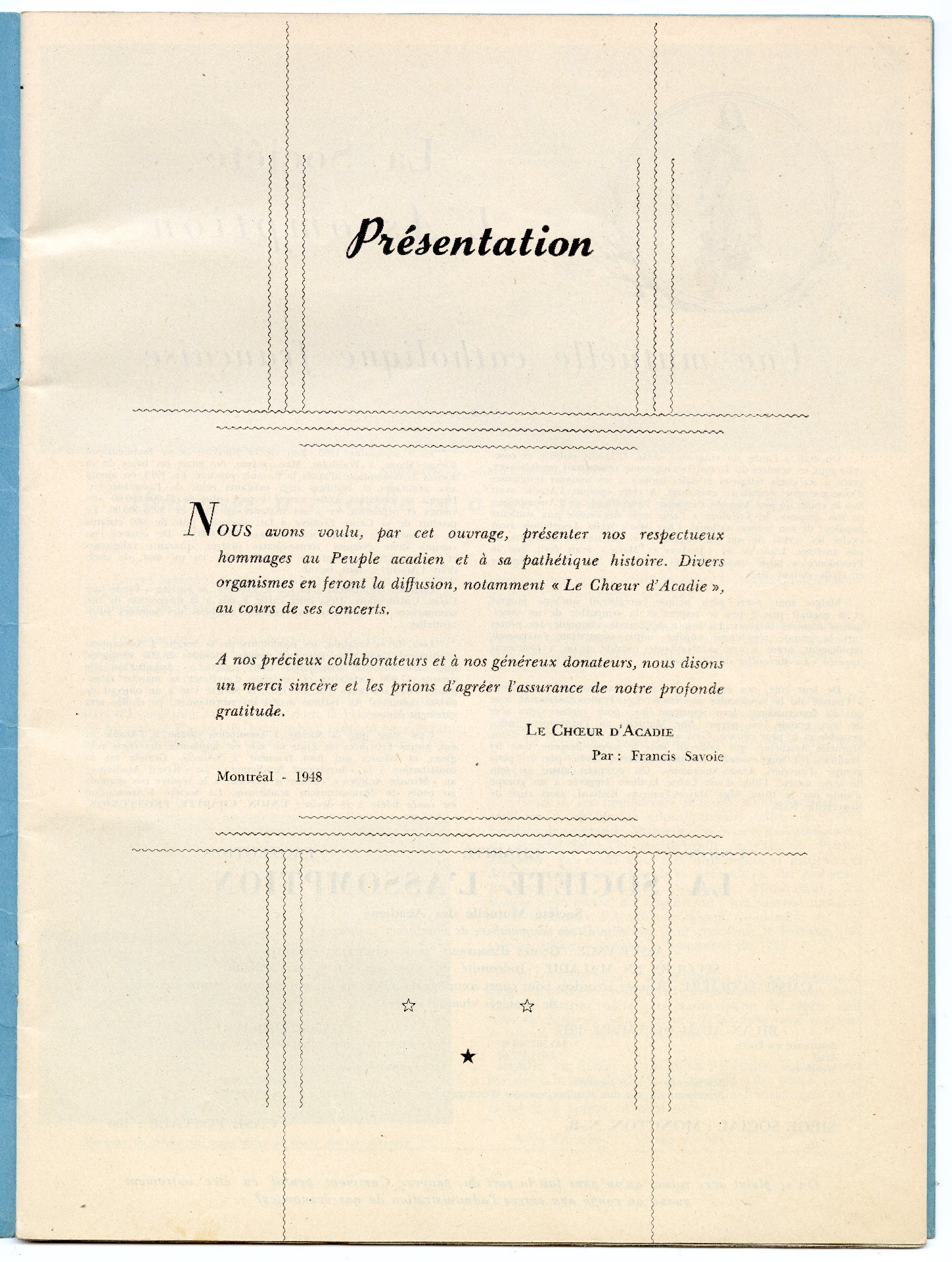
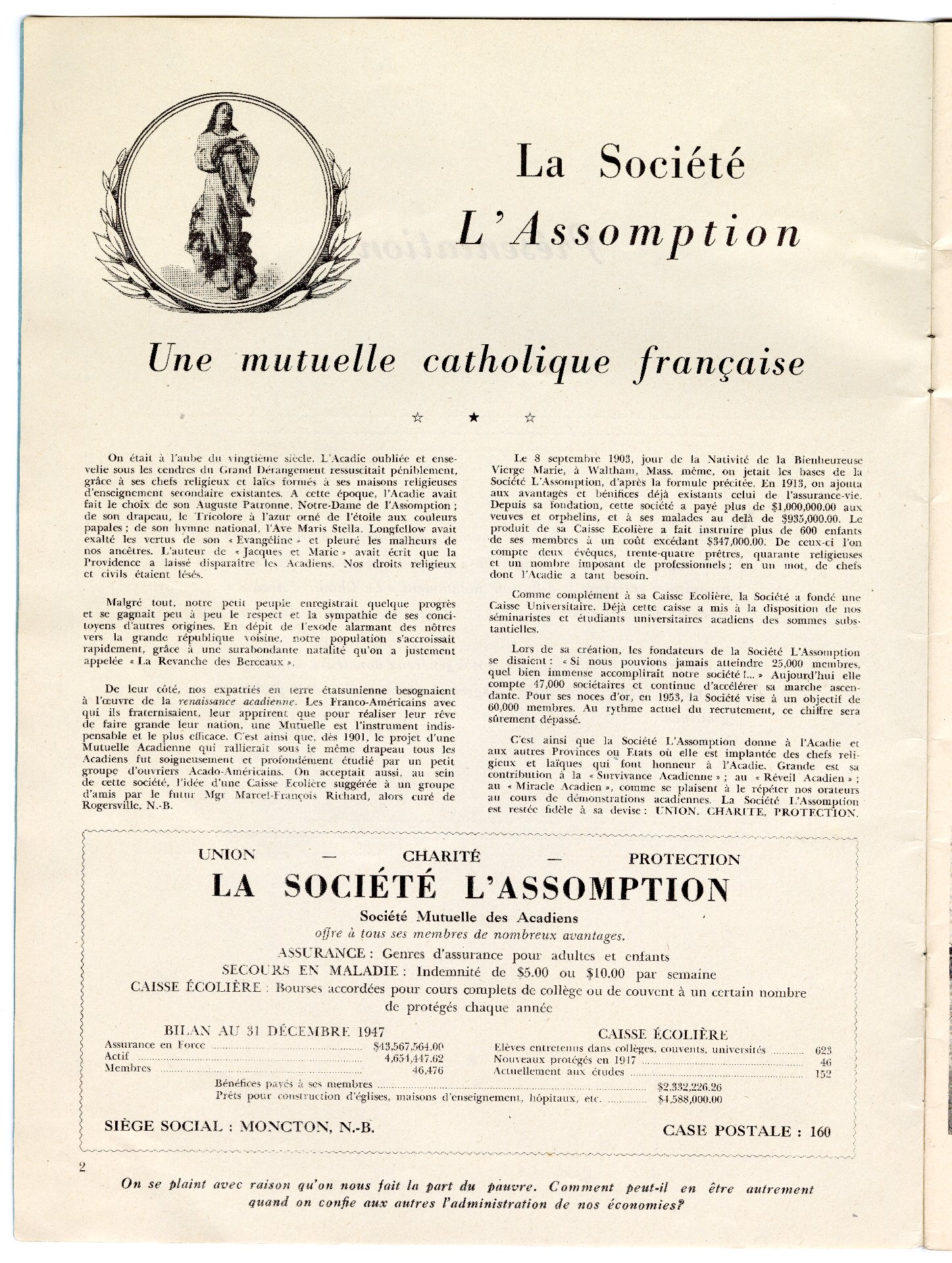
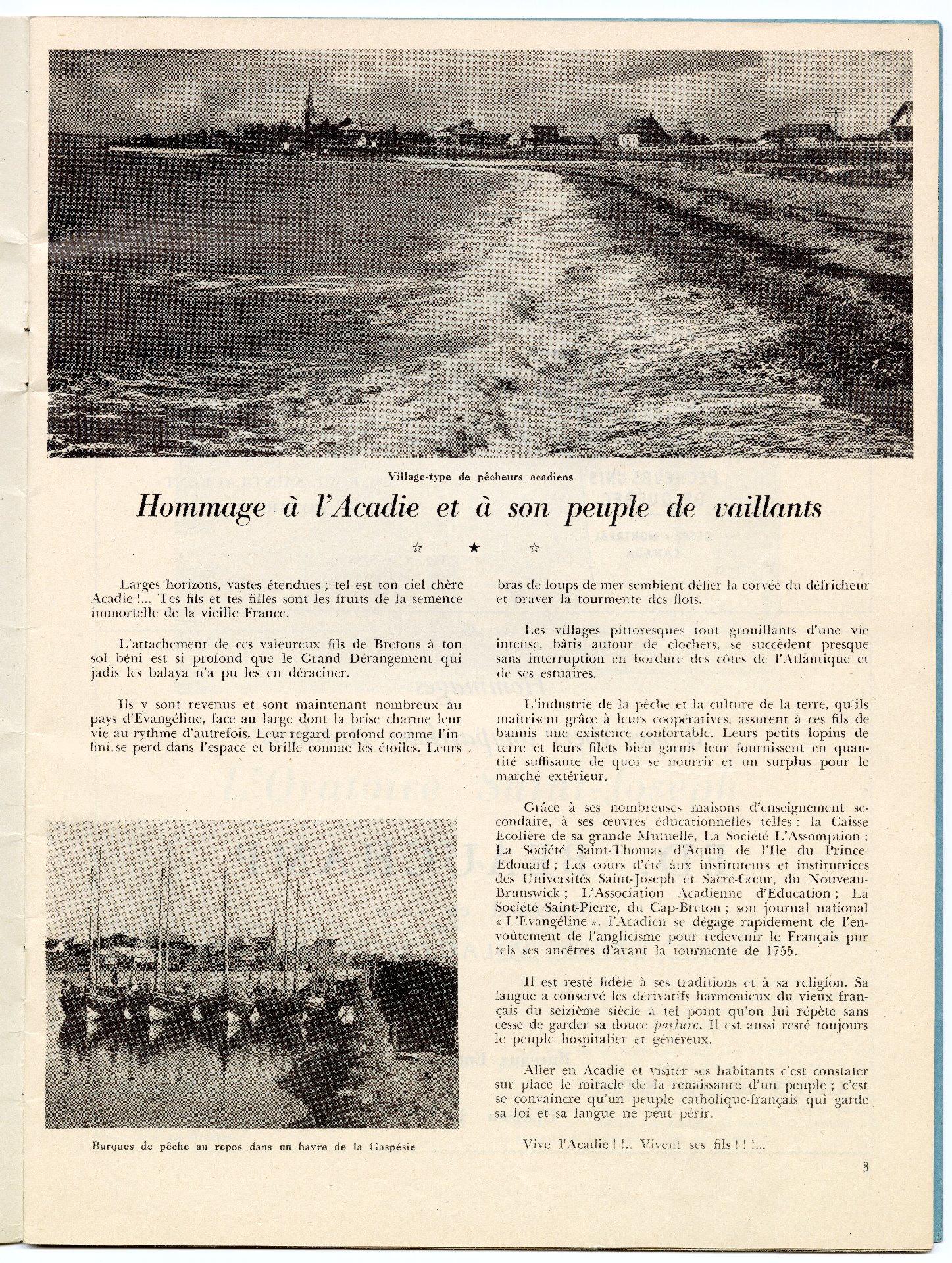
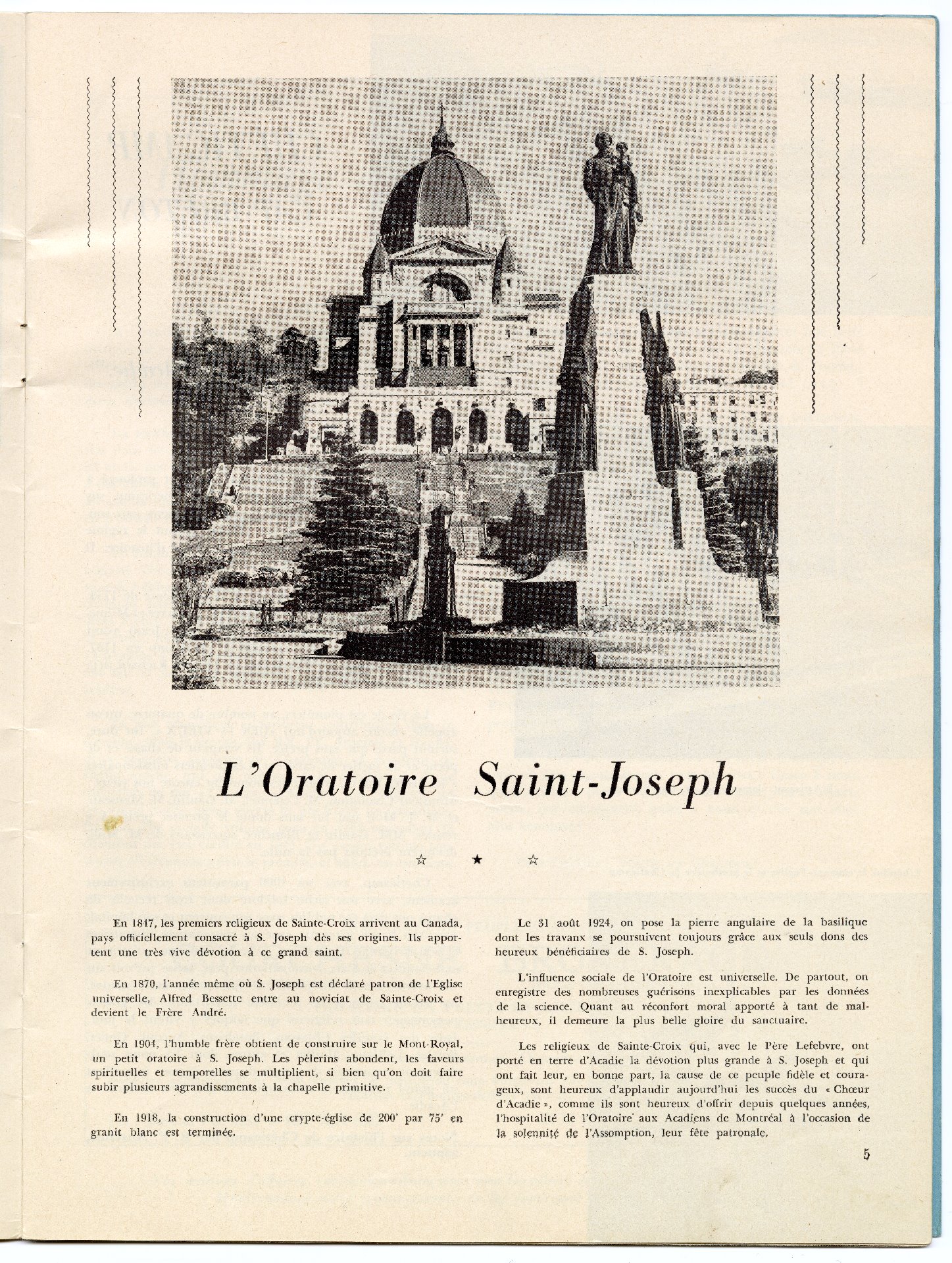
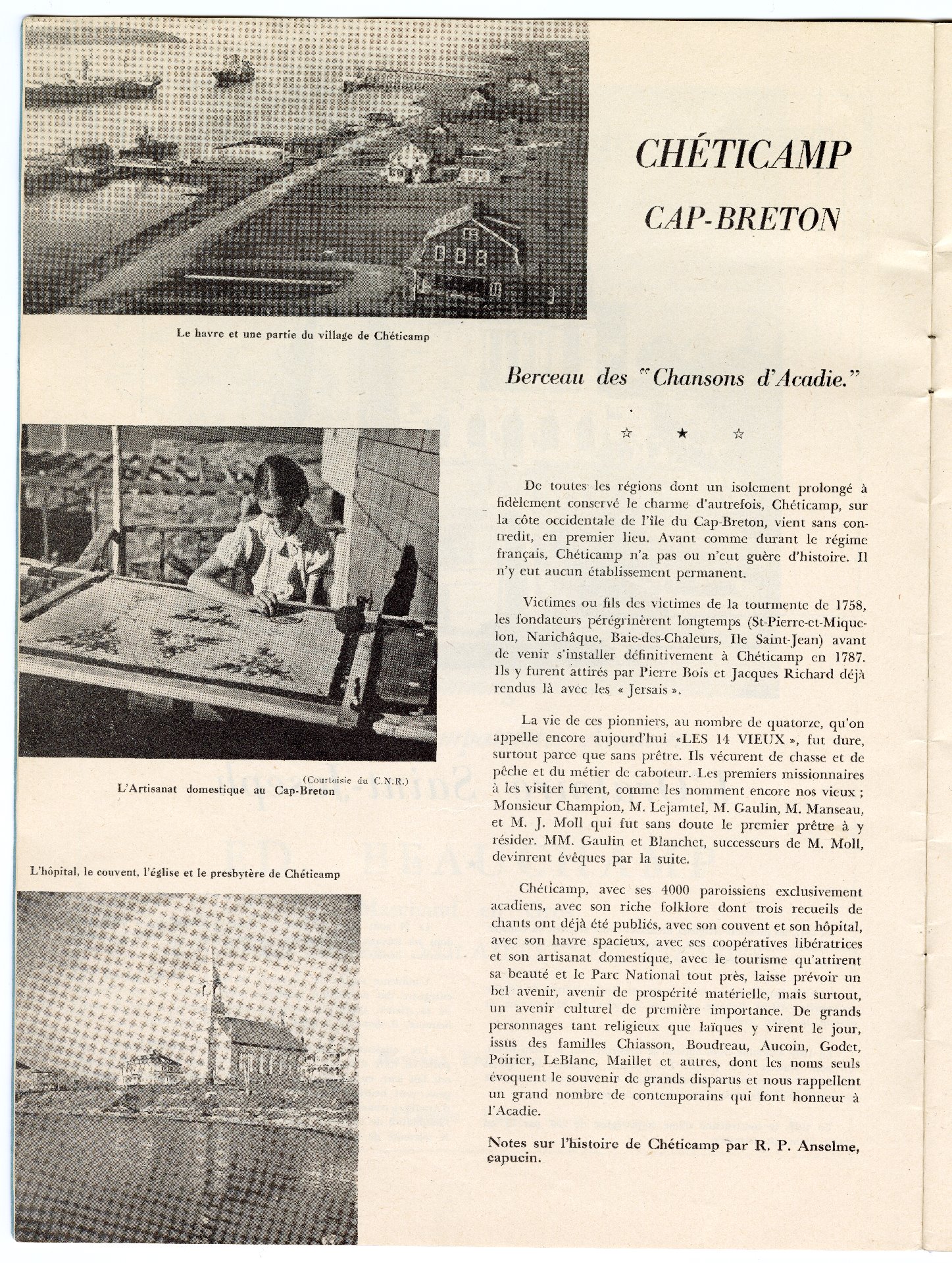
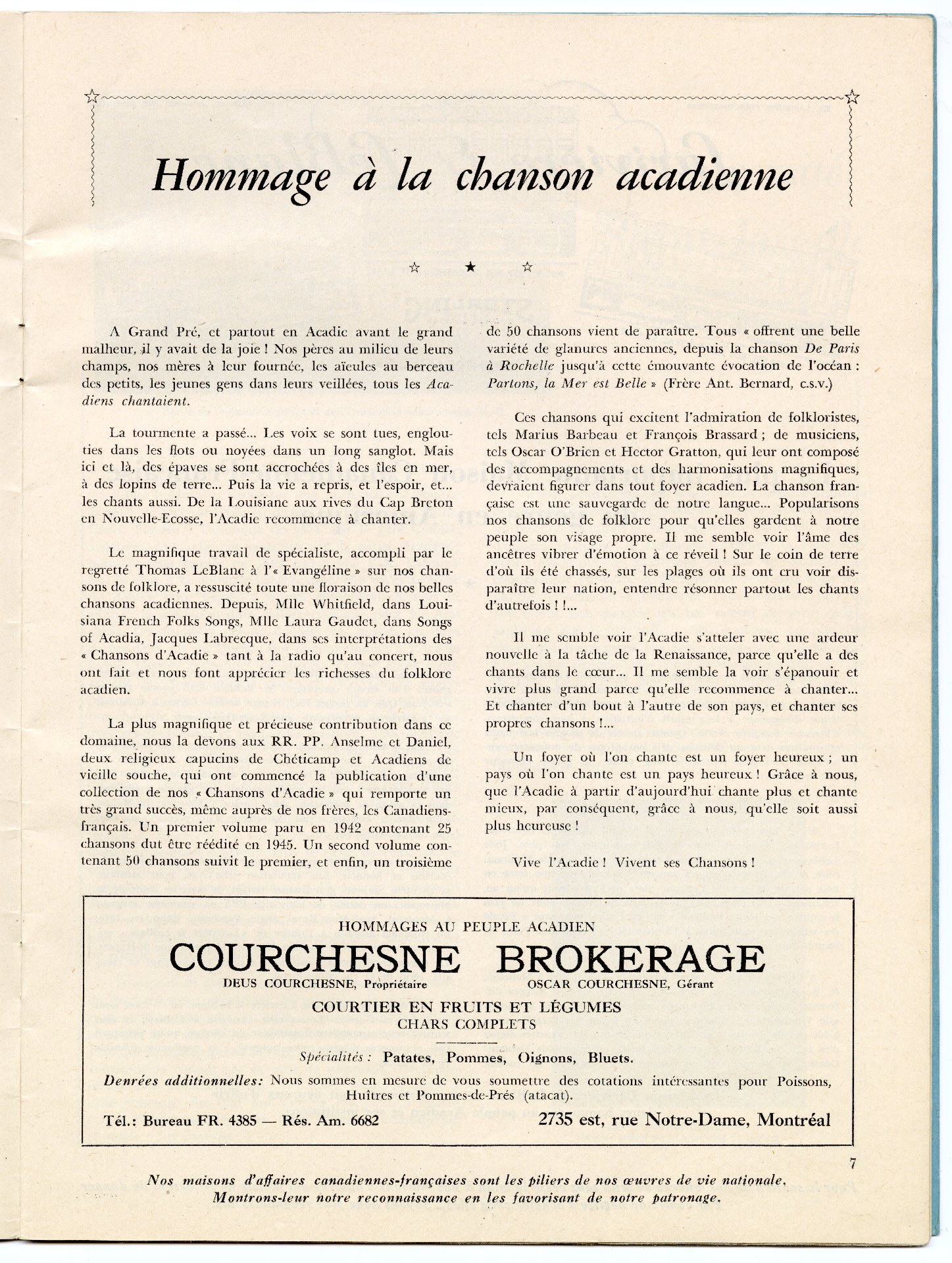
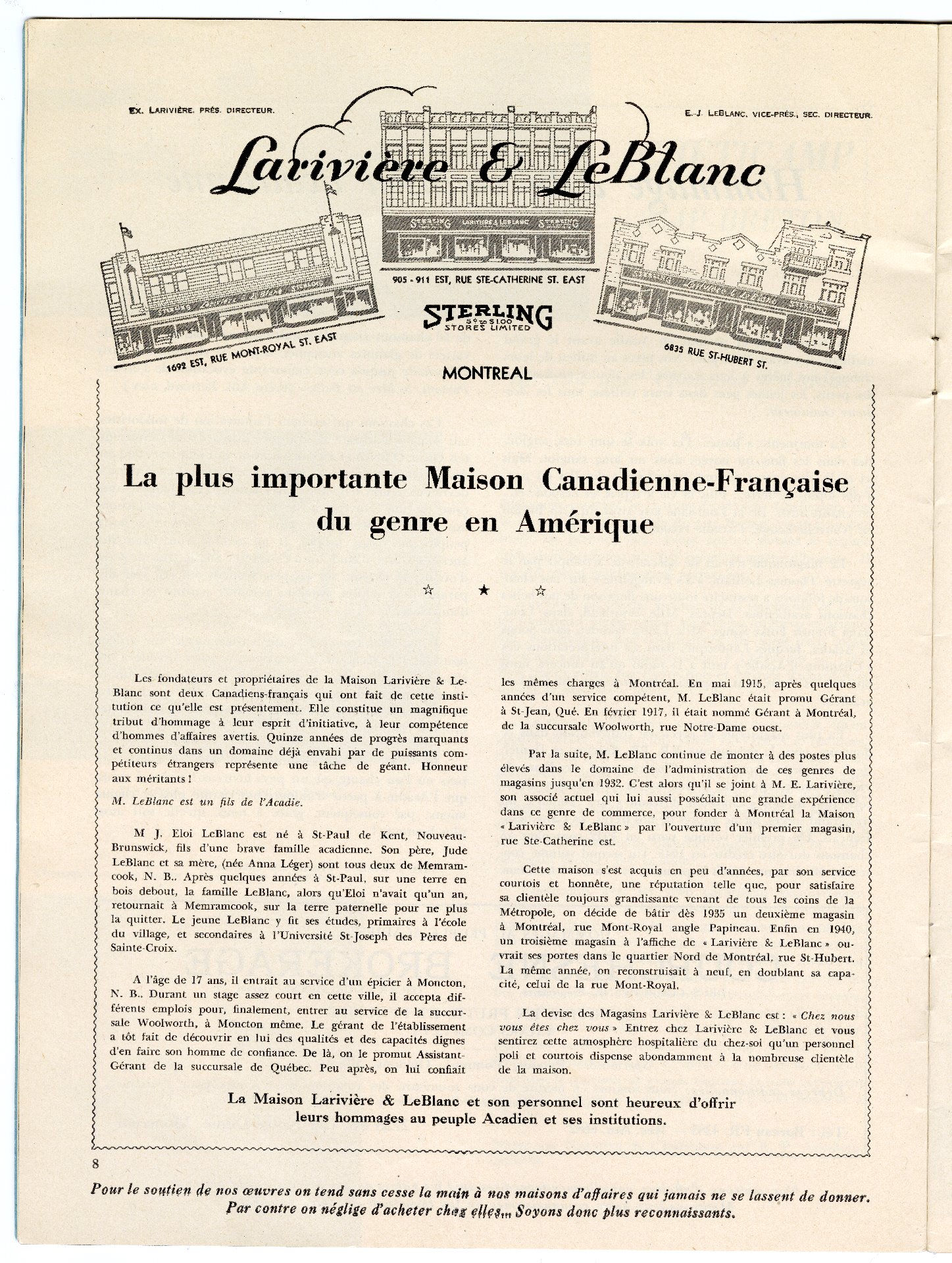
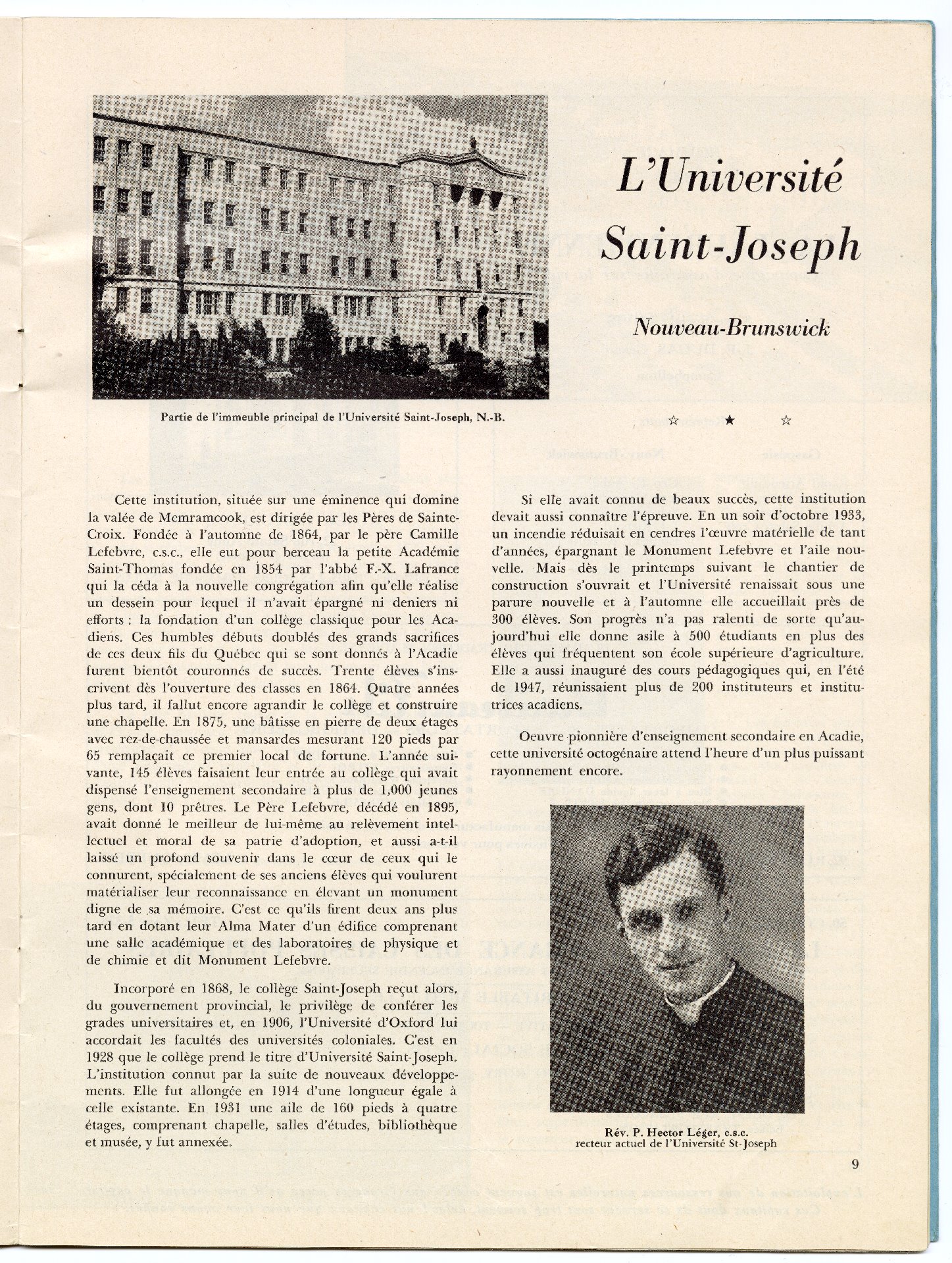
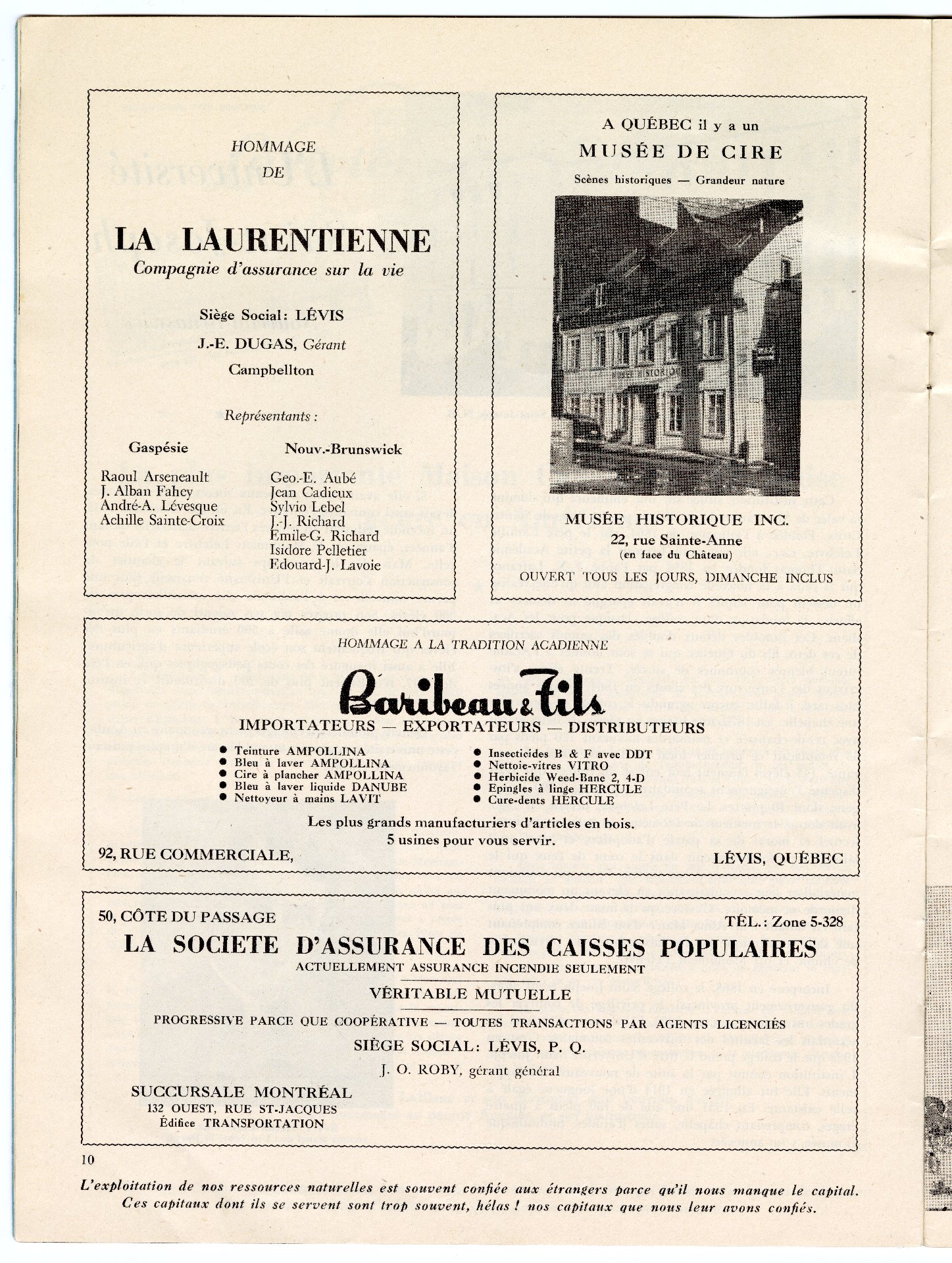
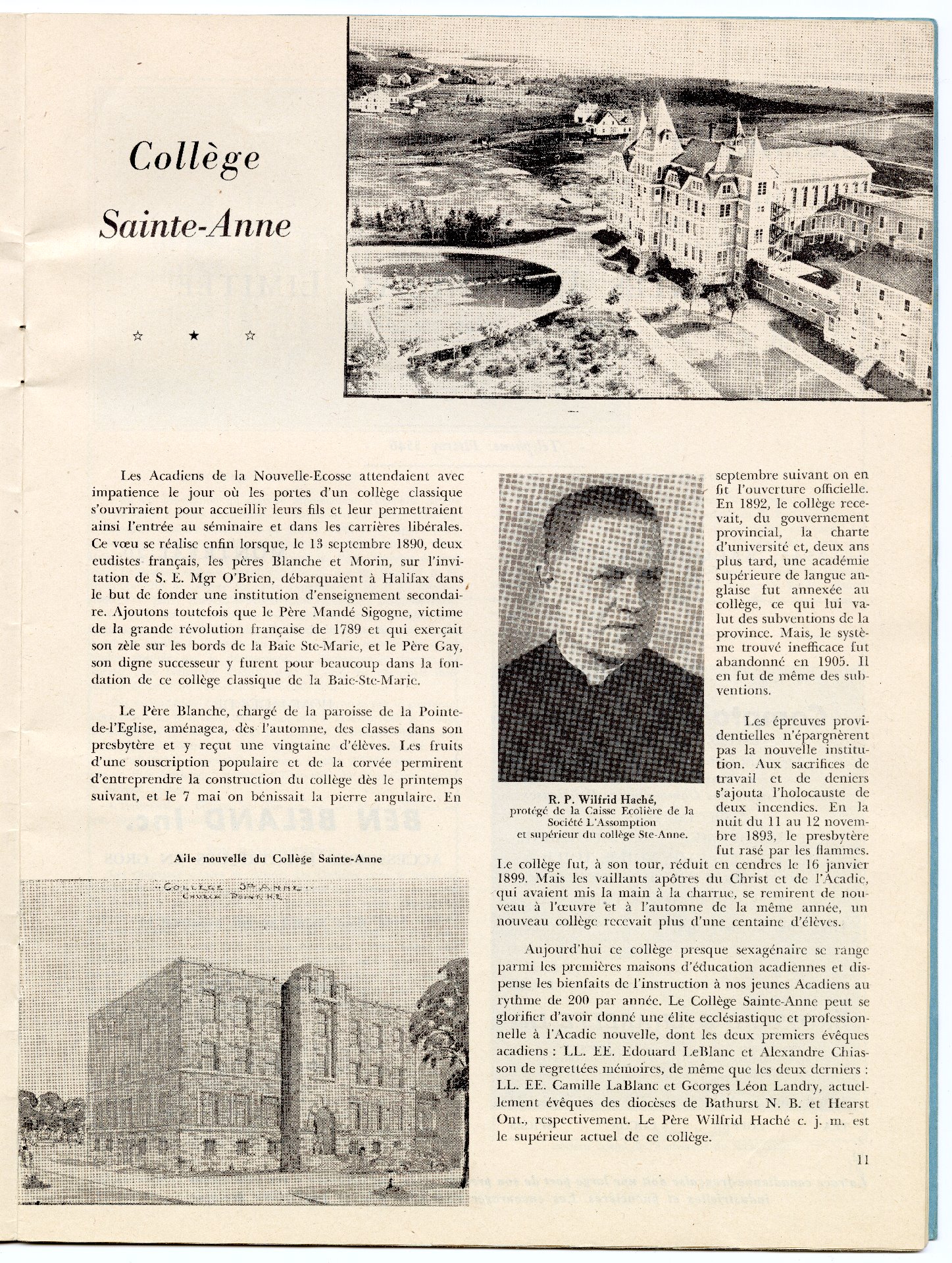
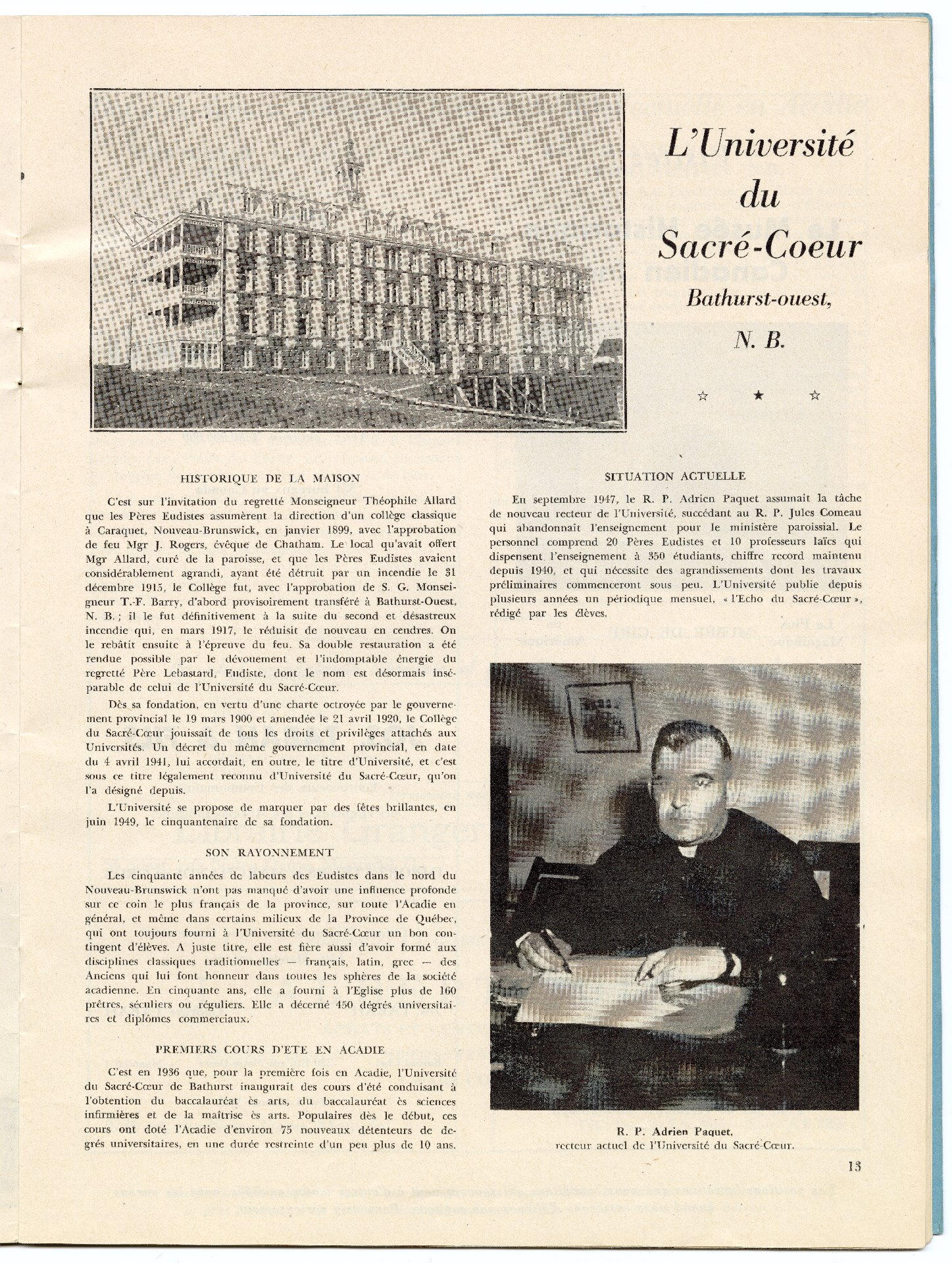
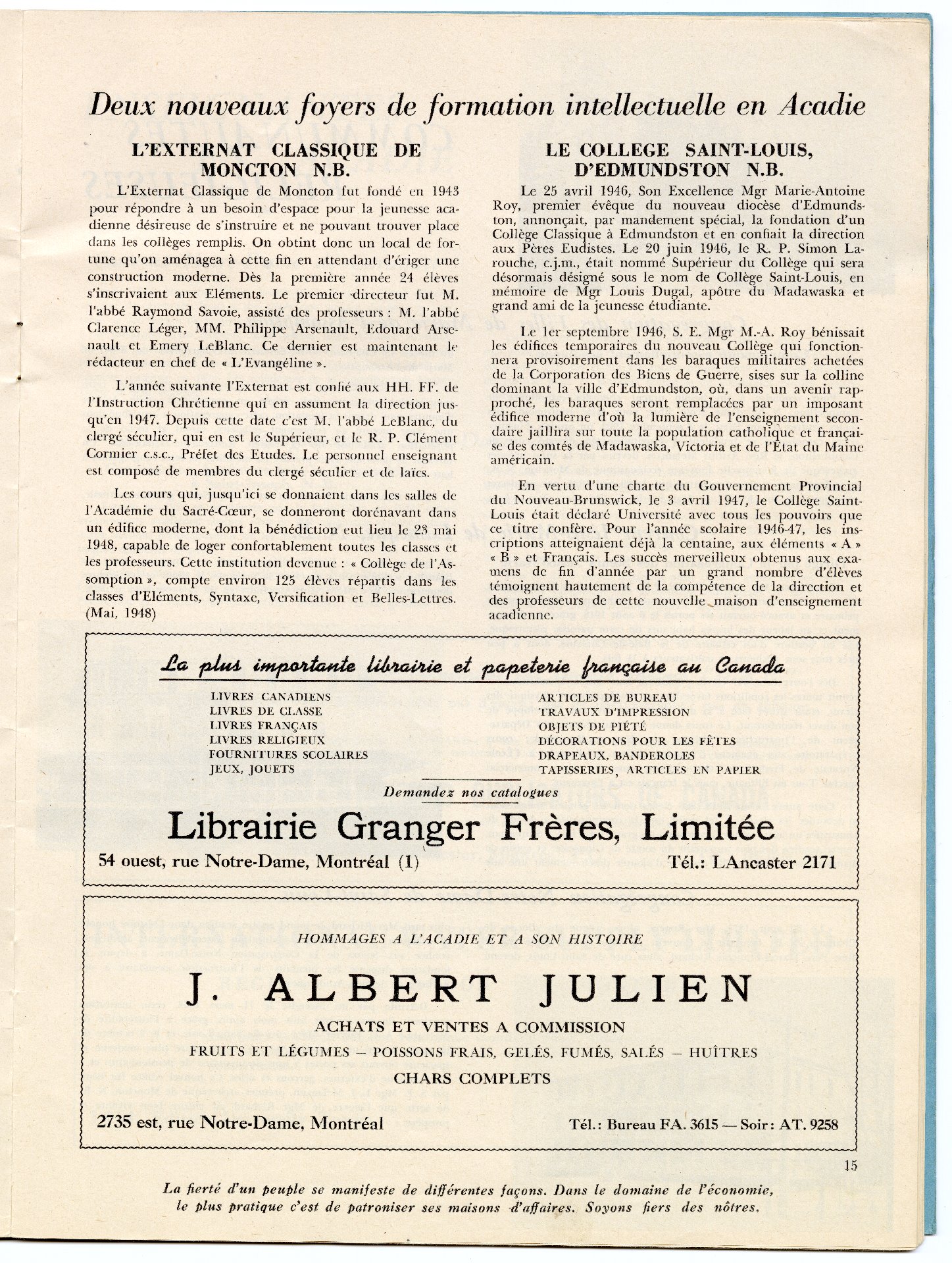
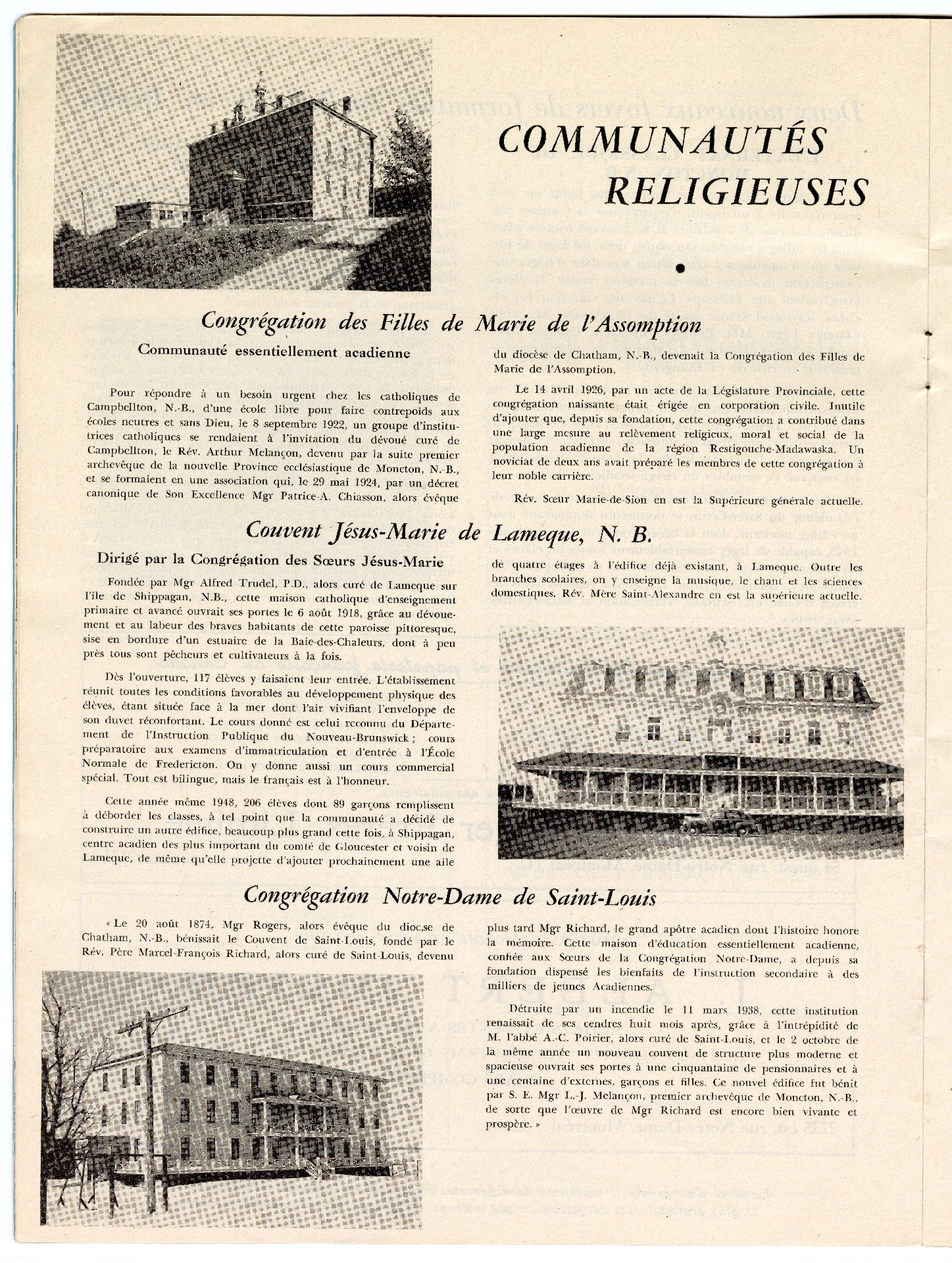
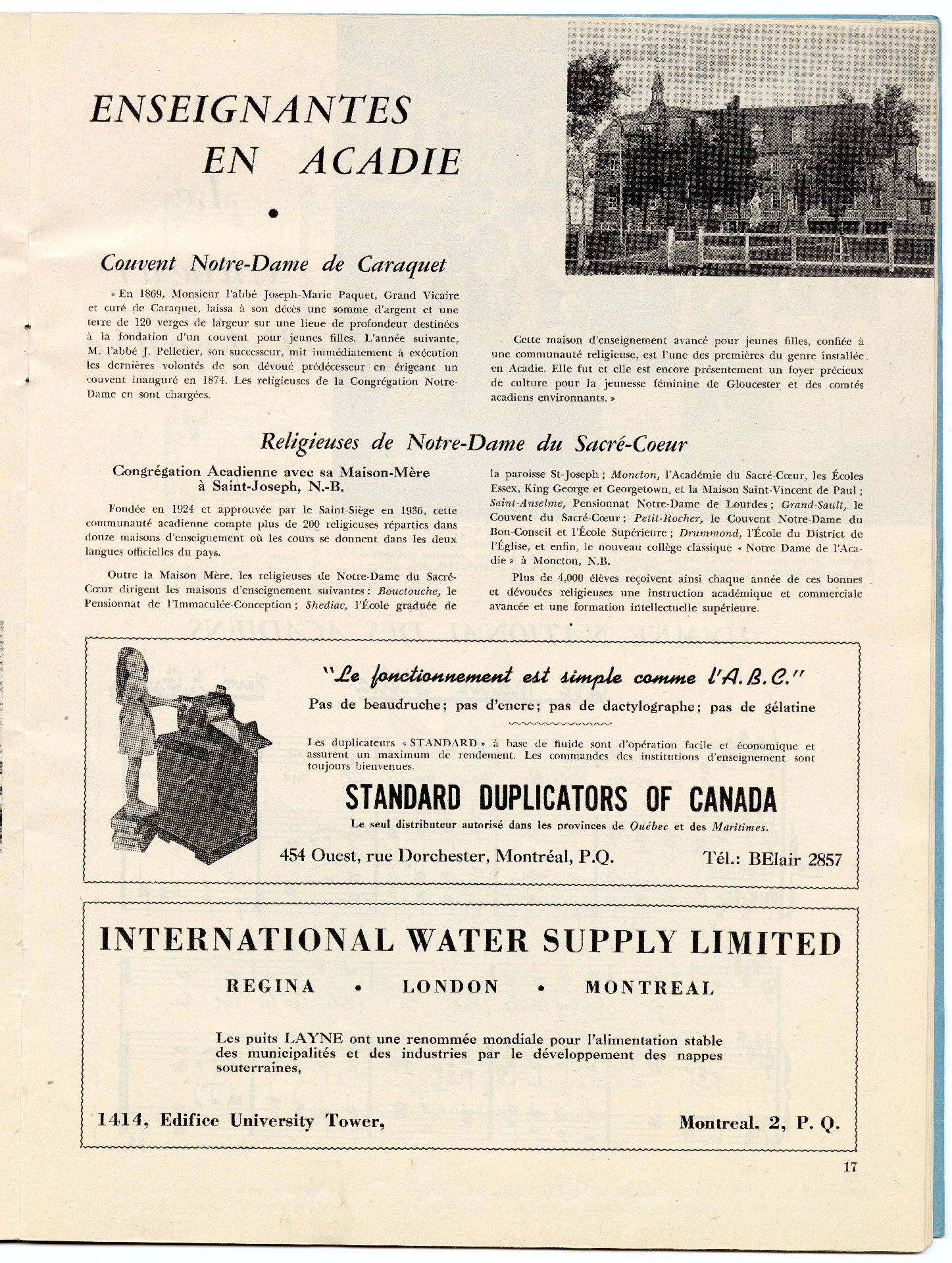
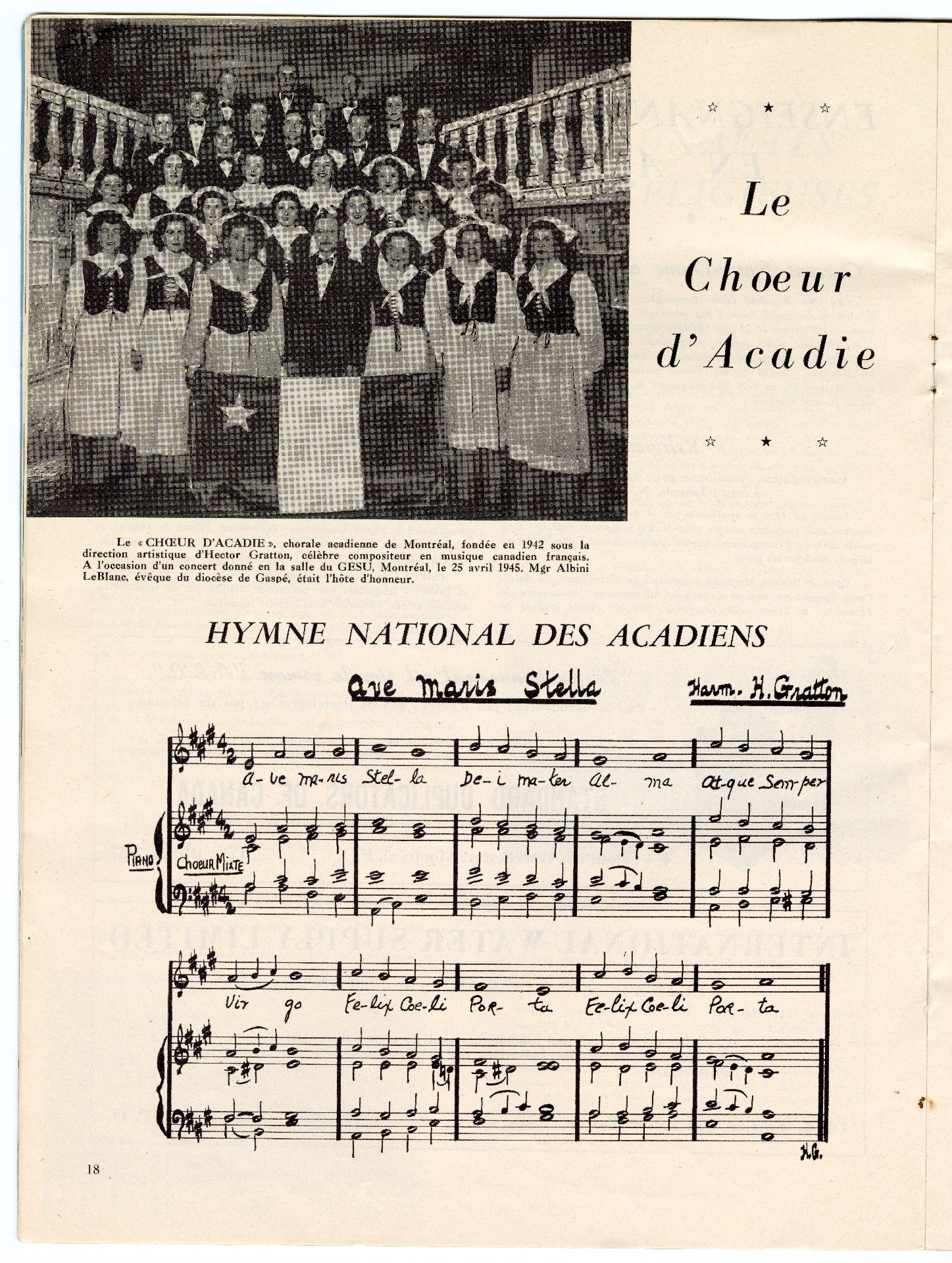
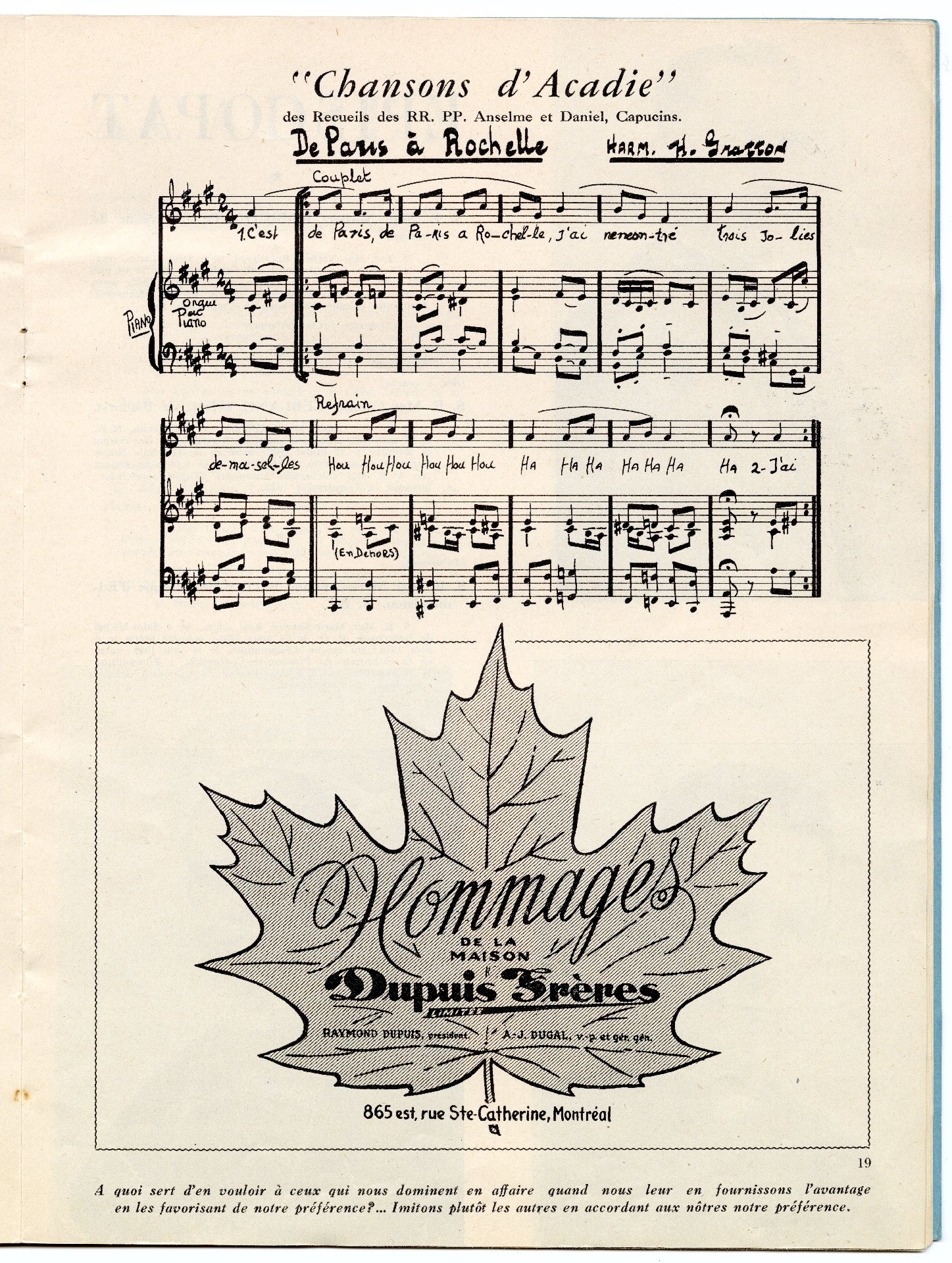
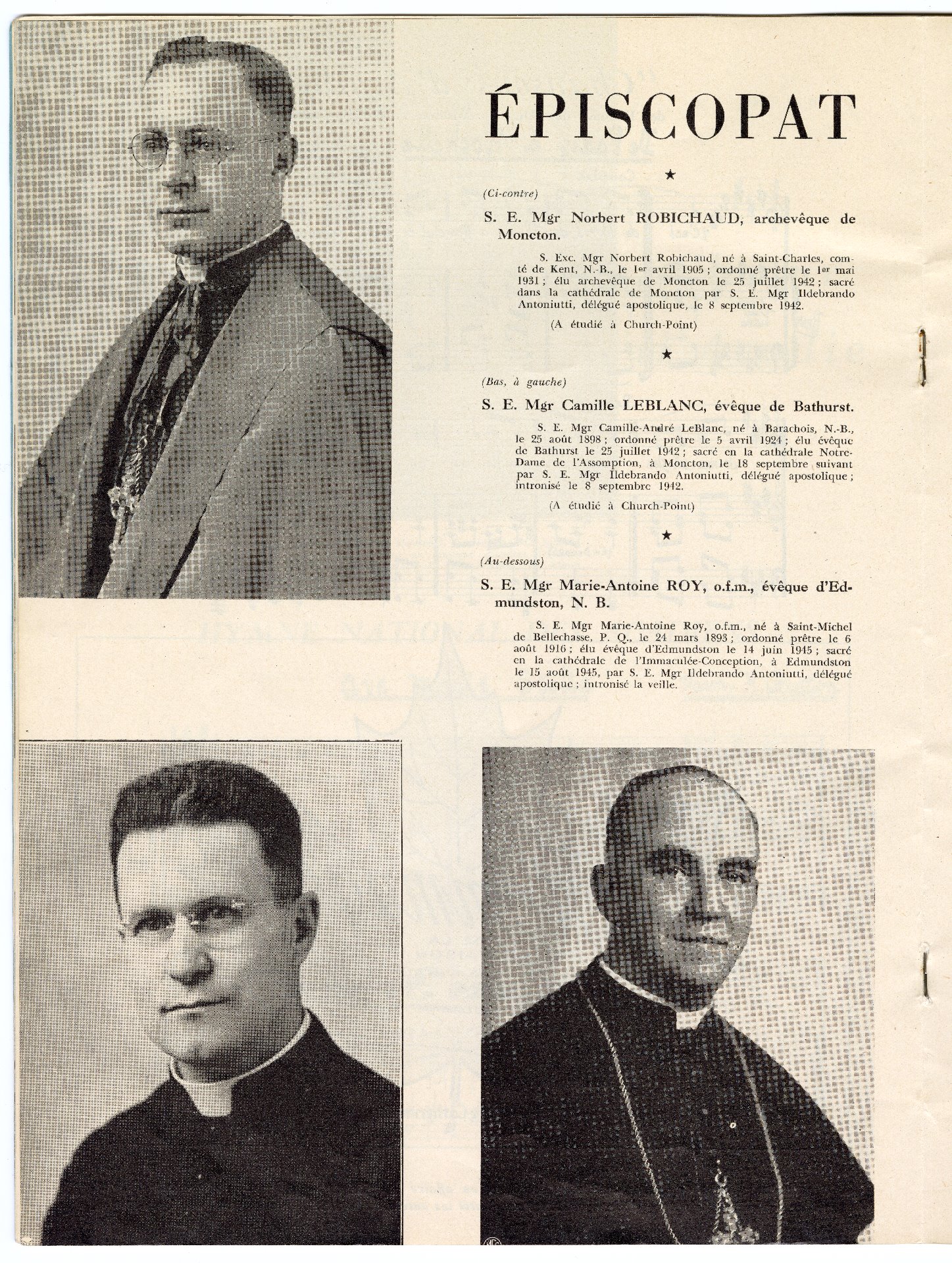
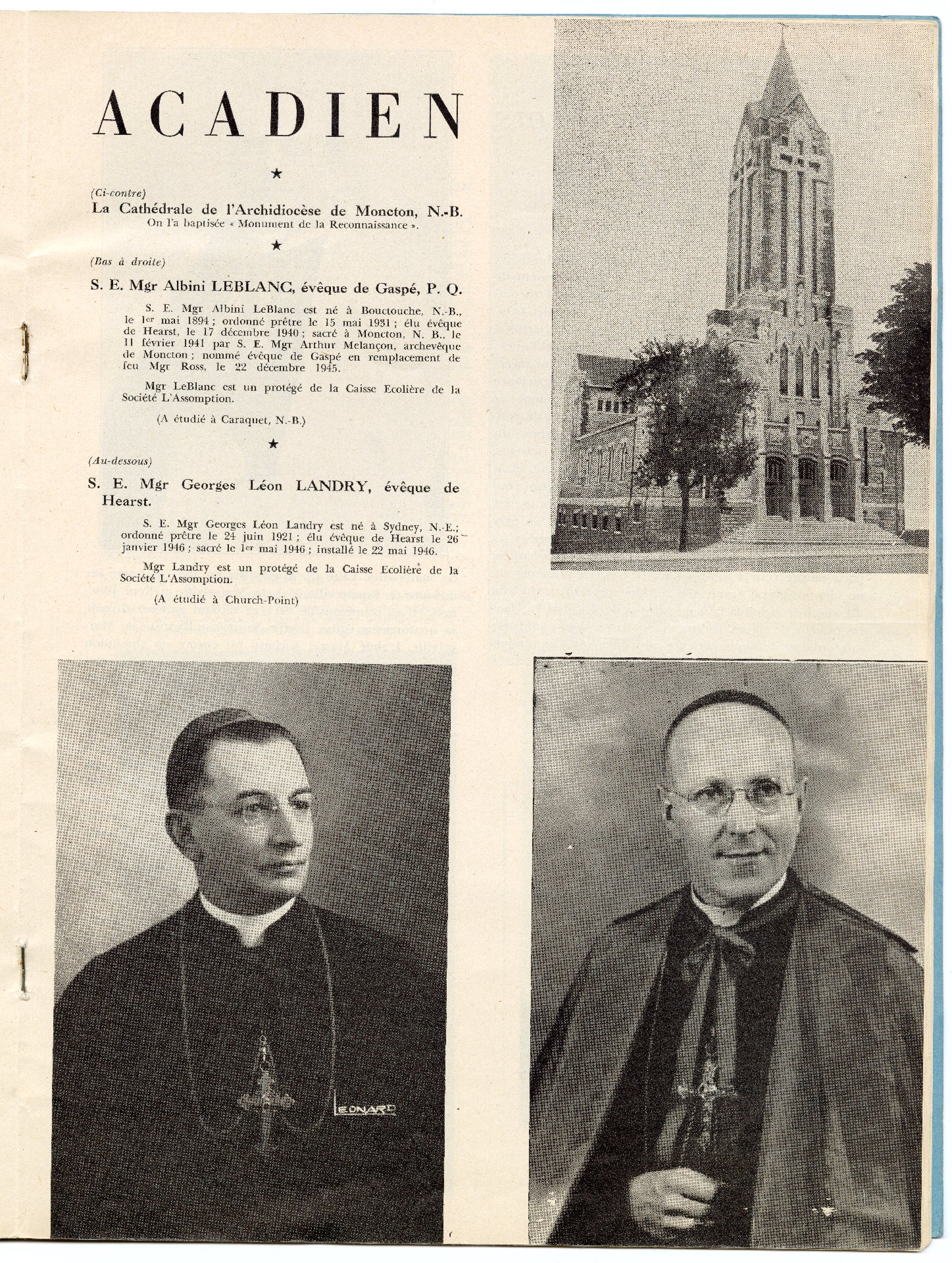
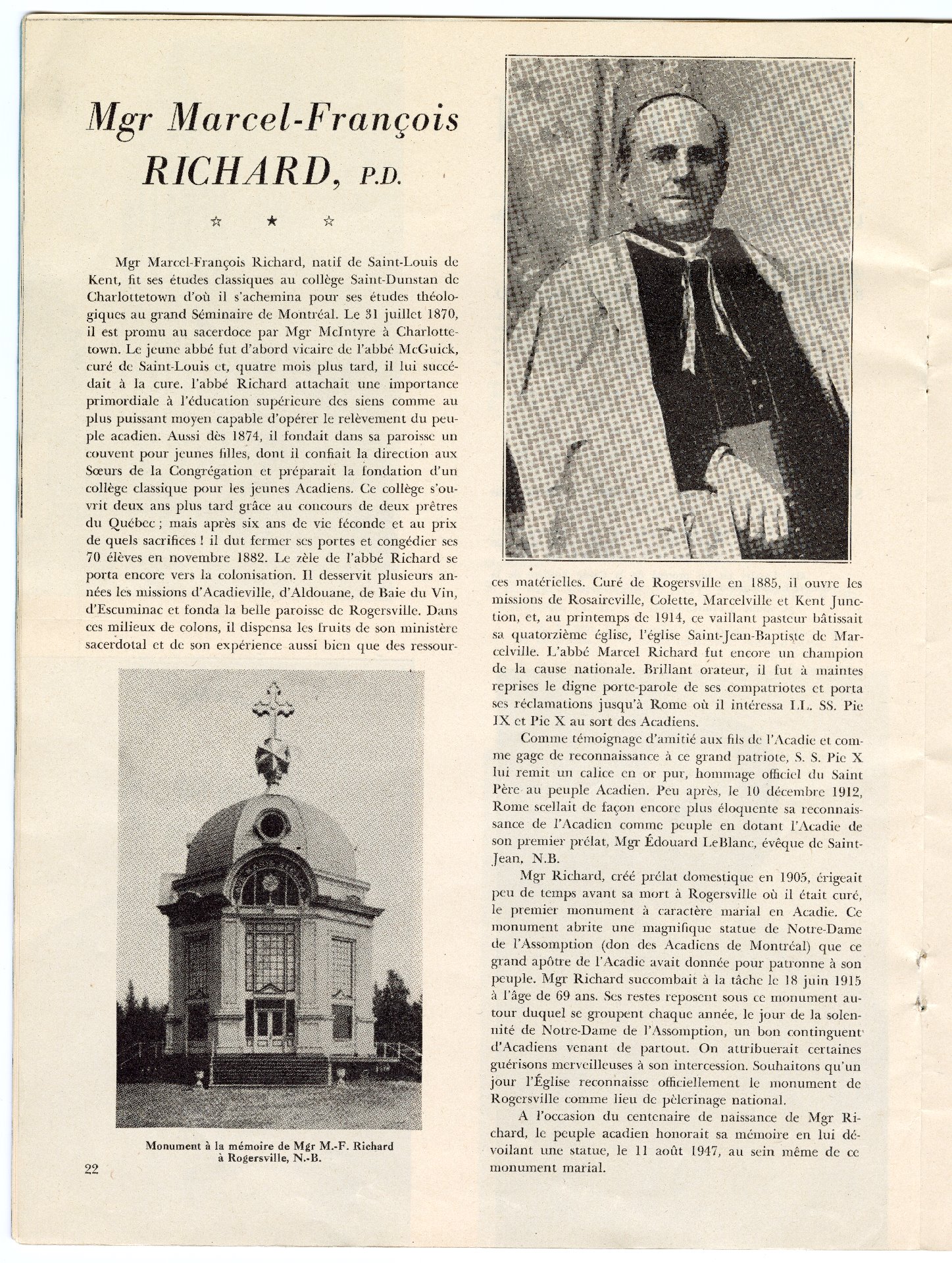
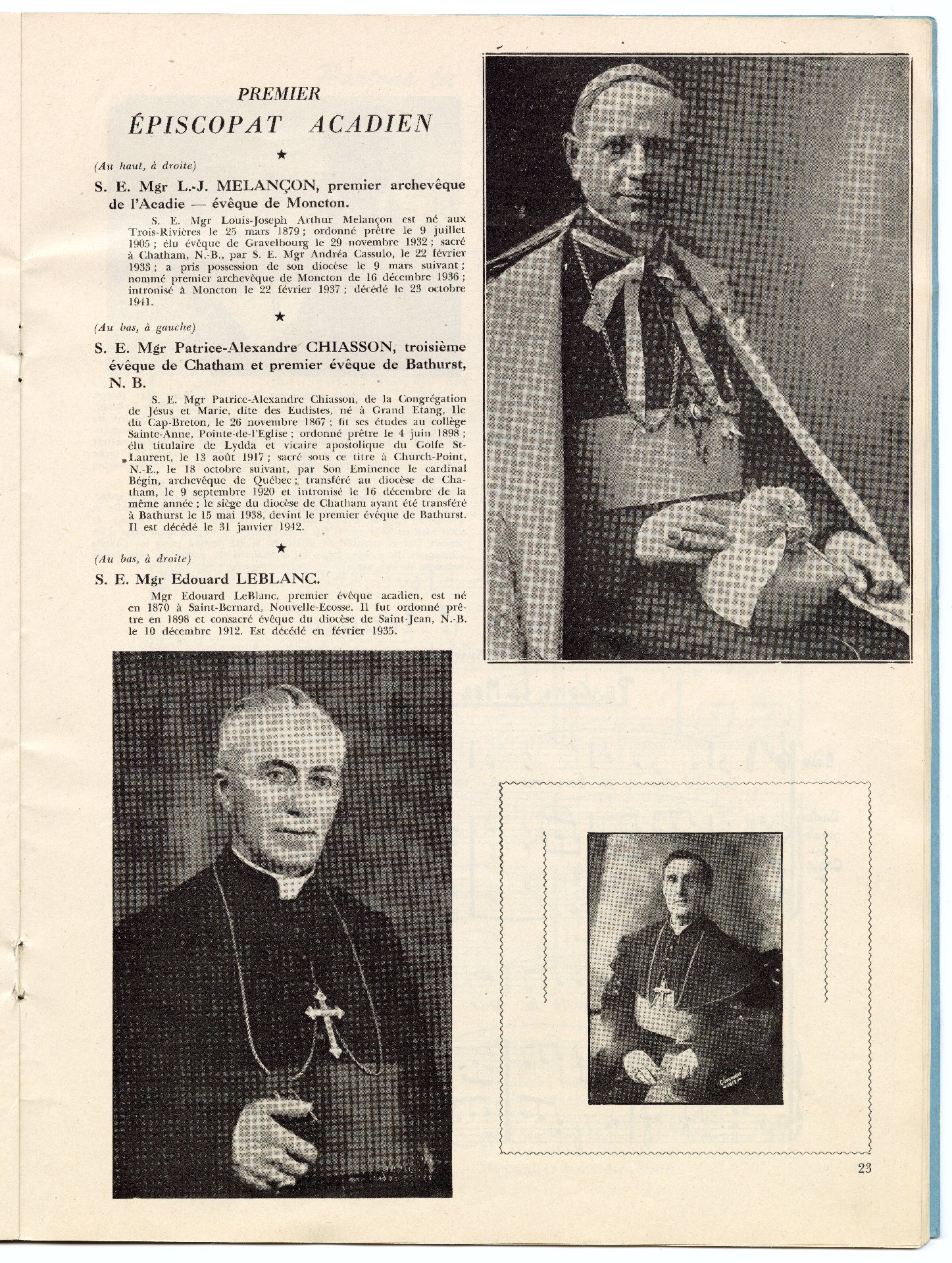
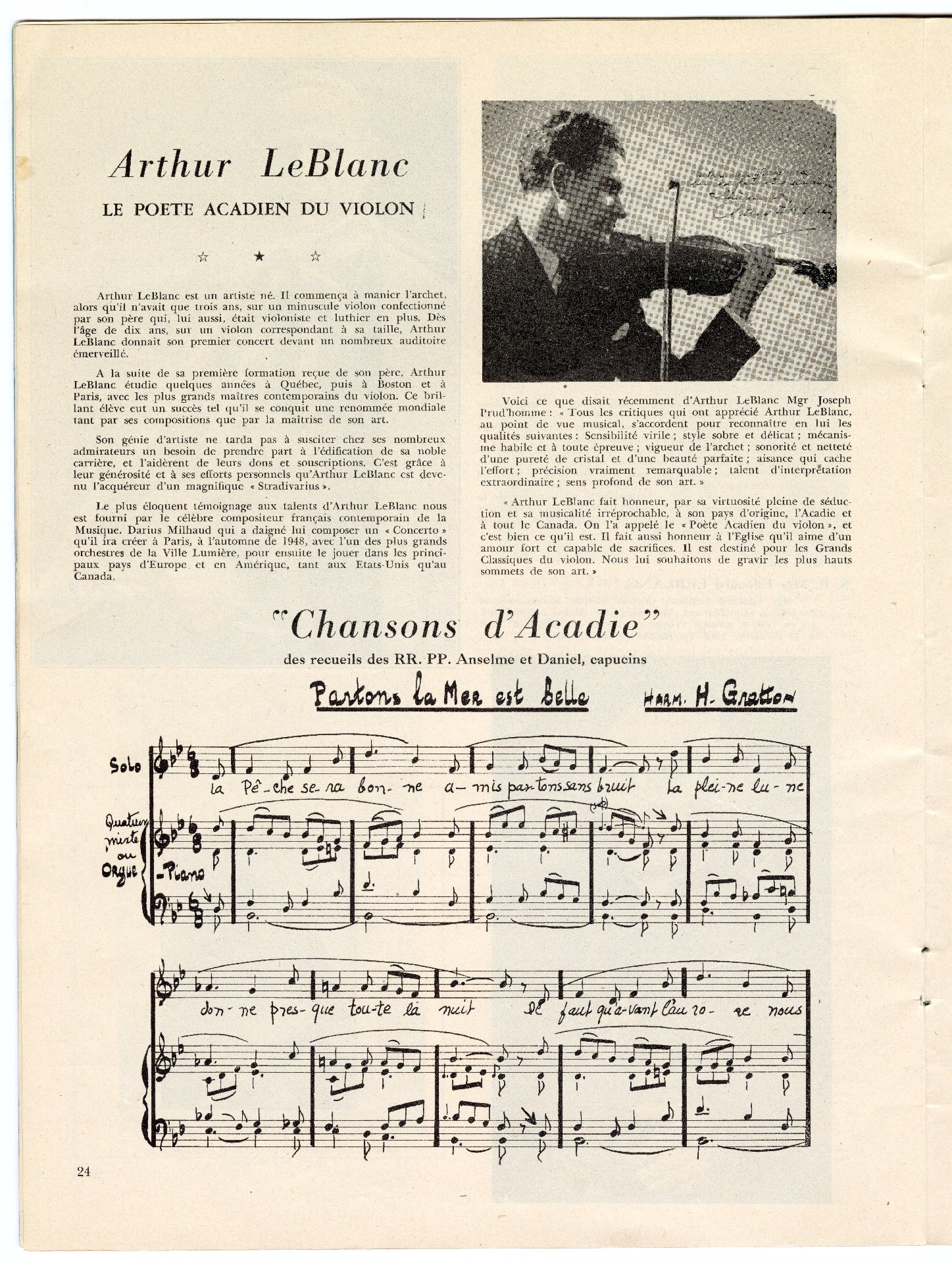
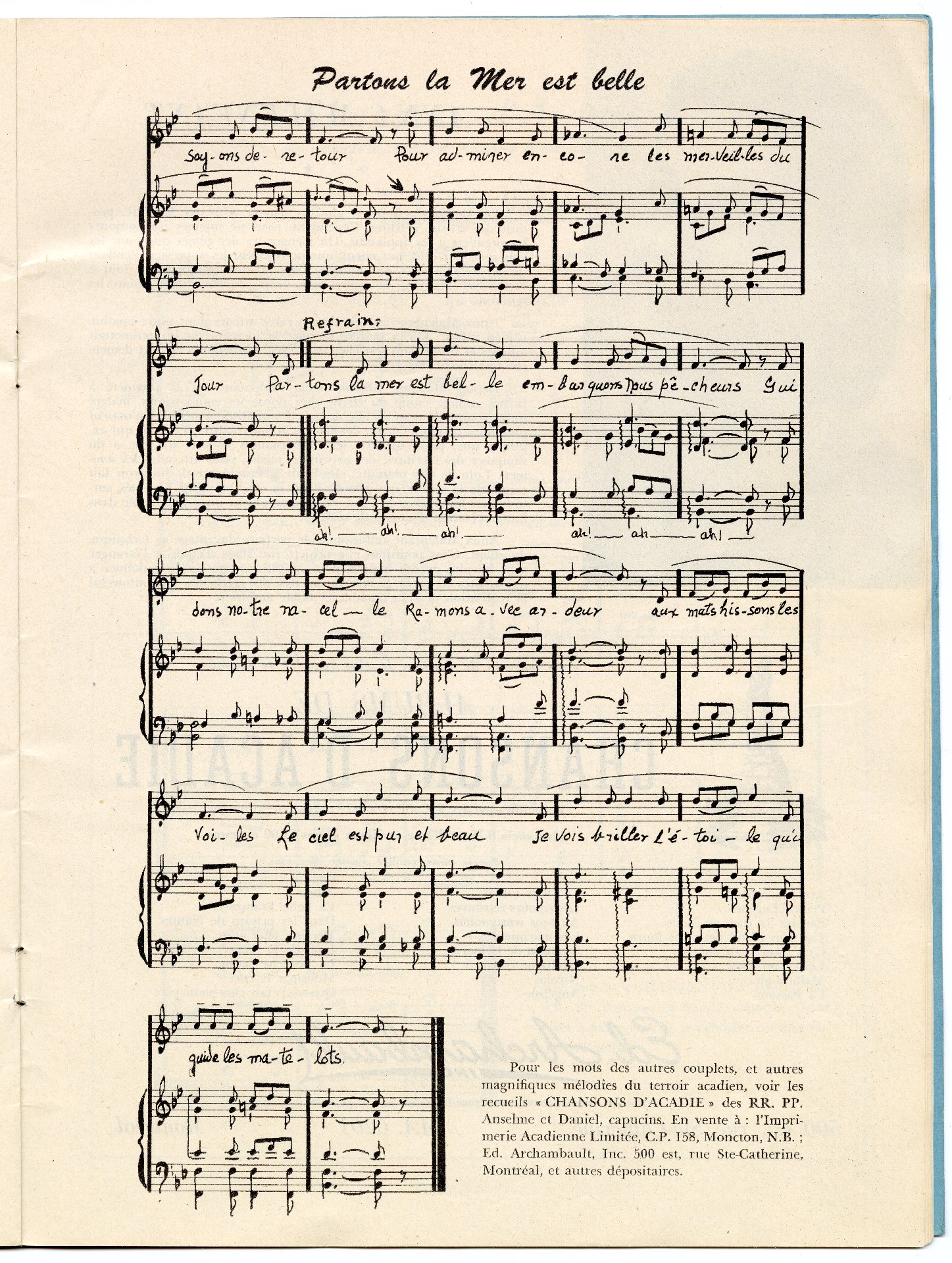
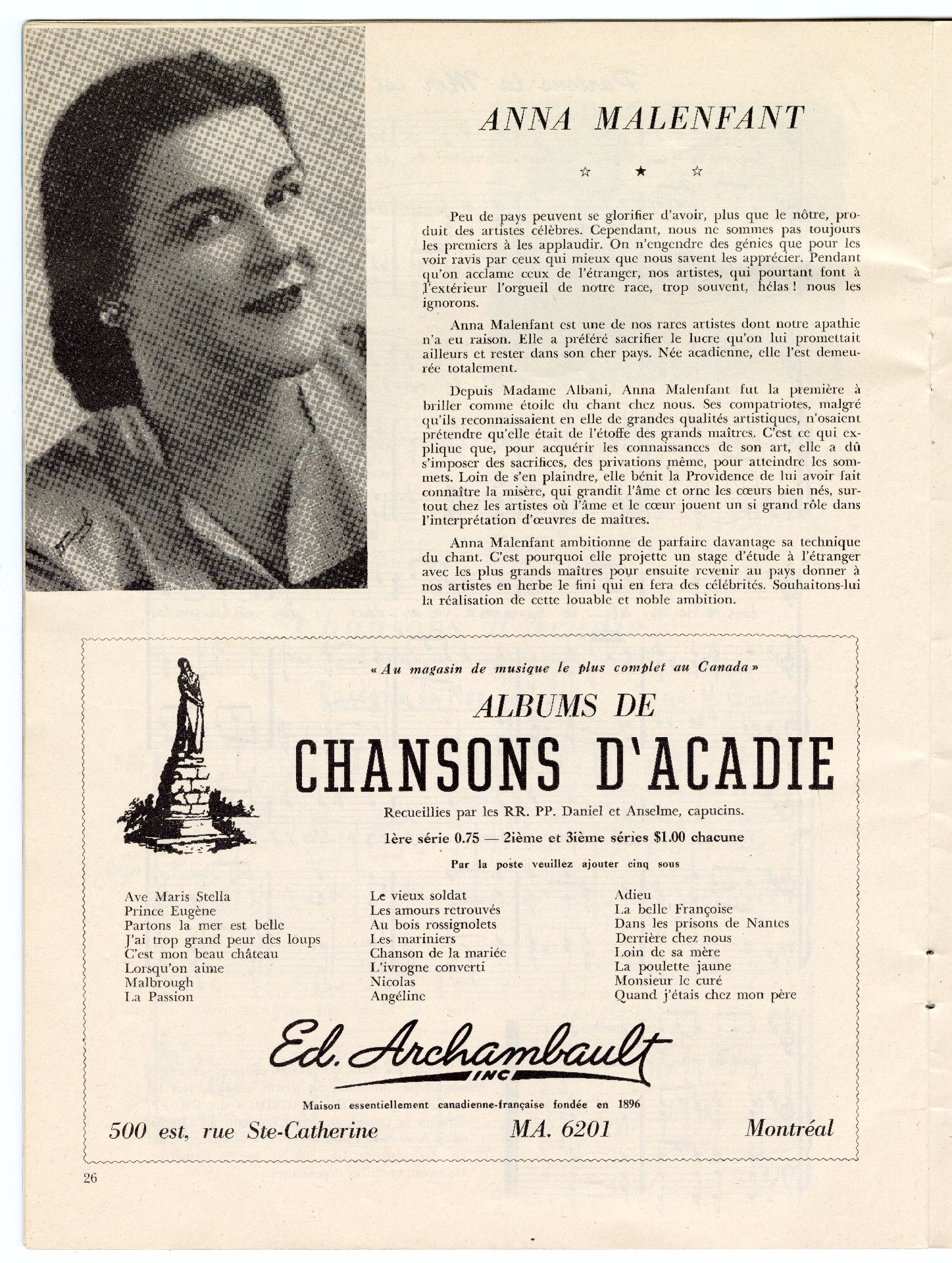
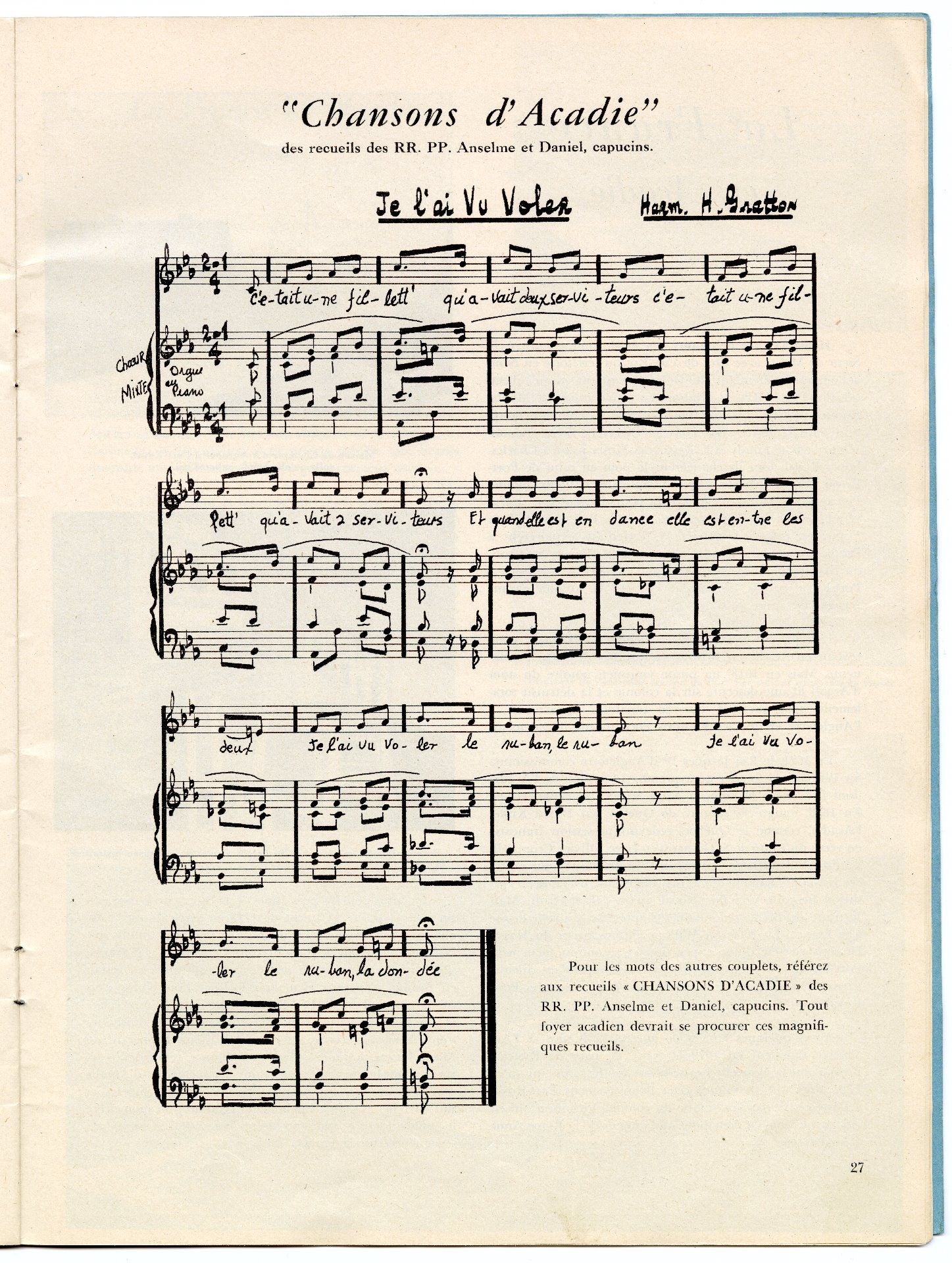
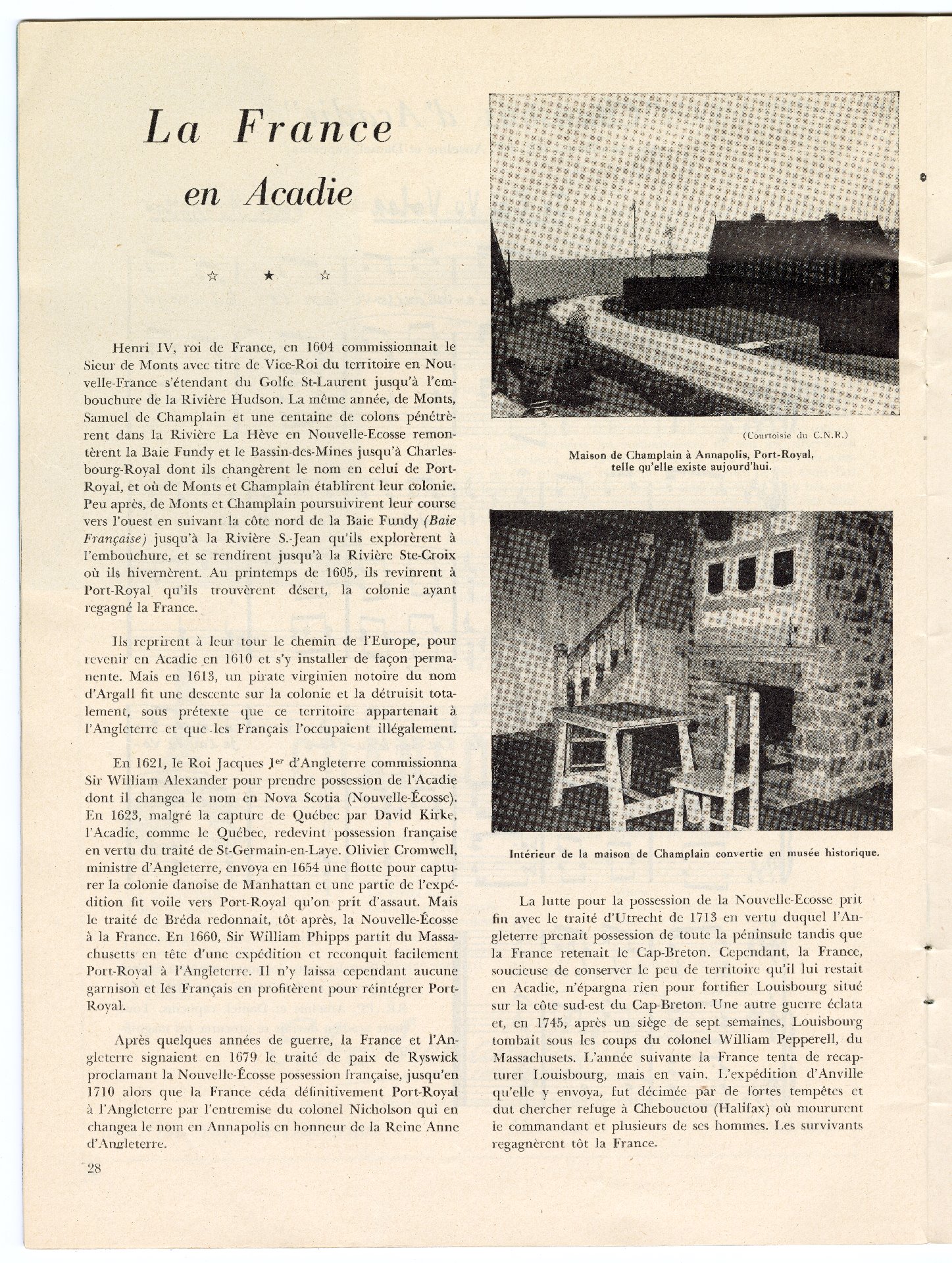
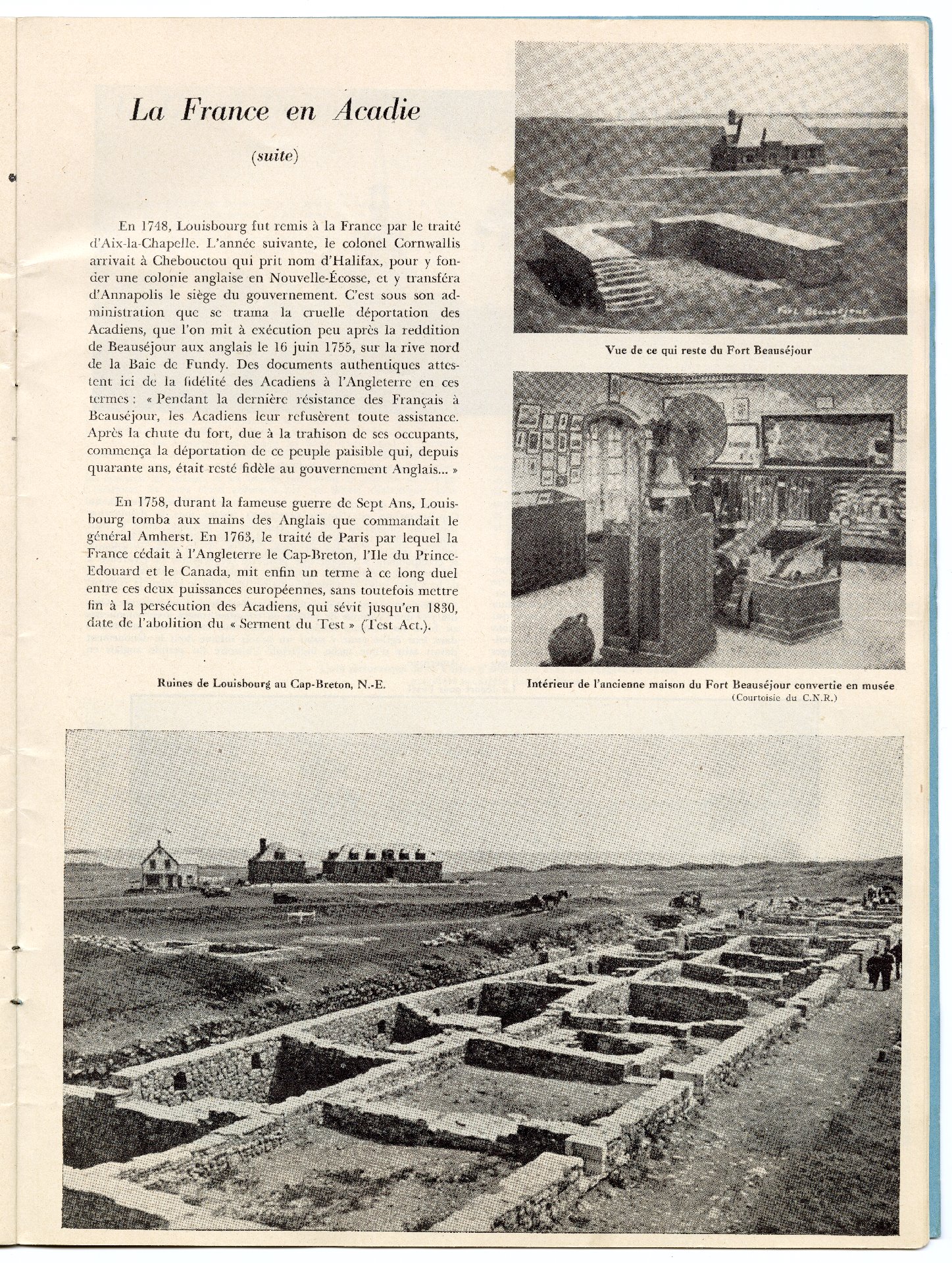
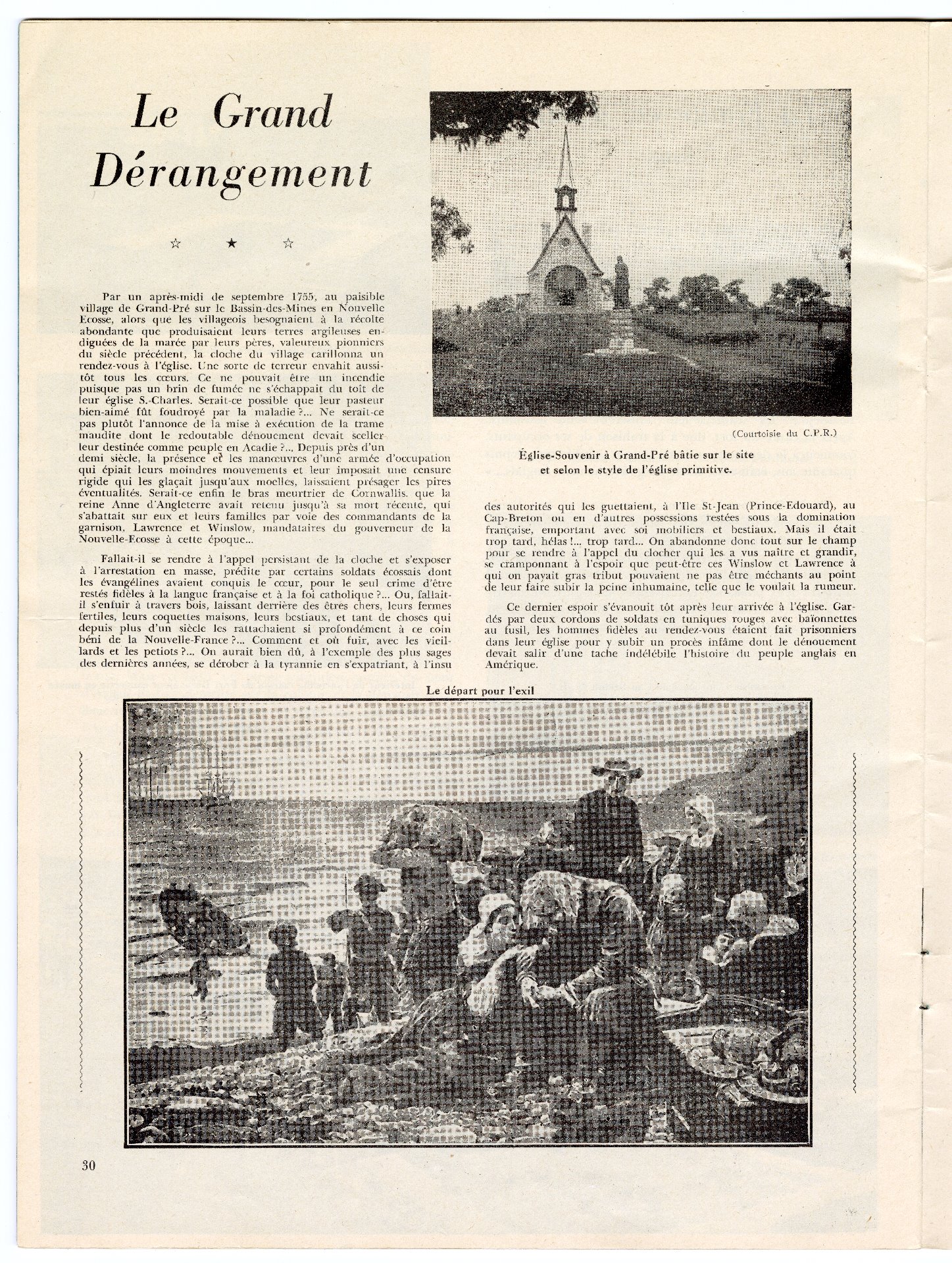
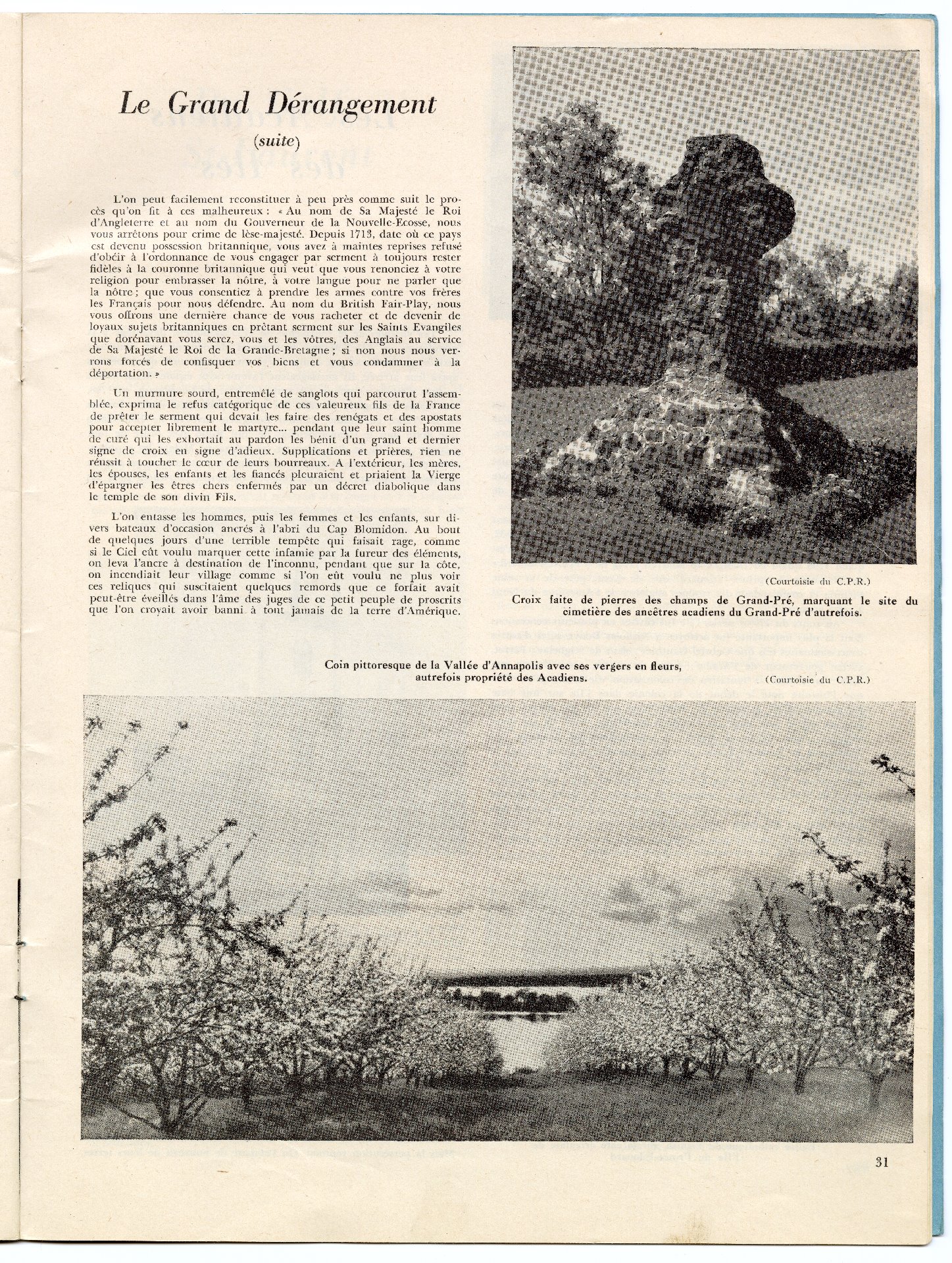
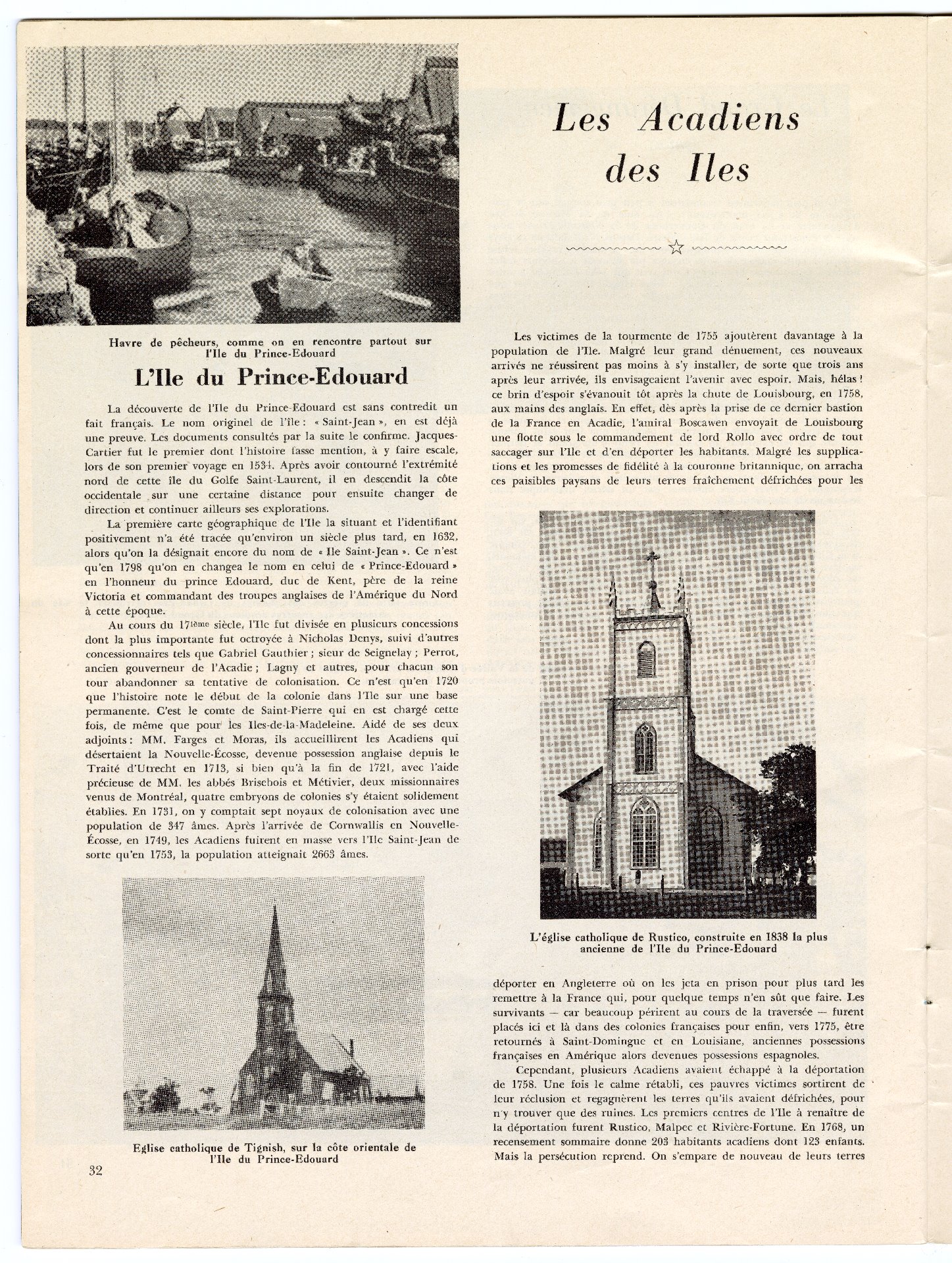
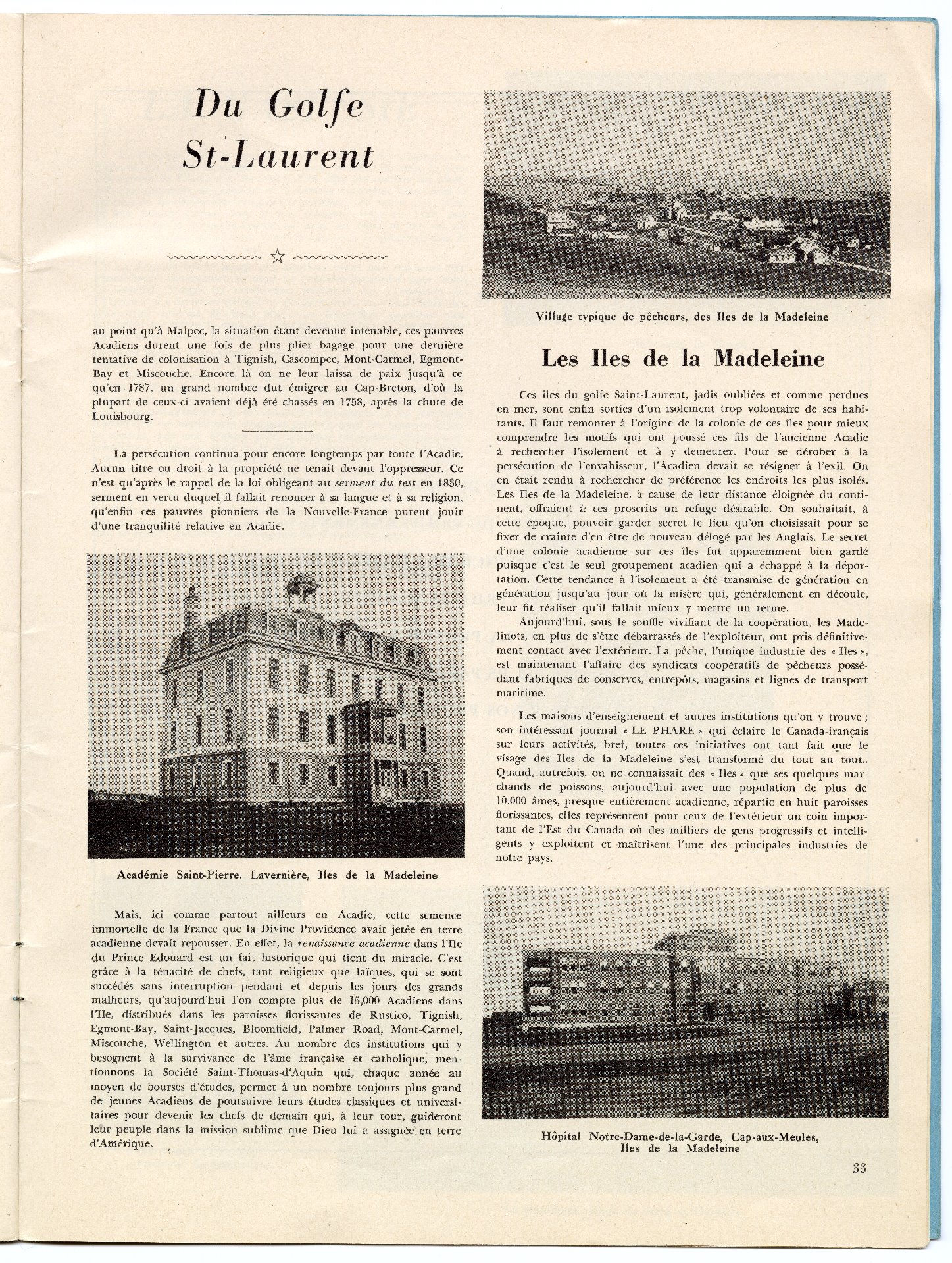
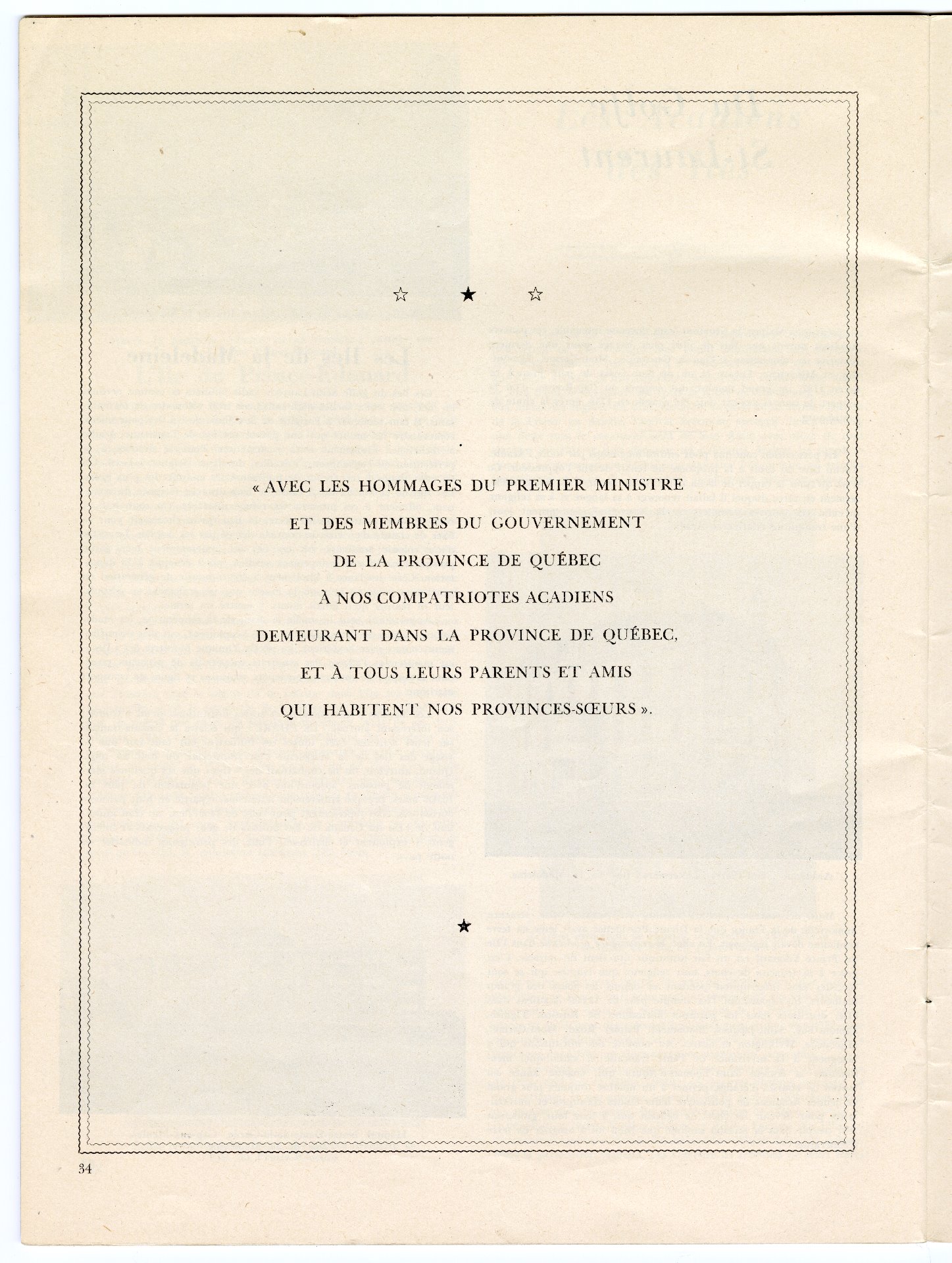
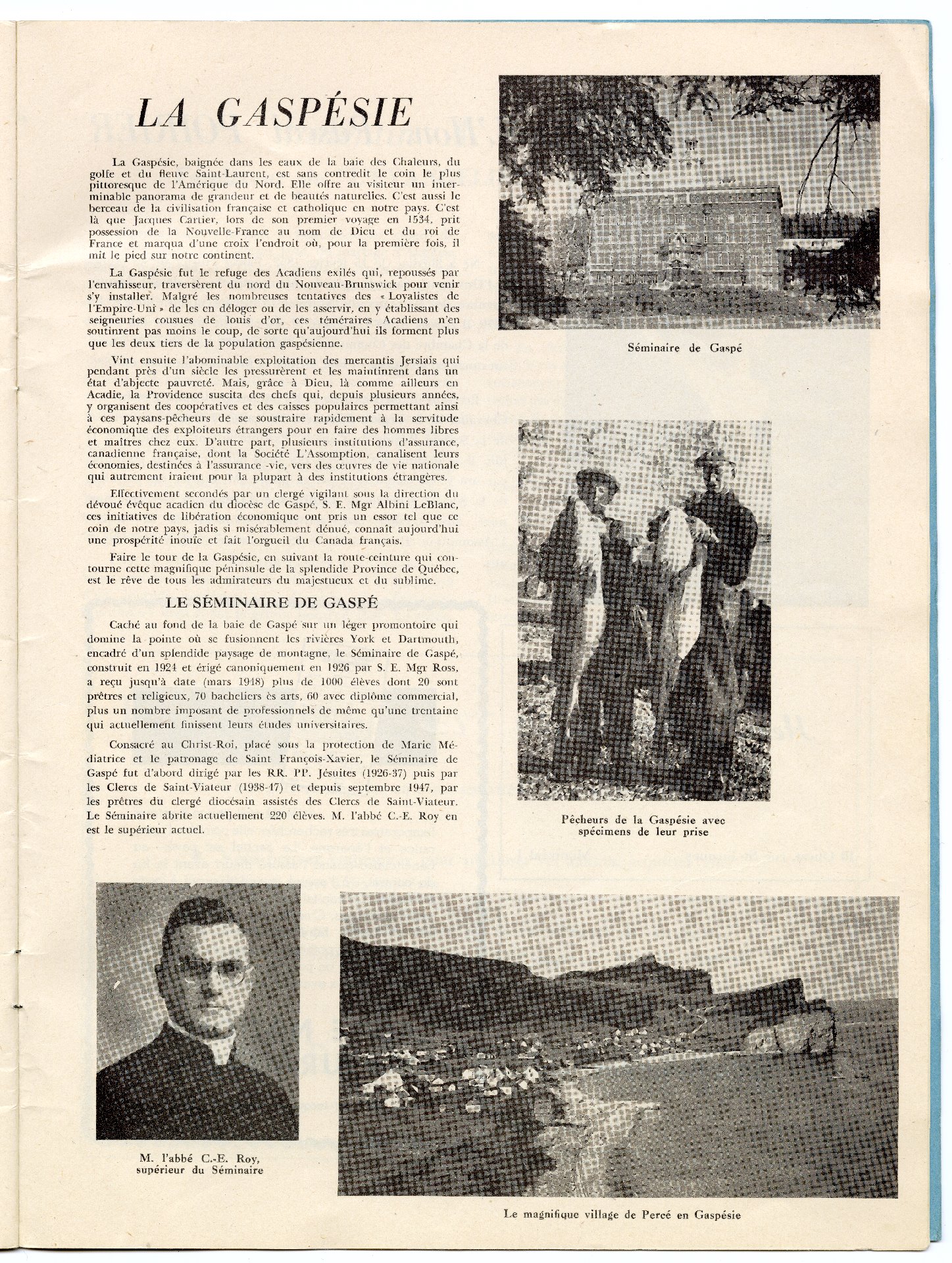
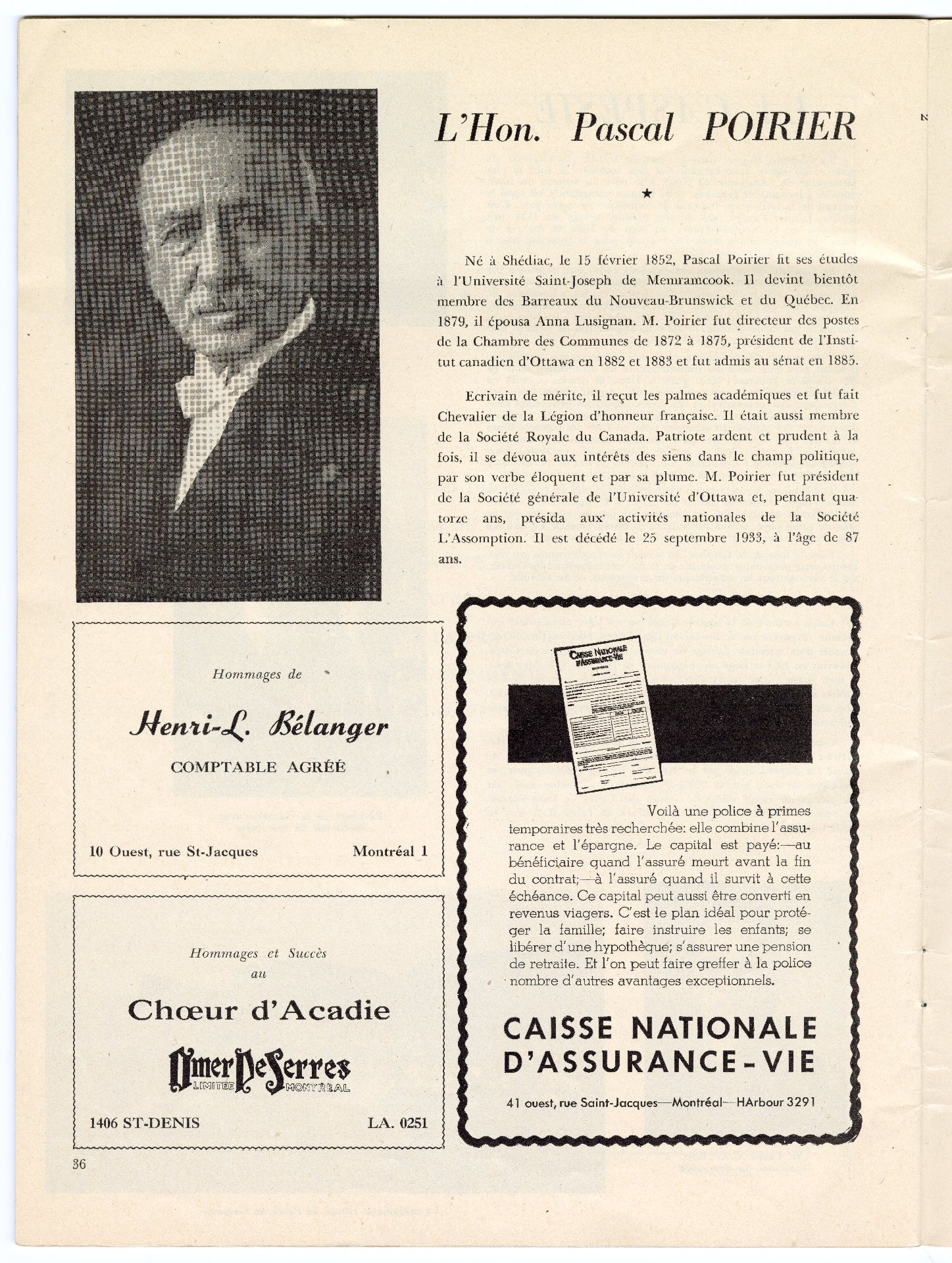
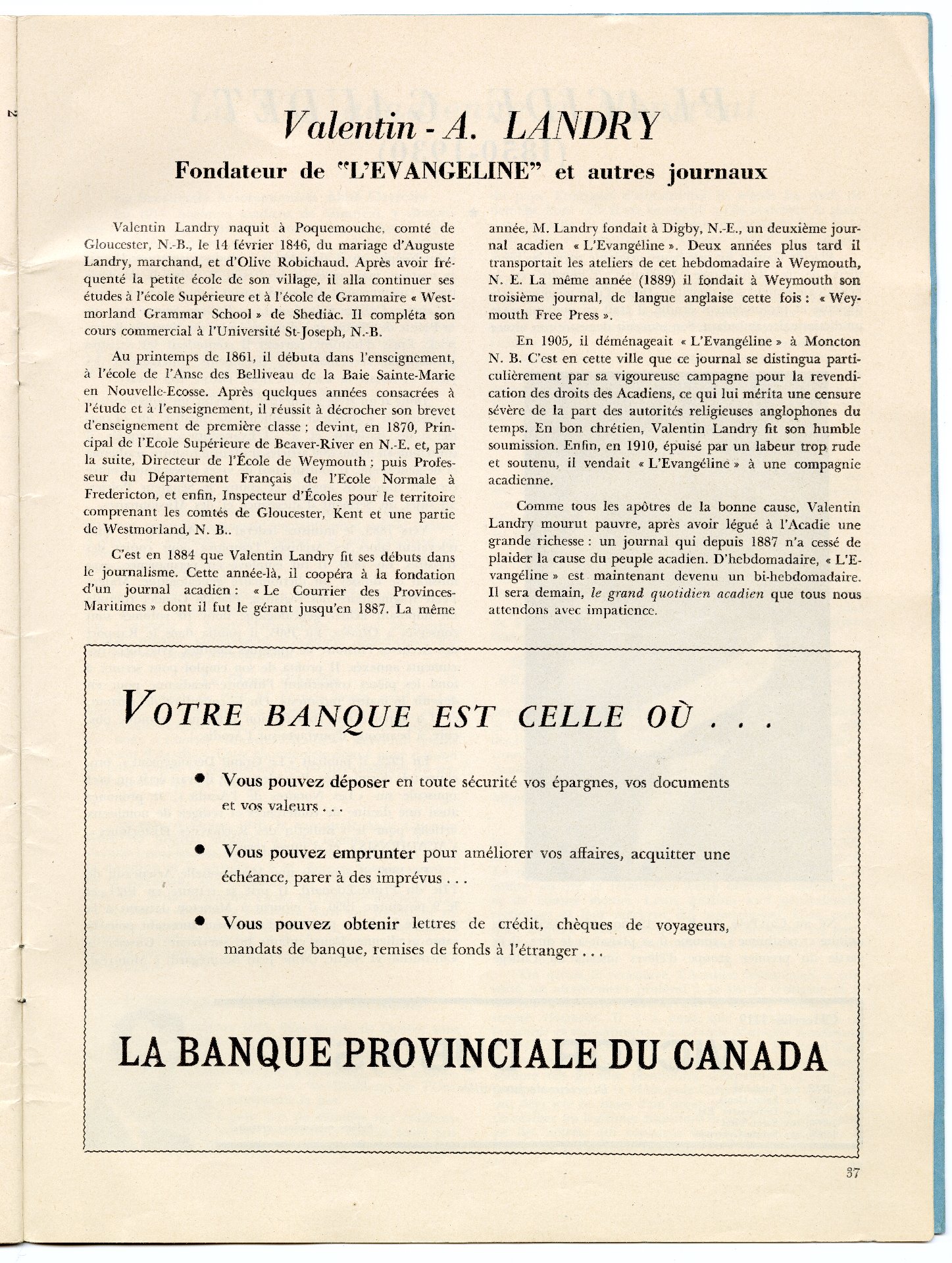
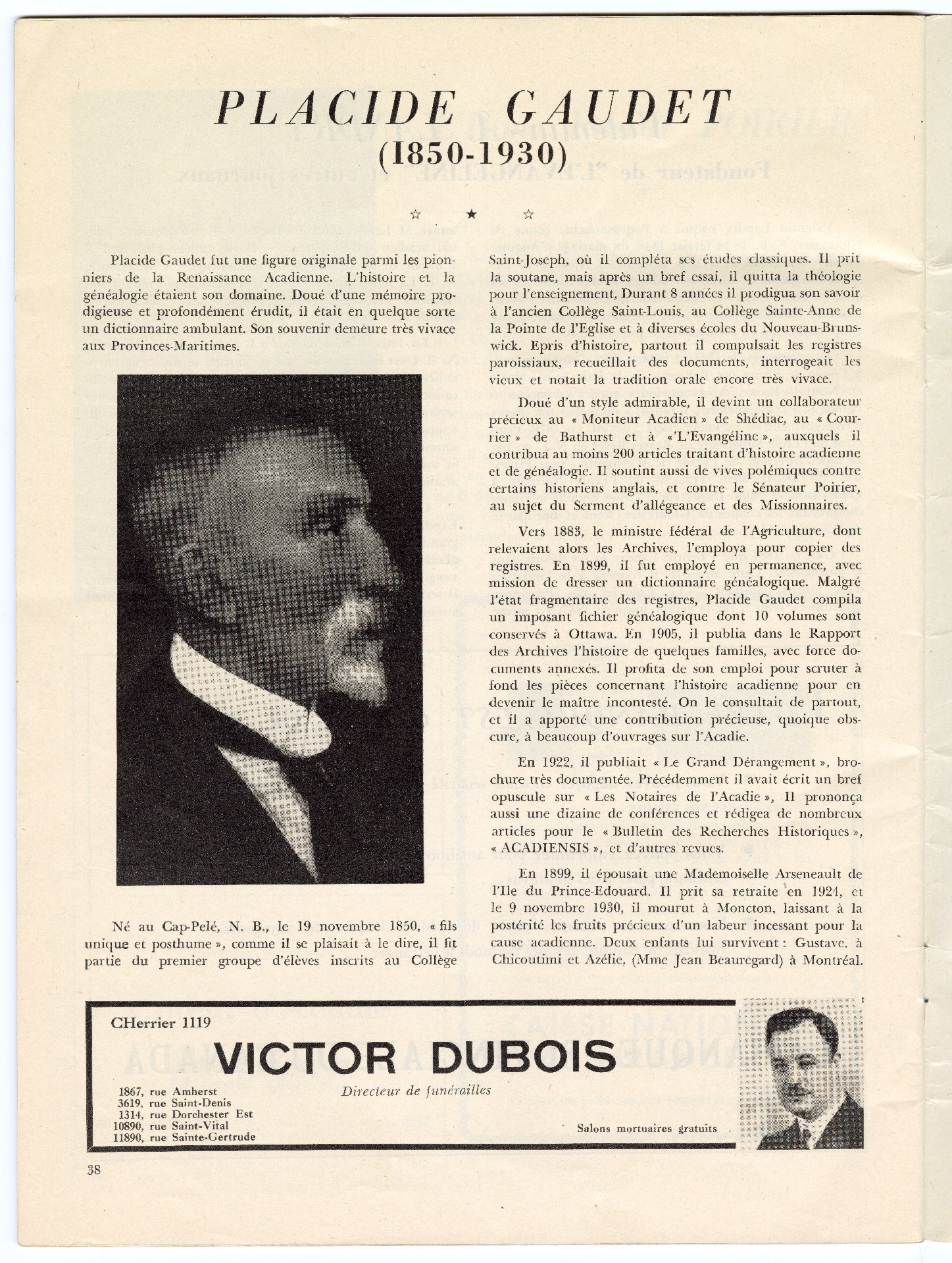
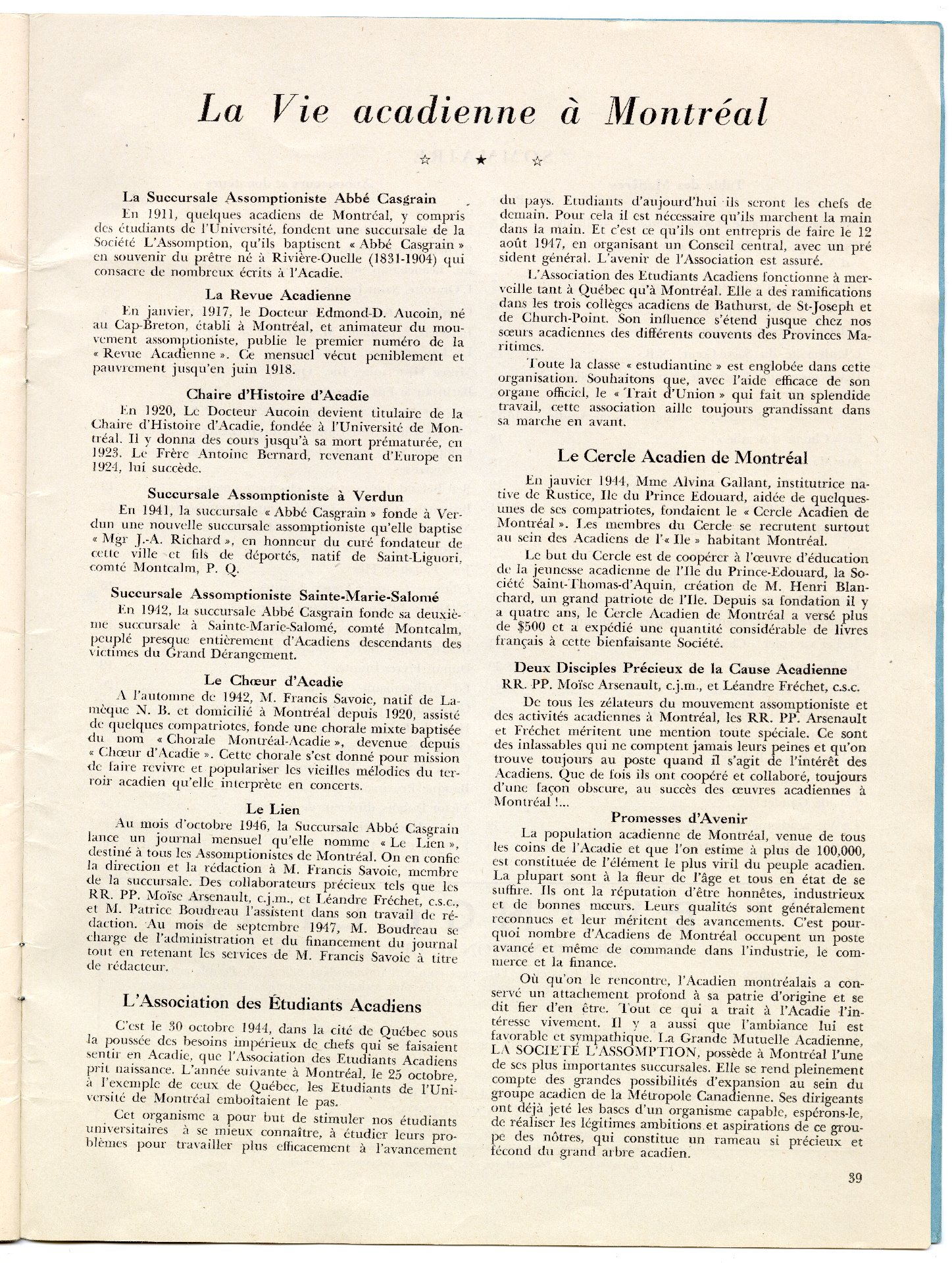
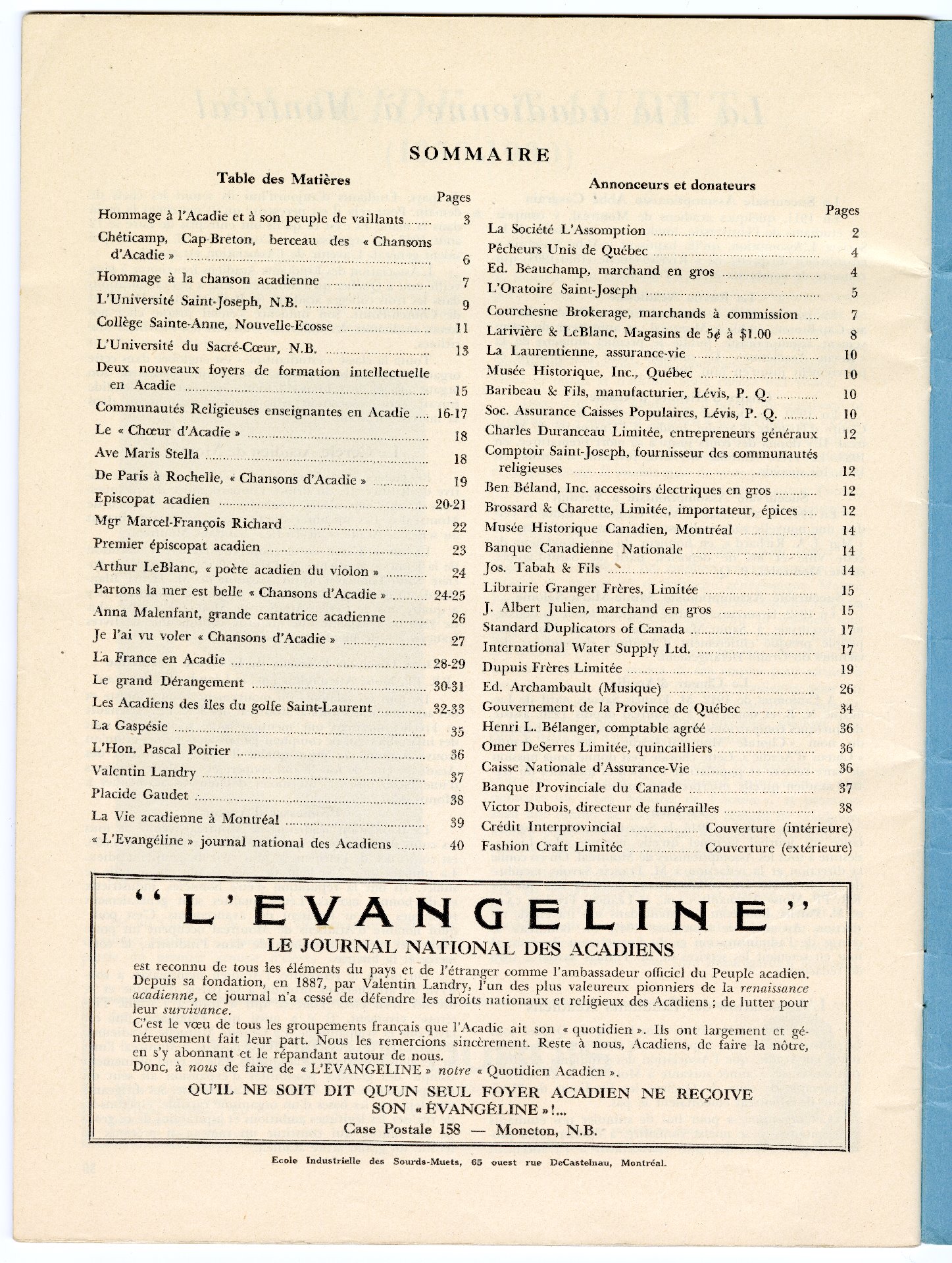
A 44-page historical album containing several articles on Acadia. It was edited and published by Le Choeur d'Acadie in 1948.
Value of the item
The book echoes a social and cultural development attributable to the Acadian Renaissance (1867-1960), a phenomenon of self-appropriation of Acadian culture by its heirs, engendering a sense of Acadian belonging. In addition, it is a publication that highlights Acadia in all its facets: places of settlement, songs, traditions, etc.
Furthermore, the book bears witness to the development of Acadian society in general, and more specifically to the links between the Petites-Cadies in Quebec and other places of Acadian settlement in the Maritime provinces and the United States. Several economic and cultural societies are also featured in this publication, including La société L'Assomption and the Choeur de l'Acadie.
Finally, this document highlights the ties that unite the Petites-Cadies through history. Genealogical and historical societies were formed throughout Quebec to meet a need for greater knowledge. Sometimes centered around a particular surname, region (such as the Gaspé Peninsula), or nation (such as the Acadians), these societies have been of great importance in the appropriation of Quebec culture. Here, we have a publication that makes Acadian history and organizations accessible.
Furthermore, the book bears witness to the development of Acadian society in general, and more specifically to the links between the Petites-Cadies in Quebec and other places of Acadian settlement in the Maritime provinces and the United States. Several economic and cultural societies are also featured in this publication, including La société L'Assomption and the Choeur de l'Acadie.
Finally, this document highlights the ties that unite the Petites-Cadies through history. Genealogical and historical societies were formed throughout Quebec to meet a need for greater knowledge. Sometimes centered around a particular surname, region (such as the Gaspé Peninsula), or nation (such as the Acadians), these societies have been of great importance in the appropriation of Quebec culture. Here, we have a publication that makes Acadian history and organizations accessible.
Learn more
The Choeur d'Acadie is a choir of Acadians in Montreal founded by Francis Savoie and Jacques Labrecque. Francis Savoie (1864-1961) was a businessman and musician from Lamèque, New Brunswick, who was very involved in various Acadian organizations in Montreal. Jacques Labrecque (1917-1995) was a folklorist and singer of Quebec folk music. The Choeur d'Acadie was directed by Hector Gratton and Labrecque. "The Choeur d'Acadie is composed mainly of Acadians exiled to Montreal; Father Anselme is its chaplain. The choir toured Acadia twice and gave numerous concerts in Quebec. Jacques Labrecque took over as director in June 1944, when the choir had already been in existence for two years." (https://www.erudit.org/en/journals/ethno/2004-v26-n2-ethno1422/013744ar/)