
Download image

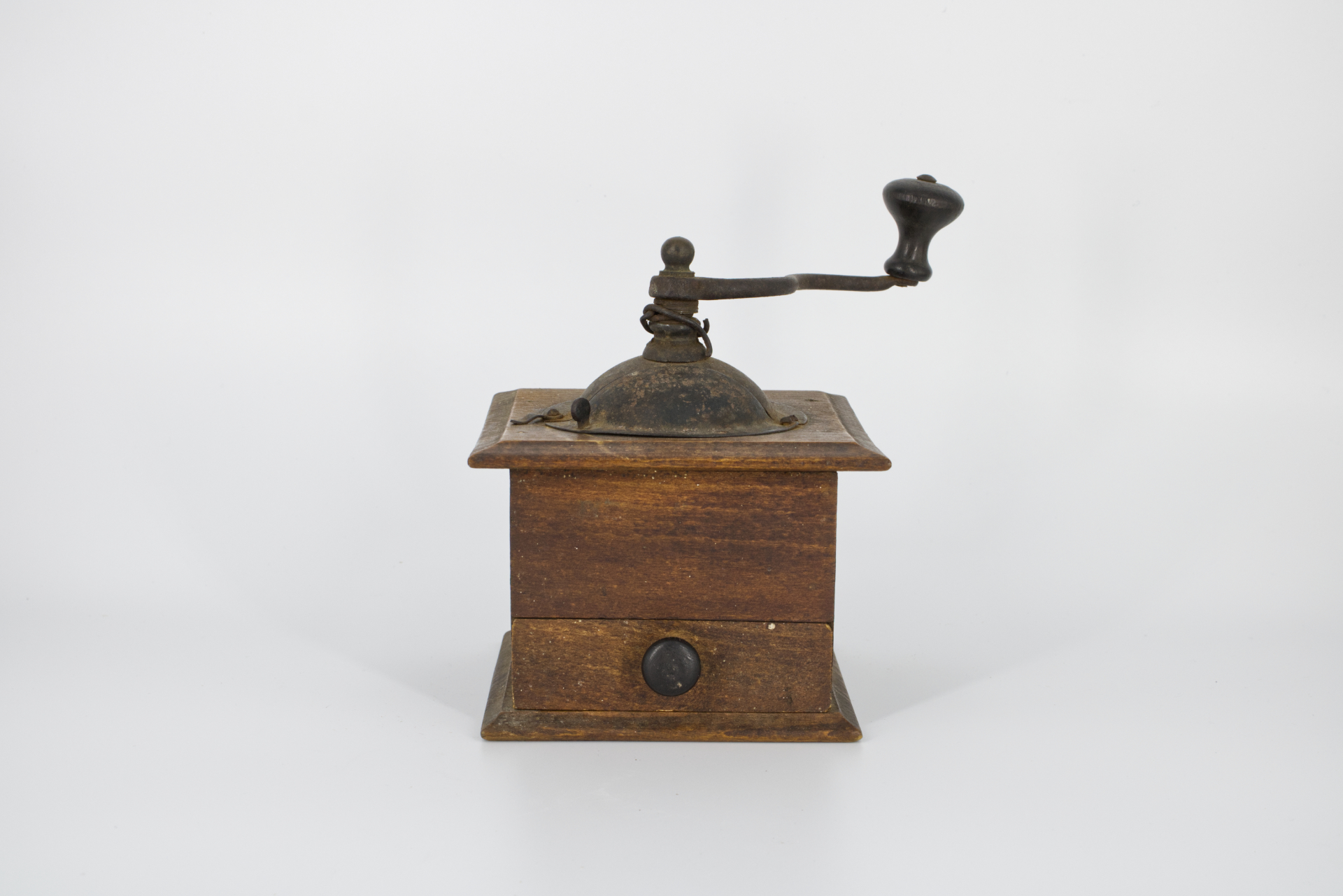
Coffee grinder | Coffee grinder |
Information about the object
Historical period
Unknown
Dimensions
Height: 29 cm. Width: 13.50 cm. Depth: 13.50 cm.
Classification
Tools and equipment -- Food production
Accession number
1980.1.166
Division
Material culture -- Tools and equipment for processing raw materials -- Food processing
Collection
Juliette Gauthier Barette
Donor
Juliette Gauthier Barette
Category/theme
Description of the object
The object is made of wood and metal. Industrial production.
Value of the item
The object bears witness to the development of Acadian and Gaspé society in general, and more specifically, to the commercial ties between the Petites-Cadies and the world during the industrial era. Here, we see the arrival of coffee in households, with the first wave estimated to have lasted from the early 20th century to the 1970s. Coffee was available in Quebec as early as the New France era, but it was reserved for the wealthiest and considered a luxury item. In the Gaspé Peninsula, it is possible that Jersey companies imported coffee into the region.
At the turn of the 20th century, industrialization brought coffee into households. It was probably at this time that tools and instruments for preparing coffee became popular. Then, around the 1950s and 1960s, affordable mass-produced coffee processed in the United States entered homes.
At the turn of the 20th century, industrialization brought coffee into households. It was probably at this time that tools and instruments for preparing coffee became popular. Then, around the 1950s and 1960s, affordable mass-produced coffee processed in the United States entered homes.
Learn more
It is estimated that there have been four or five waves that have shaped the coffee industry in Quebec:
1) The pre-industrial phase, when coffee was imported directly from the West Indies by influential companies and businessmen. During this phase, it was mainly the wealthier social classes who consumed it;
2) The industrial phase, marked by the arrival on store shelves of major companies such as Folgers and Maxwell House;
3) The artisanal phase, when coffee was consumed in specific establishments by the general public;
4) The specialization phase, at the beginning of the 21st century, where the search for flavor, quality, and origin of the bean dominated;
5) The arrival of organic and fair trade practices in the coffee trade.
The coffee consumed in the Gaspé Peninsula and the Maritimes during the pre-industrial phase arrived directly from the West Indies by schooner. During this journey, the salty air saturated the coffee beans. According to Acadian roaster and chemist Laura Richard, the salt even changed the chemical composition of the coffee, giving it a distinctive taste: sweeter, less bitter, and with new aromas. The Saltwinds Coffee roaster in Fredericton has attempted to reproduce a similar coffee. (https://ici.radio-canada.ca/ohdio/premiere/emissions/l-heure-de-pointe-acadie/segments/entrevue/442212/cafe-histoire-bruelerie-saltwinds-coffee)
1) The pre-industrial phase, when coffee was imported directly from the West Indies by influential companies and businessmen. During this phase, it was mainly the wealthier social classes who consumed it;
2) The industrial phase, marked by the arrival on store shelves of major companies such as Folgers and Maxwell House;
3) The artisanal phase, when coffee was consumed in specific establishments by the general public;
4) The specialization phase, at the beginning of the 21st century, where the search for flavor, quality, and origin of the bean dominated;
5) The arrival of organic and fair trade practices in the coffee trade.
The coffee consumed in the Gaspé Peninsula and the Maritimes during the pre-industrial phase arrived directly from the West Indies by schooner. During this journey, the salty air saturated the coffee beans. According to Acadian roaster and chemist Laura Richard, the salt even changed the chemical composition of the coffee, giving it a distinctive taste: sweeter, less bitter, and with new aromas. The Saltwinds Coffee roaster in Fredericton has attempted to reproduce a similar coffee. (https://ici.radio-canada.ca/ohdio/premiere/emissions/l-heure-de-pointe-acadie/segments/entrevue/442212/cafe-histoire-bruelerie-saltwinds-coffee)