
Download image

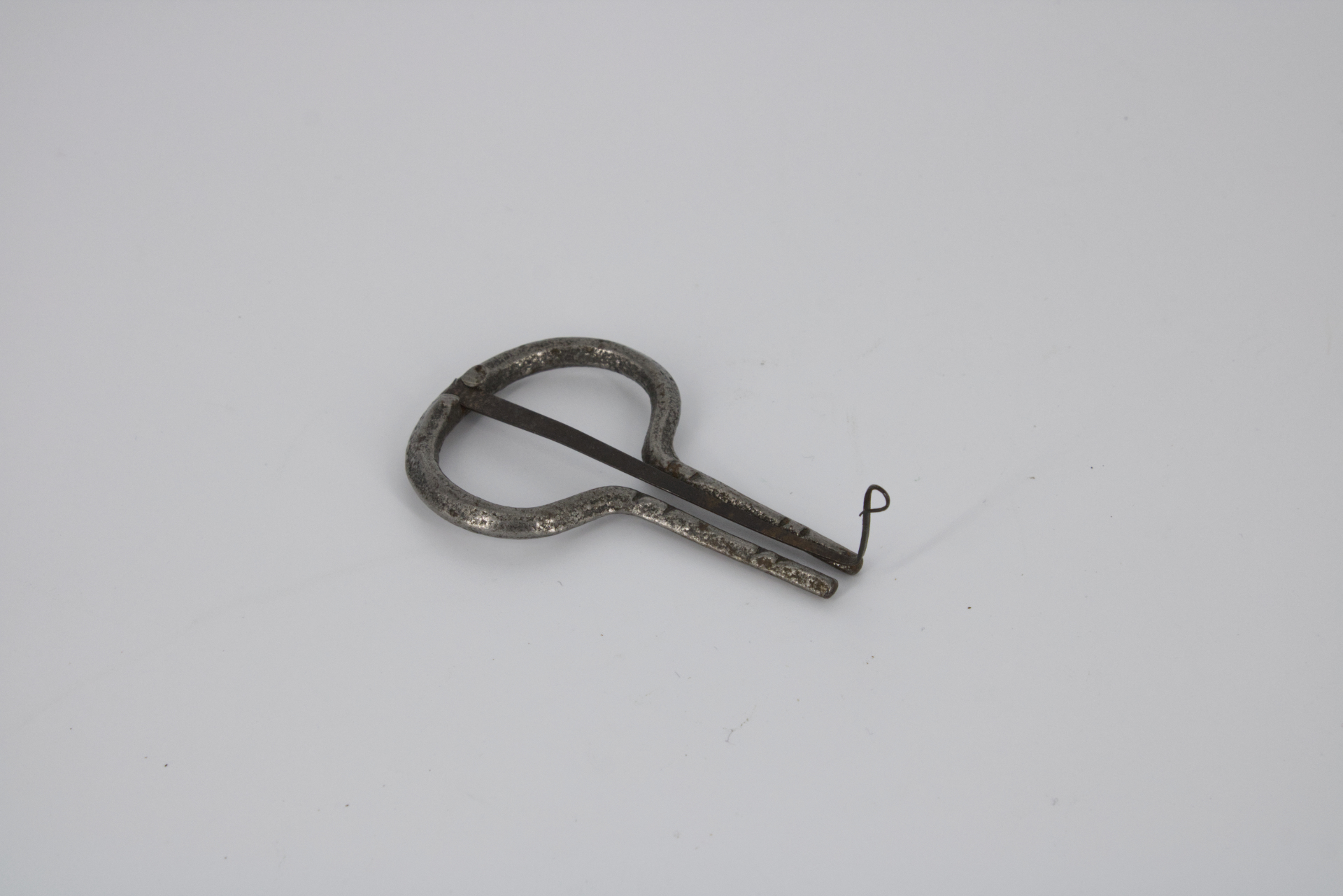
Idioglot mouth harp | Pipugwaqan
Information about the object
Historical period
Unknown
Dimensions
Height: 2.50 cm. Width: 8.50 m.
Classification
Leisure -- Music
Accession number
1987.1.1220
Division
Material culture -- Tools and equipment for communication -- Music
Collection
Evelyne Allard Landry
Donor
Evelyne Allard Landry
Category/theme
Description of the object
Small musical instrument made of steel cut from a single piece.
Value of the item
The object reflects a skill traditionally associated with or practiced by the Acadian people. More specifically, the object reflects a musical instrument associated with several cultures, including Acadian culture. The Jew's harp is believed to be one of the first instruments to arrive in Acadia. (https://ici.radio-canada.ca/nouvelle/1851359/musique-traditionnelle-acadienne-acadie-violon-trad-fetes-musiciens) As CyberAcadie points out, "Before the 1850s, the instruments used were mainly the violin, the Jew's harp, the accordion, and spoons. The guitar and mandolin appeared around the 1860s. To the sound of reels and jigs, people danced the quadrille or the cotillion." (http://www.cyberacadie.com/cyberacadie.com/index4347.html?/coutumes/La-musique-acadienne.html)
Learn more
The Jew's harp is a musical instrument widely used by nomadic peoples across Eurasia, from Finland to northern Japan, Asia, and Melanesia. It has existed in Europe since at least the Gallo-Roman period.
The Jew's harp is considered one of the oldest musical instruments in the world. In Quebec, the mouth harp has been around since the 17th century under the names trompe (in the Montreal area), bombarde, guitare de bouche in the early 20th century, and formerly, rebuth and gronde. The first instruments arrived in New France from France, then England. In the American colonies, jaw harps were given as gifts during negotiations with Native Americans. In 1708, there were 120 of them at the Chauvin house in Tadoussac, which was the first fur trading post.
The Jew's harp is considered one of the oldest musical instruments in the world. In Quebec, the mouth harp has been around since the 17th century under the names trompe (in the Montreal area), bombarde, guitare de bouche in the early 20th century, and formerly, rebuth and gronde. The first instruments arrived in New France from France, then England. In the American colonies, jaw harps were given as gifts during negotiations with Native Americans. In 1708, there were 120 of them at the Chauvin house in Tadoussac, which was the first fur trading post.