
Download image

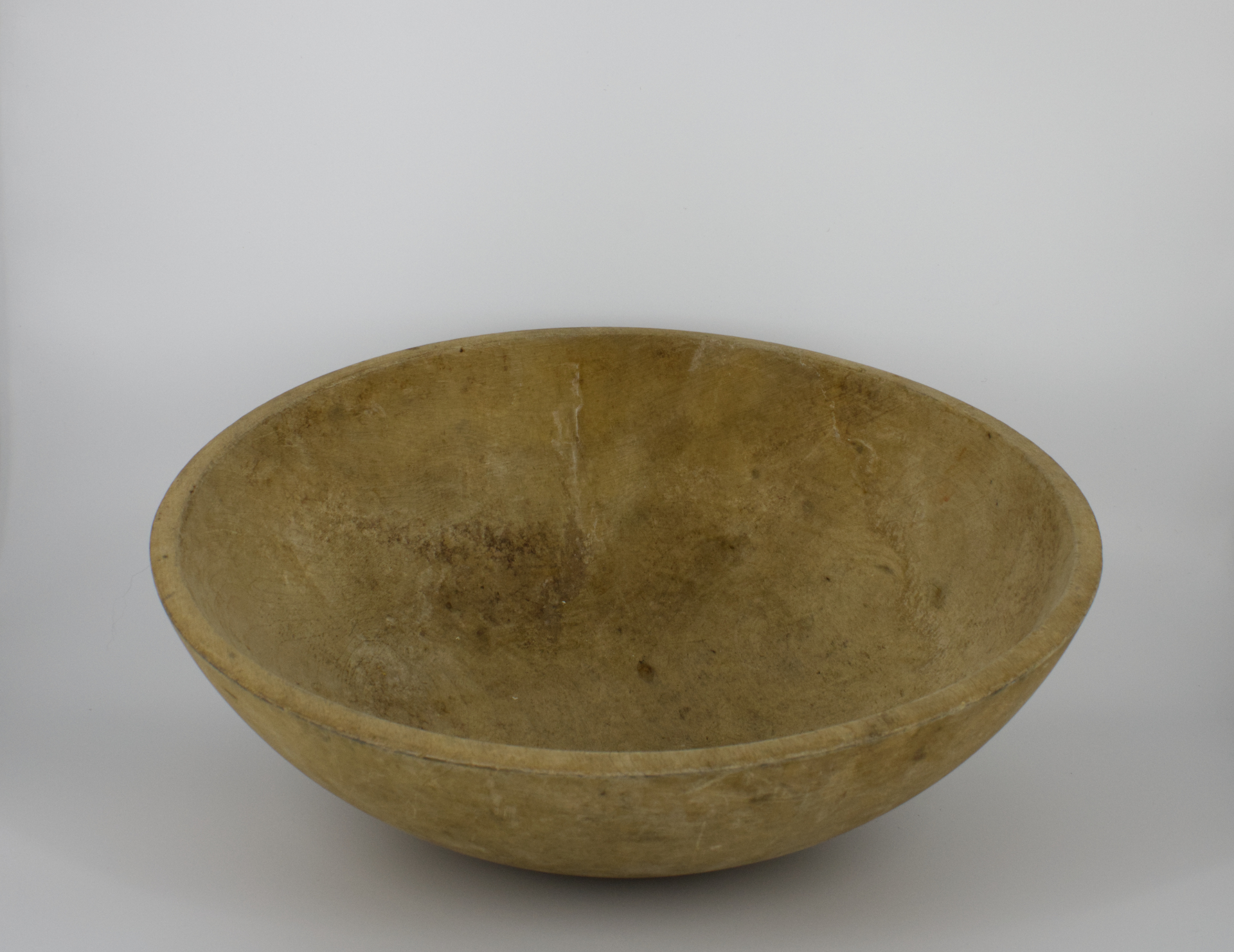
Kneading bowl | kneading bowl |
Information about the object
Historical period
c. 1800–1900
Dimensions
Depth: 13 cm. Outside diameter: 38 cm.
Classification
Tools and equipment -- Food production
Accession number
1996.14.2
Division
Material culture -- Tools and equipment for processing raw materials -- Food processing
Collection
Viola Leblanc
Donor
Viola Leblanc
Category/theme
Description of the object
The object is made of wood, handmade, circular in shape. Lightly varnished, it still shows signs of past use.
Value of the item
The object reflects a skill traditionally associated with or practiced by the Acadian population. More specifically, it reflects the development of culinary arts. The artisanal production of bread and other dough-based foods was also carried out by women.
Learn more
From the early days of colonization in Acadia and Quebec, bread was an integral part of the settlers' diet. Baked mainly by women, it was called "country bread." Bread accompanied the main dish, such as pork trotters stew. Other types of baking were also practiced in Acadia, including the making of ployes, buckwheat pancakes; galettes chaudes (small instant bread rolls); poutine en sac (balls of bread dough placed in a bag and cooked in boiling water); and tortaux (bread made from leftover bread dough). Until the early 20th century, bread was often baked in outdoor ovens. This bread was sold to tourists visiting the region, among others. A bread oven can still be found in the Gaspé Village of British Heritage.